









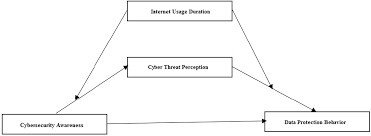
A new study published in Humanities and Social Sciences Communications examines how cybersecurity awareness influences data protection behaviors among Saudi secondary school students, revealing that both awareness and internet usage significantly shape how young people perceive cyber threats—and how effectively they protect themselves online.
Conducted in 2024, the research surveyed 1,980 students from multiple regions across Saudi Arabia using a multi-stage sampling method. The study applied confirmatory factor analysis and structural equation modeling (using AMOS24) to validate results in a culturally relevant context.
The findings show that higher cybersecurity awareness (β = 0.38, p < 0.001) and longer internet usage duration (β = 0.27, p < 0.001) both increase students’ perception of cyber threats. In turn, this heightened threat perception strongly predicts better data protection behaviors (β = 0.44, p < 0.001).
Cyber threat perception was found to mediate the relationship between awareness and protective behaviors (indirect β = 0.17, p < 0.001), meaning students who better understand cyber risks are more likely to translate awareness into action. Internet usage duration also strengthened these relationships, with heavy internet users showing a stronger link between awareness, perceived threats, and protective behavior.
The study recommends integrating interactive cybersecurity modules—such as threat simulations and hands-on digital safety exercises—into Saudi secondary school programs. It also emphasizes targeted support for students with high levels of daily internet exposure through focused workshops and coordinated efforts between teachers and parents.