









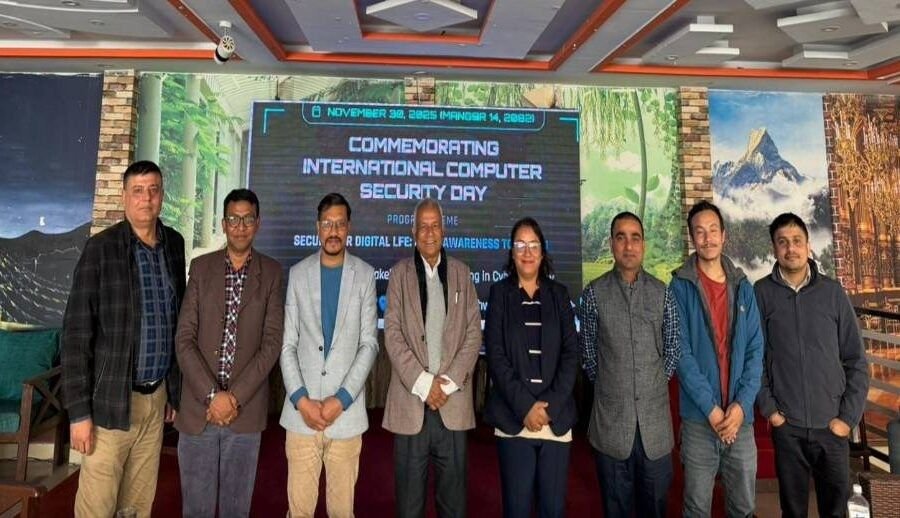
Nepal’s cybersecurity community marked International Computer Security Day with a high-impact, multi-stakeholder event organized in under 20 hours. Leaders from government, industry and academia gathered under the theme “Secure Our Digital Life: From Awareness to Action,” emphasizing that Nepal must now move beyond awareness campaigns toward sustained, nation-wide information security practices.
The event highlighted the global origins of the day, first observed after the 1988 Morris Worm incident, and used the occasion to evaluate Nepal’s current vulnerabilities. Suvash Khadka outlined persistent threats including financial fraud, instability at the Government Integrated Data Centre, and software piracy above 90%. He stressed the importance of the National Cyber Security Policy 2080, the proposed National Cyber Security Center, and the “Defense Triad” of MFA, regular updates and backups.
Roja Kiran Basukala underscored that single-day events are not enough, calling for year-round security action plans modeled on international initiatives like Safer Internet Day. She urged participants to embed cybersecurity into the national calendar rather than rely on isolated awareness moments.
Industry experts including Ram Krishna Pariyar, Udeep Baral and Ramesh Pokhrel stressed the importance of practical readiness, Zero Trust Architecture, and bridging the gap between academia and real-world practice. Their discussions reinforced that security requires disciplined work across people, processes and technology.
Academic contributors such as Phul Babu Jha called for long-term, government-aligned research programs to build a stronger national security culture.
Closing the session, former minister Ganesh Shah praised the rapid mobilization and urged the community to ensure that November 30 becomes a catalyst for ongoing, actionable national cybersecurity initiatives.
The event concluded with a shared commitment: turn discussion into sustained action and unite all stakeholders to secure Nepal’s digital future.