







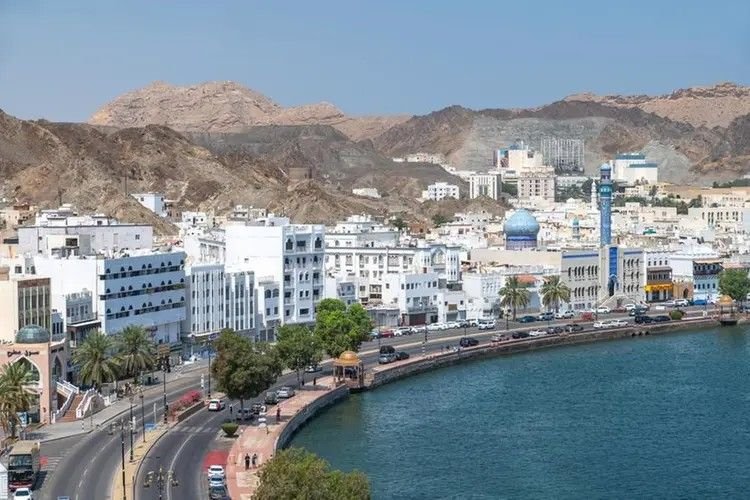
Oman is making strong progress in decarbonising its transport sector, with major advances across light vehicles, heavy trucking, maritime operations, port logistics and aviation. Speaking at the Energy Executive Circle during a panel on hydrogen ecosystems, Abdullah Al Busaidy, Director General of the Oman Logistics Centre at the Ministry of Transport, Communications and Information Technology, outlined the country’s multi-modal roadmap for a low-carbon mobility future.
Al Busaidy said the Ministry is finalising a comprehensive national green transport framework built around new policy incentives, public-private collaboration and strategic investment in climate-aligned technology. For light vehicles, the transition toward electric mobility is already underway. Heavy transport, however, requires deeper coordination with industry to ensure that the shift to cleaner fuels remains commercially viable for operators.
One of Oman’s key early milestones has been the development and local manufacturing of co-combustion truck technology, which retrofits existing diesel fleets to run on hydrogen. Trials within the Sultanate show a 53% reduction in CO₂ emissions, enabling logistics companies to meet transition goals without added operational costs.
The Ministry is also preparing to establish green transport corridors, especially linking Suhar and Al Duqm ports with major concession zones, paving the way for hydrogen-ready logistics routes and future heavy-mobility decarbonisation.
In the maritime sector, Oman is accelerating efforts to introduce green bunkering. The Ministry has signed an agreement with an international consortium — HIF EMEA, ACCIONA & Nordex Green Hydrogen, and Al Meera Investment — to assess a large-scale green-methanol production and supply project in Dhofar Governorate. The initiative aligns with Oman’s ambition to become a major regional hub for low-carbon marine fuels.
Oman’s aviation industry is also shifting toward sustainable solutions. Al Busaidy announced the launch of the country’s first Sustainable Aviation Fuel (SAF) initiative in partnership with Bauer Nimr, marking a significant step toward cleaner air transport.
The Sultanate is additionally in the final stages of formally joining the Heavy Transport Decarbonisation Alliance, reinforcing international cooperation and knowledge exchange.
Al Busaidy stressed that localisation, collaboration and innovation are the guiding pillars of Oman’s green-mobility strategy, noting: “Our targets are clear, our commitment is firm, and challenges always push us to find better solutions.”
Industry leaders participating in the panel discussion included Jürgen Rechberger (AVL List GmbH), Raul Ochagavia (ACCIONA Nordex Green Hydrogen), Ahmed Al Abri (Hydrom), Anton Geers (Port of Antwerp-Bruges) and Mohsin Al Jabri (Oman Net Zero Centre). The session was moderated by Siddiqa Al Lawati of OQ.