


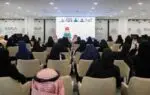

Oman will join other Arabic-speaking countries on December 18 in marking World Arabic Language Day, as renewed calls emerge to expand the role of Arabic in education, scientific research, and modern technology. This year’s UNESCO theme, “Innovative Pathways for Arabic: Policies and Practices for a More Inclusive Linguistic Future,” highlights the importance of education systems, digital tools, media, and public policy in ensuring the language remains relevant for its more than 400 million speakers worldwide.
Abdullah Saif al Toobi, Director of the Centre for Translation, Arabisation and Interest in the Arabic Language, stressed that sustaining Arabic requires reconnecting it with knowledge production, creativity, and labour markets. He said that symbolic recognition alone is no longer sufficient and called for Arabic to be used more widely as a language of instruction in universities, in peer-reviewed scientific publishing, and as a working language in advanced media. He also emphasised the need for Arabic to function effectively in artificial intelligence, digital applications, and emerging technologies.
Al Toobi urged Arab countries to adopt binding language policies that ensure the official and academic use of Arabic across both public and private sectors. He also called for stronger institutional support for translation, scientific publishing, and the localisation of knowledge, while noting that promoting dialects and local literature requires careful planning to address linguistic complexities.
Abdullah Mohammed al Harthy, Director General of Knowledge and Cultural Development at the Ministry of Culture, Sports and Youth, highlighted Oman’s historical contributions to Arabic sciences and literature. He pointed to Omani manuscripts in fields such as astronomy, medicine, history, and linguistics, adding that preservation and publication efforts continue to receive institutional backing.
The observance of World Arabic Language Day in Oman reflects broader regional discussions on how to position Arabic as a living language of science, innovation, and digital transformation in a rapidly evolving global landscape.