






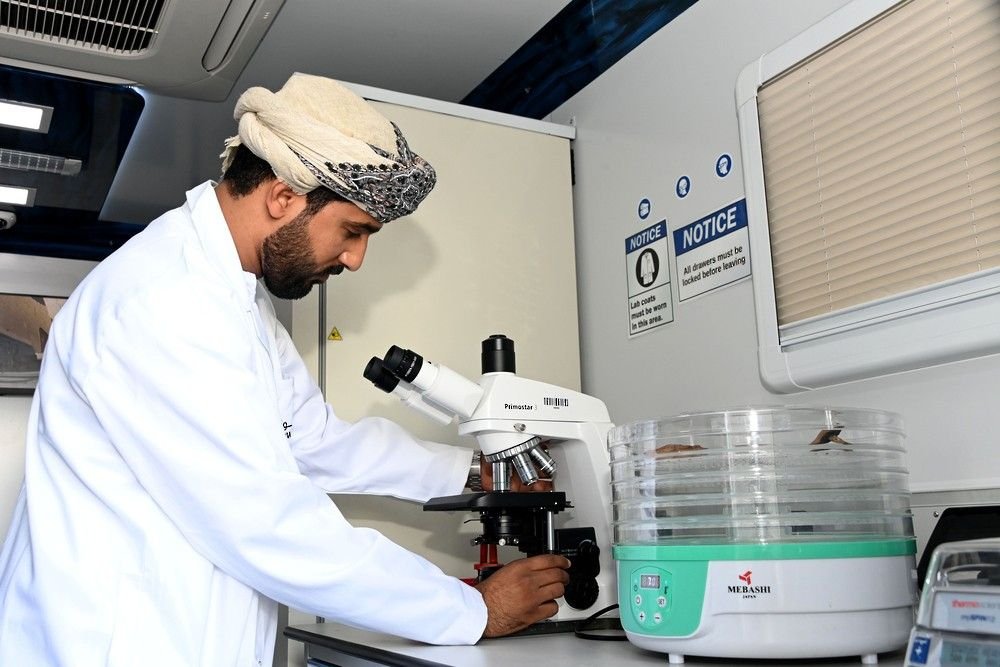
Oman has inaugurated its first mobile research laboratory dedicated to genetic resources and life sciences, marking a major step in strengthening national research capabilities. Launched by the Oman Animal and Plant Genetic Resources Centre (Mawarid) under the Ministry of Higher Education, Research and Innovation, the facility was unveiled at a ceremony held under the patronage of Dr. Rahma bint Ibrahim Al Mahrouqi.
The state-of-the-art mobile laboratory is designed to deliver advanced genetic research services directly to governorates across the Sultanate, particularly in areas without permanent laboratory infrastructure. By enabling on-site sample processing and initial analysis, the facility reduces delays, improves data quality, and enhances the preservation of genetic materials.
Equipped with advanced analytical instruments, the laboratory can examine a wide range of genetic samples, including plant, animal, marine, and microbial resources. Its scope covers medicinal plant seeds, wild and domesticated animal strains, marine organisms, microorganisms, and fungi, supporting conservation, food security, and environmental research initiatives.
Development of the mobile laboratory took more than three years and included custom design, a dedicated four-wheel-drive vehicle, equipment installation, and extensive testing. The modular design allows continuous upgrades, ensuring the laboratory remains aligned with rapid advances in genetic and life sciences research.
Mawarid is currently conducting extensive field studies across Oman’s diverse ecosystems, including mountains, deserts, plains, and coastal regions. Ongoing projects such as fungal research in Dhofar and nationwide microbial studies are expected to benefit significantly from the laboratory’s deployment.
Officials said the initiative supports Oman Vision 2040 by strengthening the national knowledge base, accelerating scientific discovery, and enabling sustainable use of the country’s rich biodiversity. In addition to research, the mobile laboratory will play an educational role through outreach programmes with schools, universities, and scientific events, promoting awareness of genetic resource conservation and its economic and environmental value.
The launch event, held at Innovation Park Muscat, also featured a panel discussion on the scientific and economic role of research laboratories, highlighting their contribution to innovation, partnerships, and the development of a knowledge-based economy.