








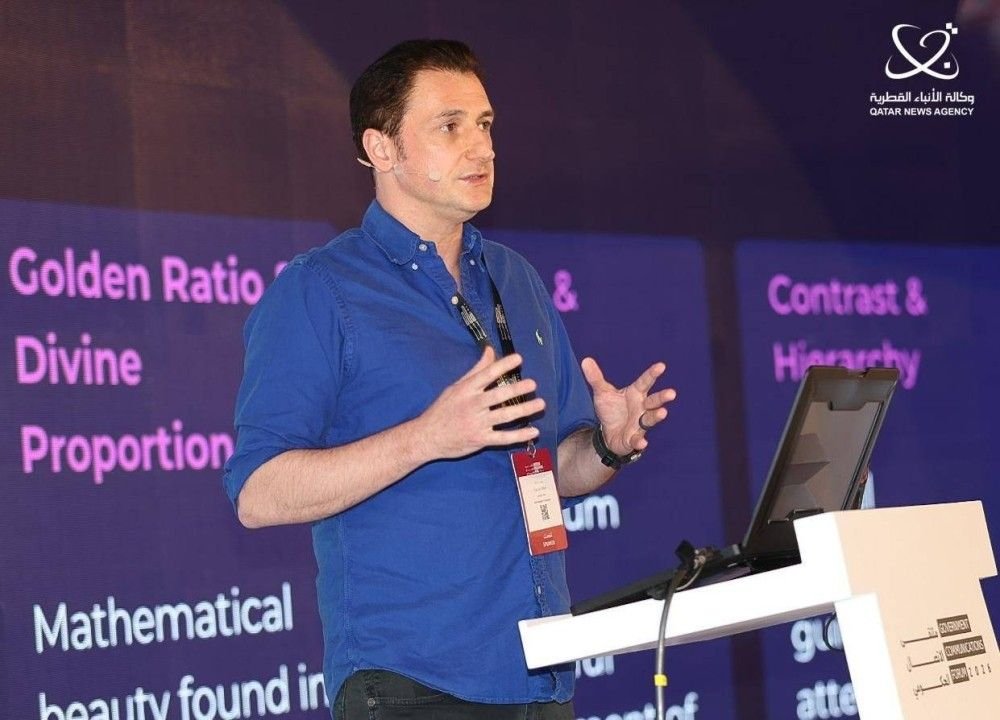
Doha: The third Government Communications Forum hosted a panel exploring the emerging frontiers of AI-powered cinematic animation, spotlighting how artificial intelligence is reshaping visual storytelling while preserving the central role of human creativity.
A highlight of the session was the presentation of Legacy of Light, an AI-animated docudrama that chronicles the life of the renowned Muslim scholar Muhammad ibn Musa Al-Khwarizmi and the intellectual renaissance that transformed Baghdad in the ninth century. The project blends rigorous historical research with advanced AI technologies, offering a new model for evidence-based cinematic storytelling.
The production demonstrates how AI can be used to recreate complex historical settings, control every visual and audio element, and bring scholarly narratives to life with unprecedented precision. By fusing academic depth with digital innovation, Legacy of Light illustrates how cultural heritage can be reimagined for modern audiences.
Spencer Striker, Professor of Digital Media Design at Northwestern University, underscored that AI tools are fundamentally changing production techniques. However, he cautioned that technology cannot replace human creative judgment. Instead, design thinking and artistic direction are becoming more important than ever.
Speaking during the keynote panel, Striker explained that the project enables filmmakers to integrate meticulous historical research with complete creative control, highlighting the expanding possibilities of AI in animation and filmmaking. He described AI as an accelerator of creativity rather than a substitute for it, emphasizing that the future of cinematic content depends on the seamless integration of human imagination with technological capability.
The forum’s broader agenda features panel discussions and specialised workshops on informed leadership engagement, unified communication strategies, visual identity, the role of women in communications leadership, data interpretation, news verification, digital content creation, and the application of AI in government communications.
Participants are also engaging in hands-on training sessions, including smartphone filmmaking, public speaking, digital media strategy across platforms, media crisis room management, and the development of modern communication plans.
These sessions aim to strengthen practical skills, enhance institutional coordination, and cultivate a culture of innovation within government communications, equipping participants to navigate the evolving media and digital landscape.