








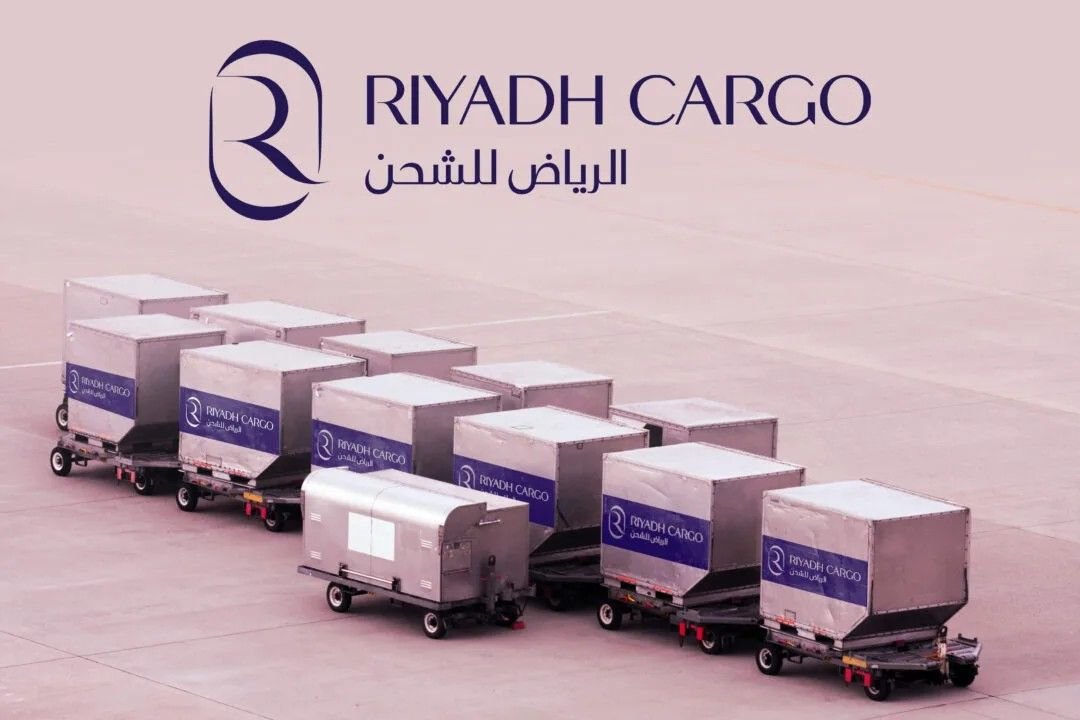
Riyadh Air has officially launched its cargo operations under the brand “Riyadh Cargo,” marking the airline’s entry into the global air freight market and activating belly-hold cargo capacity across its modern wide-body fleet.
Designed to scale in parallel with Riyadh Air’s network expansion, Riyadh Cargo will leverage capacity across more than 120 wide-body aircraft currently on order. Anchored at the airline’s Riyadh hub, the cargo business follows a phased, disciplined approach, ensuring operational maturity while supporting Saudi Arabia’s broader logistics and trade ambitions under Vision 2030.
Since beginning live operations as part of Riyadh Air’s “Pathway to Perfect” process, Riyadh Cargo has already demonstrated strong momentum on the Riyadh–London Heathrow route. It has successfully transported a wide range of commodities, including garments, textiles, fresh flowers, seafood, tea, and coffee, highlighting its capability to handle time-sensitive, perishable, and high-value shipments with consistency and reliability.
Pravin Singh, Global Head of Cargo at Riyadh Air, said the business has been built around operational discipline, reliability, and long-term scalability. He noted that launching within a live environment enables continuous learning and refinement while delivering immediate value to customers. The brand’s debut represents a foundational step toward building a cargo platform that grows alongside the airline’s global network.
Digital capability sits at the core of Riyadh Cargo’s model. The operation integrates dedicated cargo management systems, centralized airwaybill control, and enhanced data visibility to improve transparency, accelerate decision-making, and maintain high service levels. Centralized, round-the-clock access to critical functions provides a significant operational advantage.
In line with its digital-native DNA, Riyadh Cargo has partnered with CHAMP’s Cargo spot-neo platform, enabling end-to-end cargo management with greater control, visibility, and responsiveness as volumes and network complexity increase.
Cargo operations are further strengthened through a strategic partnership with Unilode, enabling the use of digitally tracked, lightweight unit load devices (ULDs). These assets improve real-time monitoring, stock optimization, and operational efficiency, particularly during irregular operations, while supporting sustainability goals.
On the ground, handling and hub management are delivered in partnership with SATS Saudi Arabia Company across key airports, including King Khalid International Airport in Riyadh, King Fahd International Airport in Dammam, and King Abdulaziz International Airport in Jeddah. These locations are equipped with modern facilities, specialized handling zones, and centralized hub management to ensure seamless cargo flows and real-time oversight.
As Riyadh Air advances toward a fleet exceeding 180 aircraft and a network of over 100 destinations by 2030, the airline is expected to contribute nearly $20 billion to Saudi Arabia’s non-oil GDP and support more than 200,000 direct and indirect jobs. Riyadh Cargo is positioned as a central enabler of this growth, reinforcing the Kingdom’s ambition to become a leading global aviation and logistics hub.