





King Abdullah University of Science and Technology (KAUST) has crossed a major milestone, with its portfolio of spinout companies raising more than $1 billion from local and international investors.
The achievement marks the maturation of the Saudi postgraduate research institution’s commercial pipeline. Founded in 2009, KAUST has spun out close to 120 companies, many of which are now attracting capital from both regional and global venture firms as Saudi Arabia opens further to international investors.
KAUST is now seeking to widen its funding base by engaging more global pre-seed venture capital firms, corporate investors, and international accelerator programmes such as TechStars.
Once heavily dependent on oil and gas, Saudi Arabia’s Vision 2030 diversification drive has positioned KAUST as a key engine for clean energy and sustainability technologies.
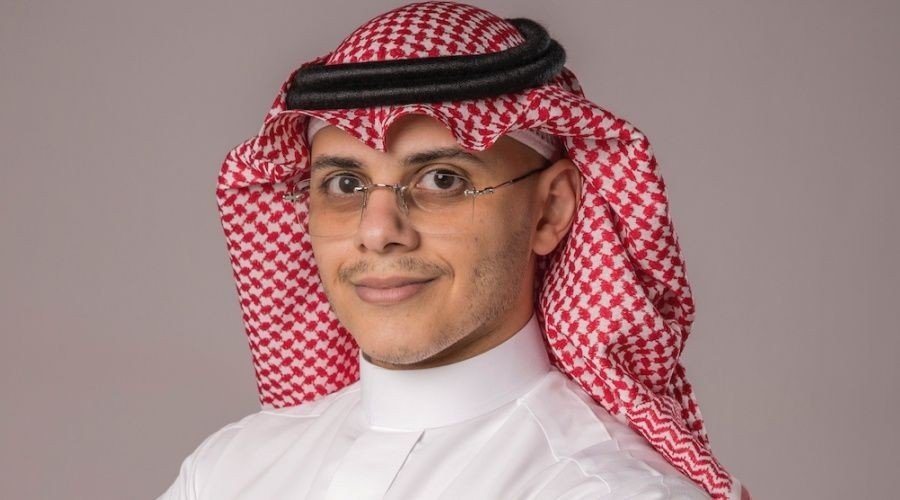
“The ideas that started at KAUST 15 years ago have now emerged into a pipeline of active IP that is inciting curiosity from the external world,” said Ian Campbell, senior vice president of the National Transformation Institute, KAUST’s technology commercialisation arm. “Investors are coming to the kingdom to see both the ambition and the scale of projects under way.”
KAUST operates a structured technology transfer programme supported by two dedicated funds. The KAUST Innovation Fund provides seed investments of up to $250,000 and follow-on funding of up to $1 million. Silicon Valley-based Capital K, a $200 million deep-tech fund, supports scale-up financing for KAUST technologies and external startups.
Many KAUST spinouts focus on sustainability and resource efficiency. Terraxy, which produces biochar from organic waste to improve soil quality, has received backing from Wa’ed Ventures, a $500 million fund supported by Aramco. Edama, which recycles vegetative waste to enhance soil fertility and double crop yields, secured $5.6 million from the Saudi Investment Recycling Company.
The university is also generating innovations in mining and critical minerals. Lihytech, founded by a KAUST professor, has developed a low-energy method to extract lithium using electrodialysis and ceramic membranes. The company raised $6 million from Saudi mining group Ma’aden and is working with Aramco to test lithium extraction from oilfield brine.
Other Saudi corporates engaging with KAUST spinouts include Sabic and ACWA Power.
To broaden its investor base, KAUST recently hosted a pitching event for global pre-seed investors and accelerators, including TechStars, Newlab, and First Star Ventures.
“They are first-time entrants to the kingdom,” Campbell said. “We’re becoming a place where they can test and deploy their accelerator models.”
KAUST has also expanded internationally, establishing an innovation hub in Shenzhen, China, in partnership with a local incubator. The hub integrates Saudi founders into China’s technology and manufacturing ecosystem.
“Shenzhen is ten times cheaper and ten times faster than Silicon Valley,” Campbell said. “We wanted to test whether we could accelerate speed to market and value creation.”
Several ventures emerging from the Shenzhen programme have already secured funding.
Looking ahead, KAUST plans to build a translational research hub to identify high-potential technologies at earlier stages and accelerate them to higher readiness levels before external investment.
“We aim to de-risk technologies earlier,” Campbell said. “There is more value in finding diamonds in the rough and polishing them before bringing investors in.”