








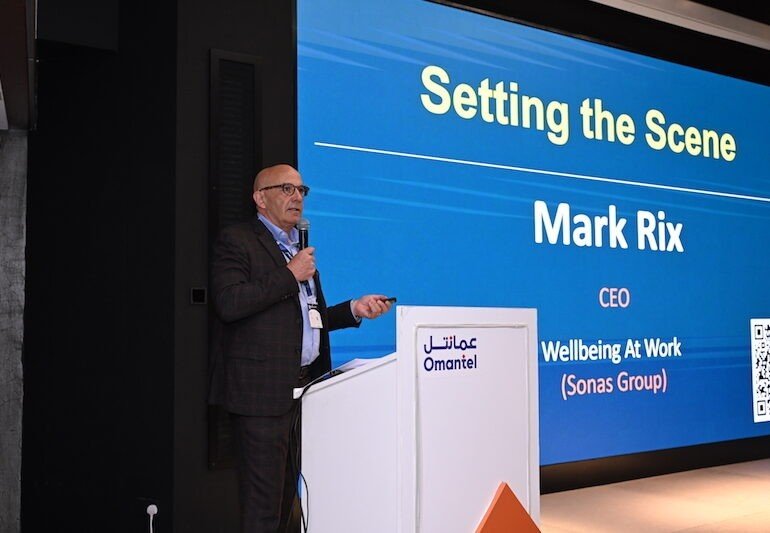
MUSCAT — The second Wellbeing at Work Summit, held at Omantel headquarters on January 27, placed employee engagement at the centre of organisational performance, urging leaders to move beyond perks and embed wellbeing into workplace culture.
Opening the event, summit chair Scott Armstrong, founder and CEO of mentl, delivered a candid reflection on leadership. Despite driving exceptional commercial growth in a previous role, he described his tenure as a “failure” for neglecting the human element. The message resonated across the room: performance without people is unsustainable.
Armstrong stressed that no two employees are alike and warned against “one-size-fits-all” management. Backed by global data, he highlighted the enormous economic cost of disengaged workforces and called for deeper personal and professional reflection among leaders.
Headline partner Mohammed Husary, founder and CEO of ViWell, framed wellbeing through six pillars: mental, physical, social, financial, nutritional, and professional. He noted that a 5 percent increase in engagement can lift productivity by up to 4 percent, and that organisations with strong wellbeing programmes experience up to 41 percent lower absenteeism.
Saif al Abri, General Manager for People Experiences at Omantel, reinforced the message with practical insight. “Productivity starts at the employee’s house,” he said, outlining Omantel’s personalised welfare policies, from in-house clinics and counselling to “work from anywhere” options.
A leadership panel explored wellbeing as a driver of organisational performance. Dr Sola Togun-Butler described wellness as psychological safety, empathy, flexibility, and belonging. Manal Al Raisi emphasised balance and value, while Dr Reem Al Hashar called for a shift from isolated perks to integrated organisational ecosystems.
Dr Hamed Al Sinawi highlighted rising stress levels driven by economic change and job insecurity, noting cultural stigma around mental health as a major barrier to seeking support in Oman.
Workshops challenged participants to design practical wellbeing strategies for Oman by 2030, while afternoon sessions focused on benchmarking, behavioural models, and embedding wellbeing into leadership DNA.
Speakers agreed that effective wellbeing is not about table tennis or yoga classes alone. It requires systemic integration into policies, processes, and leadership behaviour, ensuring employees feel seen, supported, and empowered.
The summit concluded with a clear call: move from “where are you?” to “how are you?” and build workplaces where people can thrive, not just perform.