









SpaceX has acquired artificial intelligence startup xAI in a landmark move that reportedly values the combined entity at approximately $1.2 trillion, creating one of the most ambitious technology platforms ever assembled. While financial terms were not officially disclosed, the transaction brings together two of Elon Musk’s ventures under a unified strategy spanning space launch, satellite internet, AI infrastructure, and real-time global communications.
The companies described the merger as the creation of a “vertically integrated innovation engine” designed to tightly couple AI development with SpaceX’s launch systems and orbital satellite network. The announcement framed the deal as a foundational shift in how computing infrastructure will evolve in the decades ahead.
Central to the vision is the argument that advanced AI workloads are increasingly constrained by terrestrial data centre limits, including electricity demand, cooling requirements, and environmental impact. The companies stated that scaling AI sustainably on Earth will become progressively harder, making space-based computing a long-term necessity rather than a futuristic concept.
SpaceX and xAI outlined plans to deploy orbital data centres powered by continuous solar energy, dramatically lowering operational constraints while expanding available computing capacity. “It’s always sunny in space,” the statement noted, pointing to the potential of near-constant solar power in orbit.
This strategy relies heavily on SpaceX’s Starship rocket, designed for high-frequency, heavy-payload missions. Starship is expected to deploy next-generation Starlink satellites this year, each offering more than 20 times the capacity of current versions, alongside enabling global direct-to-mobile cellular coverage.
The companies believe that large constellations of AI-enabled satellites could eventually contribute hundreds of gigawatts of computing power annually, with a long-term pathway to terawatt-scale infrastructure. Such capacity, they suggested, could move humanity closer to becoming a Kardashev Type II civilisation capable of harnessing a significant share of the Sun’s energy.
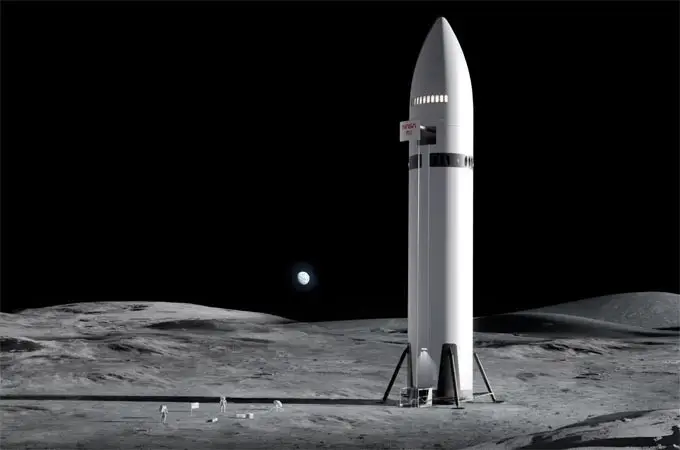
Beyond Earth orbit, the merged entity envisions using Starship to support permanent lunar operations and future settlements on Mars. The statement positioned space-based AI infrastructure as both an enabler and a funding mechanism for humanity’s expansion across the solar system.
This merger, they said, is “not just the next chapter, but the next book” in a broader mission to redefine the intersection of AI, energy, communications, and space exploration.