








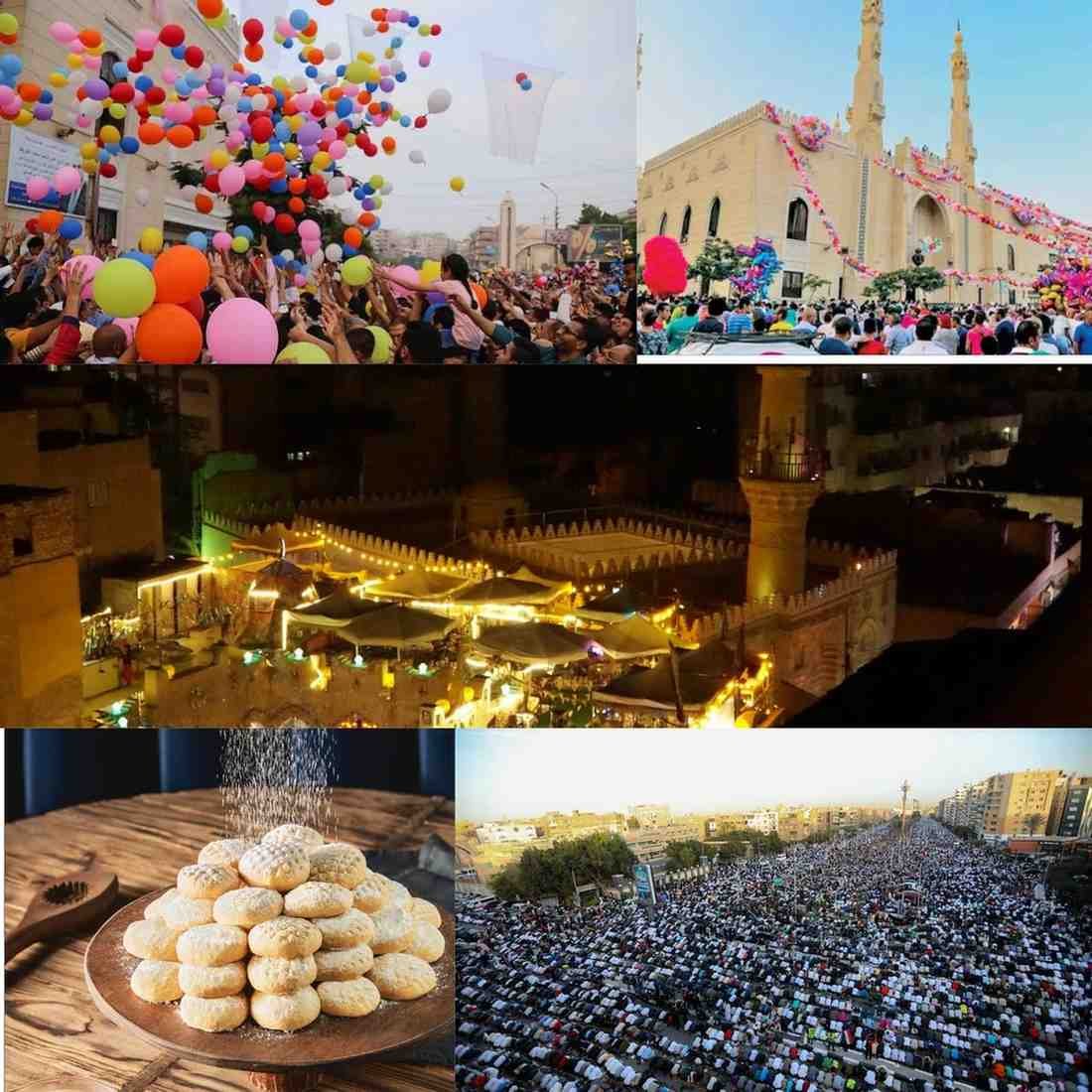
As the holy month of Ramadan comes to a close, Egypt awakens to the vibrant spirit of Eid al-Fitr, a festival that blends religious devotion with social festivity. Across the country, streets and mosques glow with colorful lights, while homes radiate joy, reflecting the values of connection, generosity, and the renewal of family bonds during this cherished occasion.
While many Arab and Islamic countries share common Eid traditions, Egypt’s time-honored customs give the holiday a unique character, intertwining faith, family, and celebration.
Eid Preparations
In the final nights of Ramadan, Egyptian households begin extensive preparations for Eid. Families clean and decorate their homes, shop for new clothing, and prepare beloved dishes and sweets for the festivities. Traditional markets and modern shopping centers, particularly in Downtown Cairo and other major commercial hubs, come alive with bustling crowds preparing for the celebration.
Zakat al-Fitr: Giving Back During Eid
A few hours before the Eid prayer, Egyptians observe Zakat al-Fitr, often distributed in packages containing rice, flour, sugar or dates. Each package typically weighs around three kilograms per person, reflecting the spirit of social solidarity and ensuring that everyone can partake in the joy of Eid.
Eid Takbeer: The Chants of Celebration
As the sun sets on the last day of Ramadan, the air fills with the sounds of Takbeer: “Allahu Akbar, Allahu Akbar, La ilaha illa Allah, Allahu Akbar, Allahu Akbar wa lillah al-hamd.” These chants continue until the morning Eid prayer, uniting communities in a shared spiritual experience.
Eid Prayers
Eid al-Fitr prayers are held shortly after sunrise in mosques and open spaces, drawing large gatherings of families. After the prayers, people exchange greetings such as “Eid Mubarak” and “Kul ‘am wa antum bikhair.” In many neighborhoods, children receive sweets and small gifts, adding to the festive spirit.
Eidiya: Gifts of Joy
Eidiya is one of the most cherished traditions, where children receive money or small gifts from elders during family visits. This practice brings joy across generations and remains a highlight of the celebrations.
Family Visits
Following prayers, families visit relatives and neighbors, sharing sweets, nuts and warm conversations. These gatherings are central to Eid in Egypt, reinforcing strong family ties and social connection.
Kahk: Egypt’s Iconic Eid Cookies
Kahk al-Eid is a signature part of the celebration. Made from flour, ghee and sesame seeds and often dusted with powdered sugar, these cookies are either baked at home or bought from bakeries. With roots tracing back to ancient Egypt and later traditions, Kahk remains a timeless symbol of Eid.
Outings and Leisure
Eid in Egypt also includes outdoor celebrations, with families visiting parks, the Nile Corniche, shopping malls and cinemas. Coastal destinations attract visitors, while evening strolls through illuminated streets capture the festive atmosphere.
Eid al-Fitr in Egypt offers a rich cultural experience where tradition, community and celebration come together, creating lasting memories for families and visitors alike.