









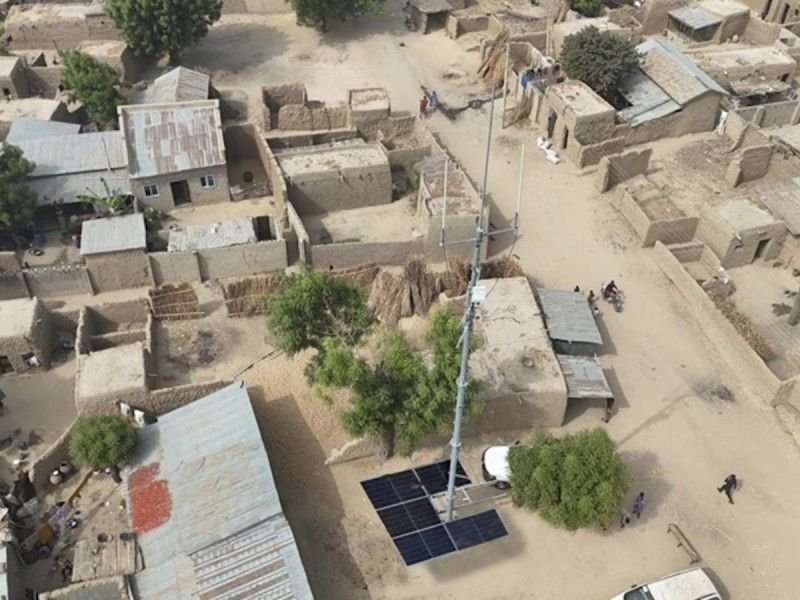
Huawei and MTN Nigeria have completed the world’s first commercial deployment of Huawei’s RuralCow mobile base station, a rapid-deployment, all-in-one solution designed to bring mobile connectivity to remote rural communities. The deployment comes just weeks after the solution’s official launch.
Nigeria was selected as the first commercial market due to its vast rural population of around 105 million people and the significant challenges associated with traditional network rollouts. These include the lack of reliable grid power, absence of fibre infrastructure, dispersed populations, and comparatively low average revenue per user in rural regions.
RuralCow integrates the baseband unit, radio unit, and transmission equipment into a single compact system that supports multiple frequency bands and radio access technologies. Compared to conventional macro base stations, the solution reduces power consumption by approximately 85 percent, cuts equipment volume by about 70 percent, and eliminates the need for heavy machinery during installation.
The system operates without fibre or microwave backhaul and delivers non-line-of-sight transmission over distances of up to 30 kilometres. This allows operators to extend coverage more efficiently while relying on intelligent remote monitoring and maintenance, significantly reducing the need for on-site visits.
Live network data shows that in villages with populations between 1,000 and 3,000, RuralCow shortens the return on investment period from five to ten years down to approximately three years. This improves the commercial viability of extending coverage into underserved areas.
In Nigeria’s grassland regions, all RuralCow equipment can be transported by motorcycle and installed within a single day. Huawei also highlighted the solution’s applicability in challenging environments such as Brazil’s rainforests, where its non-line-of-sight capability enables faster deployment at lower site heights, helping rural communities connect to global agricultural markets.
Huawei confirmed that RuralCow will now be rolled out across more villages in Africa, Asia Pacific, and Latin America as part of broader rural connectivity expansion plans