








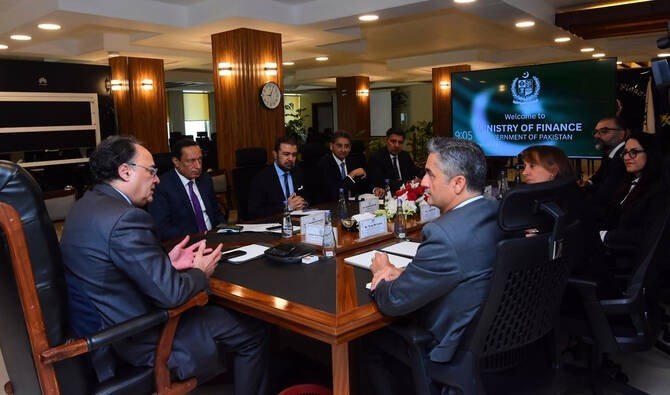
Pakistan’s finance minister has met senior executives of global payments giant Visa to advance discussions on digital payments, financial inclusion, and broader economic reforms, as the government accelerates its digitization agenda.
The meeting comes as Pakistan seeks to modernize its largely cash-based economy, widen access to formal financial services, and improve transparency in government transactions under an International Monetary Fund-supported reform program. Policymakers view digital payments as a key lever to expand financial inclusion, improve tax documentation, and support small and nano businesses.
The government of Prime Minister Shehbaz Sharif has intensified efforts to digitize public finances and payment systems as part of wider stabilization and reform measures, including restructuring state-owned enterprises, improving energy-sector governance, and accelerating privatization. Officials say digitalization is being driven at the highest political level to ensure coordination across government institutions.
“Both sides exchanged views on the acceleration of Pakistan’s digital transformation, with particular emphasis on digital infrastructure, payment systems, and the digitization of government payments,” the Associated Press of Pakistan reported, citing the finance ministry.
Finance Minister Muhammad Aurangzeb briefed the Visa delegation on progress under the IMF-supported program, recent validations from international credit rating agencies, and the government’s broader reform agenda spanning taxation, public debt management, energy reforms, and privatization.
Discussions also covered strengthening Pakistan’s digital payments ecosystem, including reforms to payment rails under the State Bank of Pakistan, the establishment of the Pakistan Digital Authority, and initiatives to digitize government receipts and expenditures to improve efficiency and service delivery.
Visa executives shared insights from their engagement with banks, fintech firms, and other stakeholders, noting rising confidence linked to macroeconomic stabilization and growing interest in expanding digital payments and financial inclusion. Talks included cash displacement, fraud prevention, support for small businesses, QR-based payments, and expanding acceptance infrastructure beyond major cities.
The meeting also touched on emerging areas such as remittances, e-commerce, tourism-related spending by overseas Pakistanis, and the potential use of new technologies, including blockchain and digital assets, within a regulated framework.