






February 25, 2026
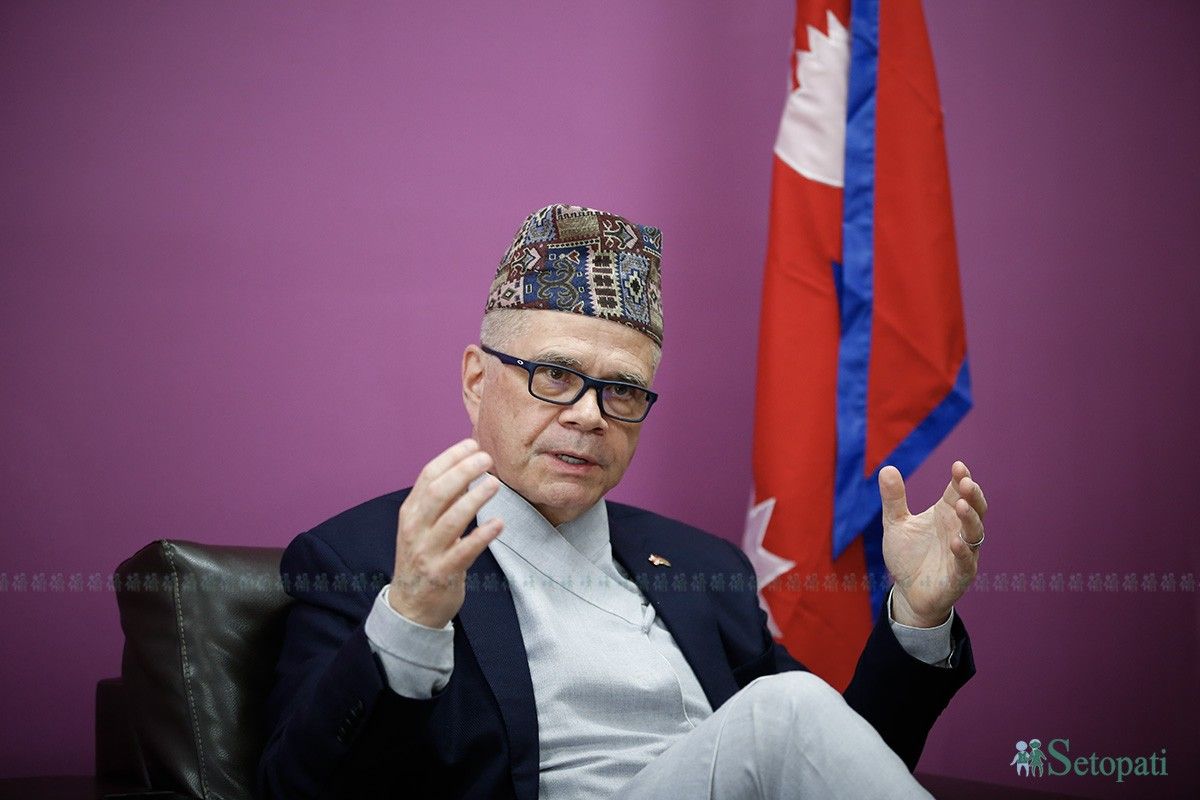
Ncell CEO Michael Foley has stated that policy clarity and license continuity are critical to unlocking long-term foreign direct investment (FDI) and sustaining Nepal’s digital future. Appointed in November, Foley says uncertainty surrounding Ncell’s license renewal beyond 2029 is directly affecting the company’s ability to commit to major capital expenditure.
According to Foley, large-scale investments in telecom infrastructure, including 5G deployment, gigabit-speed connectivity, and data centers, require regulatory certainty. Without clarity on license extension after 25 years of operation, even routine expansion decisions are becoming increasingly difficult.
He noted that telecom operators must reinvest approximately 20% of annual revenue simply to maintain technological relevance, with higher spending required during generational shifts such as 4G to 5G. In the absence of long-term visibility, committing $60–70 million in new investment becomes commercially unviable.
Foley also highlighted broader industry challenges, including comparatively weaker network quality and limited competition in Nepal’s telecom market, which currently functions as a duopoly. He emphasized that improved regulatory stability would allow Ncell to accelerate investment, enhance service quality, and strengthen Nepal’s digital competitiveness regionally.
Addressing ownership concerns, Foley stated that Ncell is prepared to transition into a majority Nepali-owned public company through structural changes and a potential IPO. However, regulatory constraints introduced during the last license renewal have restricted ownership restructuring, limiting the company’s ability to secure long-term continuity under the Telecommunications Act 1997.
Foley expressed confidence that dialogue with stakeholders will ultimately lead to resolution, stressing that ensuring Ncell’s continuity is essential not only for the company but also for sustained FDI, digital infrastructure development, and Nepal’s broader economic resilience.