









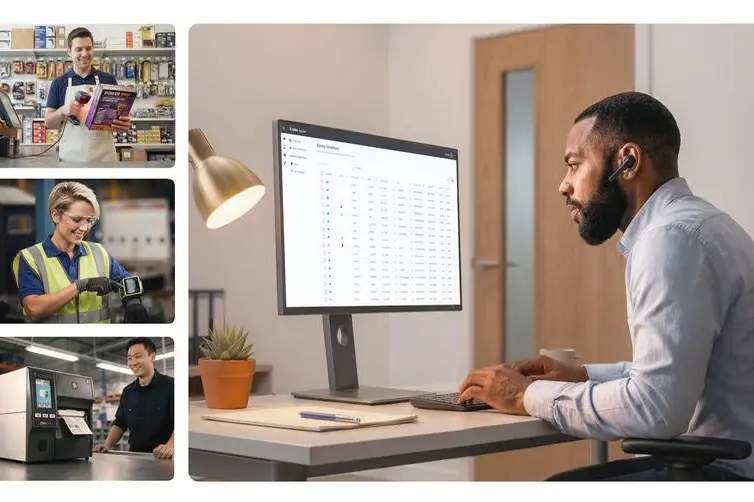
Zebra Technologies has introduced a new version of its DNA software platform designed to help organizations improve the productivity, efficiency, and performance of frontline workers through enhanced device management, automation, and intelligent operational tools.
The platform aims to support employees working in sectors such as retail, logistics, transportation, manufacturing, healthcare, and field services, where mobile devices and real-time access to information have become essential components of daily operations. As businesses continue to digitize workflows, organizations are increasingly investing in technologies that enable frontline employees to work more effectively while improving operational visibility and decision-making.
The latest DNA platform integrates software capabilities that simplify device deployment, management, security, and user experience. By streamlining operational processes and reducing administrative complexity, organizations can improve workforce productivity while ensuring that employees have reliable access to the tools and information required to perform their roles.
Frontline workers represent a critical segment of the global workforce, yet digital transformation initiatives have historically focused more heavily on office-based employees. This is changing as organizations recognize the value of equipping field teams, warehouse staff, healthcare workers, retail associates, and logistics personnel with digital tools that improve efficiency and customer service.
The platform arrives at a time when industries are increasingly adopting mobile computing, automation, artificial intelligence, and data analytics to optimize operations. Real-time information access, digital workflows, and connected devices are becoming central to modern operational environments, enabling organizations to respond more quickly to changing conditions and customer demands.
For sectors such as logistics and supply chain management, workforce enablement technologies can improve inventory visibility, order fulfillment accuracy, and operational responsiveness. In healthcare environments, digital tools can help streamline clinical workflows and improve access to critical information. Retail organizations are similarly leveraging technology to enhance customer engagement and operational efficiency.
The launch also reflects broader trends in enterprise mobility. Organizations are seeking integrated platforms that simplify technology management while providing employees with secure and intuitive experiences. As the number of connected devices continues to grow, software platforms that centralize management and support operational intelligence are becoming increasingly important.
Artificial intelligence is also beginning to play a larger role in workforce technologies. Intelligent automation, predictive analytics, and context-aware applications are helping organizations optimize workflows and improve employee productivity while reducing operational friction.
As digital transformation extends deeper into operational environments, technologies designed specifically for frontline workers are becoming an increasingly important component of enterprise modernization strategies.
Editor’s Note
The introduction of Zebra’s DNA platform highlights an often-overlooked aspect of digital transformation: the modernization of frontline work.
Much of the attention surrounding digital transformation focuses on cloud computing, artificial intelligence, cybersecurity, and enterprise software. However, many organizations derive significant value by digitizing operational workflows and empowering employees who interact directly with customers, products, infrastructure, and services.
Frontline workers form the operational backbone of industries such as retail, logistics, manufacturing, transportation, and healthcare. Improving their access to information and digital tools can have a direct impact on productivity, customer experience, operational efficiency, and business performance.
The launch also reflects a broader shift toward connected workforce strategies. Organizations are increasingly viewing employees as participants in digital ecosystems where data, devices, applications, and workflows are interconnected. The ability to manage and optimize these environments has become a competitive differentiator.
From a technology perspective, workforce enablement is emerging as an important growth area for artificial intelligence and automation. AI-powered recommendations, workflow automation, predictive maintenance, and operational analytics can help employees make better decisions while reducing manual effort and administrative burdens.
For the Middle East and Africa, where sectors such as logistics, retail, healthcare, and industrial operations are undergoing significant modernization, technologies that support frontline productivity can play an important role in improving competitiveness and service delivery. As governments and businesses invest in digital transformation, workforce-focused solutions are likely to become increasingly important.
The broader lesson is that successful digital transformation is not solely about deploying advanced technologies. It is about ensuring that the people responsible for executing daily operations are equipped with the tools, information, and capabilities needed to operate effectively in increasingly digital environments. Organizations that prioritize workforce enablement will be better positioned to translate technology investments into measurable business outcomes.