









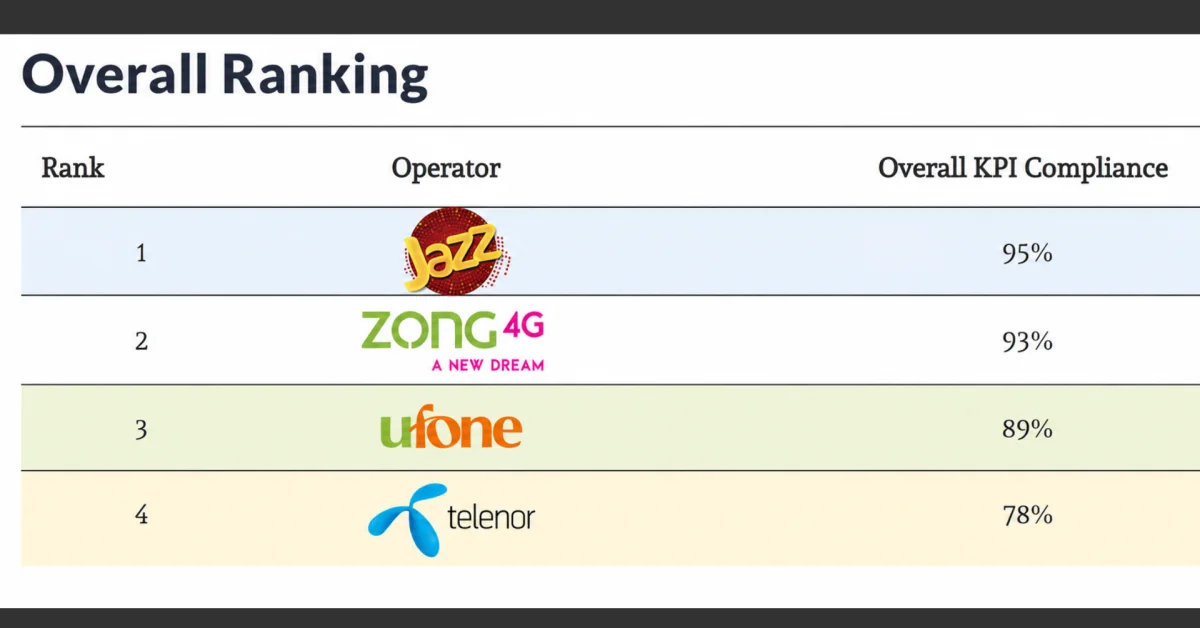
Jazz has emerged as Pakistan’s highest-ranked mobile network operator in the latest 2026 network performance assessments, reinforcing its position in one of South Asia’s most competitive telecommunications markets and highlighting the increasing importance of network quality as demand for digital services continues to grow.
The recognition reflects the operator’s ongoing investments in network infrastructure, capacity expansion, and service quality improvements as consumers and businesses become increasingly reliant on mobile connectivity for everyday digital activities.
Pakistan’s telecommunications sector has undergone significant transformation over the past decade, with mobile broadband becoming the primary gateway to the internet for millions of users. As smartphone adoption continues to rise and digital services expand, network performance has become a critical differentiator among operators competing for subscribers and enterprise customers.
The ranking comes at a time when mobile networks are carrying growing volumes of data driven by video streaming, digital payments, e-commerce, online education, gaming, cloud services, and social media usage. Operators are under increasing pressure to deliver reliable coverage, faster speeds, and improved user experiences while managing rapidly expanding traffic demands.
Jazz, Pakistan’s largest mobile operator by subscriber base, has invested heavily in network modernization and digital infrastructure to support evolving customer requirements. The company has also expanded its focus beyond traditional telecommunications services into digital financial services, enterprise solutions, cloud offerings, and digital platforms.
Network quality has become increasingly important as Pakistan advances its digital transformation agenda. Reliable connectivity serves as the foundation for digital government services, fintech adoption, online commerce, remote work, and broader economic digitization initiatives. Improvements in network performance therefore have implications that extend well beyond the telecommunications sector.
The achievement also reflects the broader competitiveness of Pakistan’s mobile market, where operators continue to invest in coverage expansion and technology upgrades despite pricing pressures and rising infrastructure costs. Maintaining high network standards has become essential for supporting future growth opportunities and meeting customer expectations.
Industry analysts increasingly view network performance as a key indicator of digital readiness. Strong mobile infrastructure enables greater adoption of digital services and supports innovation across multiple sectors of the economy. As a result, investments in network quality are becoming closely linked to national digital competitiveness objectives.
The ranking arrives as operators continue preparing for future technology developments, including expanded broadband services, enterprise connectivity solutions, and eventual next-generation network deployments. Building robust network foundations today is expected to play an important role in supporting future digital innovation.
As demand for high-quality mobile connectivity continues to increase, network performance rankings are likely to remain a closely watched measure of operator competitiveness and market leadership.
Editor’s Note
Jazz’s position at the top of Pakistan’s mobile network rankings is significant because it highlights how the telecommunications industry is evolving from a connectivity business into a digital infrastructure business.
In the early stages of mobile market development, subscriber growth was the primary measure of success. Today, network quality is increasingly becoming the defining metric. Consumers and businesses depend on mobile networks not only for communication but also for banking, commerce, entertainment, education, and access to public services.
For Pakistan, the quality of mobile infrastructure has broader economic implications. Mobile broadband serves as the primary internet access channel for a large portion of the population, meaning network performance directly influences digital inclusion, financial participation, and access to online opportunities.
The ranking also reflects the growing strategic importance of infrastructure investment. As digital services become more data-intensive, operators must continuously upgrade networks to support higher traffic volumes and more demanding applications. This requires sustained investment in spectrum, towers, fiber backhaul, cloud platforms, and network optimization technologies.
Competition based on network quality can ultimately benefit the wider digital ecosystem. Operators seeking to improve performance often accelerate infrastructure investments, driving broader improvements in connectivity standards and user experiences. This creates a stronger foundation for digital innovation and economic growth.
The development is also relevant in the context of Pakistan’s future technology ambitions. Emerging technologies such as artificial intelligence, IoT, cloud services, and advanced enterprise applications will depend on reliable and high-capacity connectivity. Operators that invest in network excellence today will be better positioned to support these future opportunities.
The broader implication is that telecommunications operators are becoming critical enablers of national digital transformation. Their networks form the foundation upon which digital economies are built, making infrastructure quality an increasingly important measure of both corporate competitiveness and national digital readiness.