








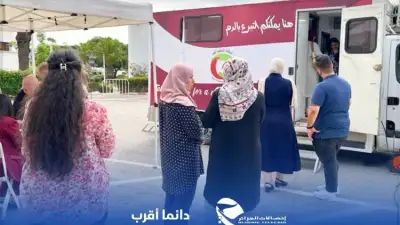
Algérie Télécom has launched a nationwide blood donation campaign across multiple wilayas, reinforcing the operator’s commitment to community engagement and social responsibility while supporting efforts to strengthen Algeria’s national blood reserves.
The initiative brings together employees, healthcare authorities, and local communities in a coordinated campaign aimed at encouraging voluntary blood donation and helping ensure adequate blood supplies for hospitals and healthcare facilities across the country.
The campaign forms part of Algérie Télécom’s broader corporate social responsibility (CSR) programme, which focuses on supporting social development initiatives alongside the company’s role as Algeria’s leading telecommunications provider.
Blood donation campaigns remain an important public health initiative, particularly during periods when healthcare systems seek to maintain sufficient reserves to meet routine and emergency medical needs. Voluntary donations play a critical role in supporting surgeries, accident response, chronic disease treatments, and other healthcare services that depend on reliable blood supplies.
By mobilizing employees across multiple regions, Algérie Télécom is leveraging its national presence to contribute to a public health objective that directly benefits communities throughout the country. Large organizations increasingly play an important role in supporting healthcare initiatives by providing logistical support, awareness campaigns, and volunteer participation.
The initiative also reflects a growing trend among telecommunications operators to expand their societal impact beyond connectivity services. Across the Middle East and Africa, telecom companies are increasingly involved in education, healthcare, environmental sustainability, digital inclusion, and community development programmes.
As one of Algeria’s largest state-owned enterprises, Algérie Télécom maintains an extensive presence across the country, enabling it to coordinate nationwide initiatives and engage employees in community-focused activities. Such programmes help strengthen ties between corporations and local communities while supporting broader national development objectives.
Corporate volunteerism has become an increasingly important component of CSR strategies worldwide. Organizations are encouraging employee participation in social initiatives as part of efforts to create positive social impact while fostering a culture of civic engagement and responsibility.
The blood donation campaign also aligns with wider healthcare support efforts in Algeria, where public institutions, private organizations, and civil society groups frequently collaborate to raise awareness about the importance of voluntary blood donation.
As demand for healthcare services continues to grow, partnerships between public health authorities and major organizations are expected to remain an important mechanism for supporting critical healthcare resources and community wellbeing.
Editor’s Note
While telecommunications companies are typically associated with connectivity, networks, and digital transformation, initiatives such as Algérie Télécom’s blood donation campaign highlight another important dimension of their role in society.
Telecom operators are among the most widely distributed organizations in many countries, with extensive infrastructure, large workforces, and deep community reach. These characteristics enable them to contribute to national priorities beyond their core business operations.
Corporate social responsibility programmes are increasingly evolving from symbolic activities into structured initiatives that address real social and economic needs. Health, education, digital inclusion, and sustainability have emerged as key areas where large enterprises can generate measurable community impact.
For Algérie Télécom, the campaign reinforces the idea that digital infrastructure providers are also important social institutions. Their influence extends beyond technology deployment to include contributions to national development and community wellbeing.
The initiative is also a reminder that successful digital economies depend not only on technology and connectivity, but also on healthy and resilient communities. Investments in digital transformation and social development are often complementary rather than separate objectives.
As telecommunications operators continue expanding their role within national economies, community-focused programmes are likely to remain an important part of how companies demonstrate social value and strengthen engagement with the populations they serve.