








Artificial intelligence-assisted “vibe coding” is gaining traction among Nepal’s developers, reflecting a broader shift in how software is being designed, built and tested as generative AI becomes an integral part of the software development lifecycle.
The emerging approach allows developers to describe application requirements in natural language while AI tools generate code, accelerating development workflows and lowering barriers to software creation. The trend mirrors global adoption of AI coding assistants that are reshaping programming practices for both experienced engineers and newcomers.
As AI becomes more deeply embedded in software engineering, countries such as Nepal are beginning to see changes in how developers learn, prototype and deliver digital products.
AI Changes the Way Software Is Built
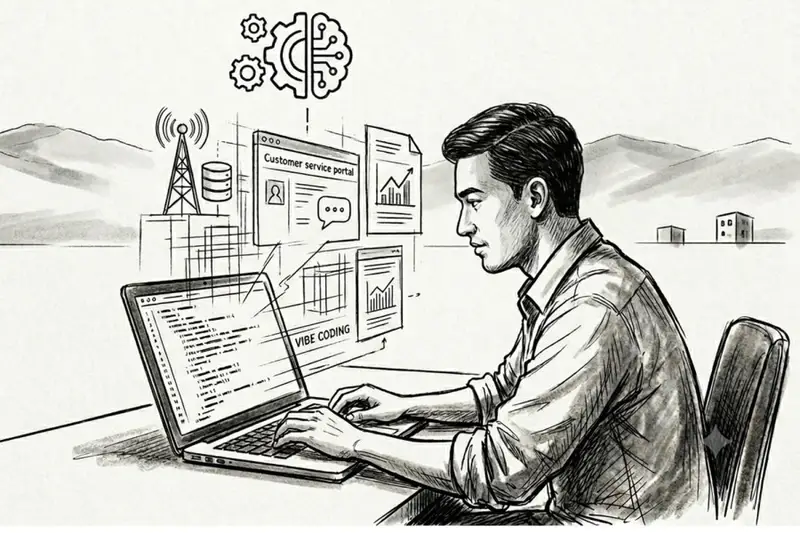
“Vibe coding” refers to a development approach where programmers rely heavily on generative AI tools to translate ideas, prompts and functional requirements into executable code.
Rather than writing every line manually, developers collaborate with AI assistants to generate, refine and debug applications, allowing them to focus more on product design, business logic and user experience.
The approach is particularly attractive for rapid prototyping, startup development and educational environments, where faster iteration can reduce development time and lower technical barriers.
While AI significantly improves productivity, developers still play a critical role in validating outputs, ensuring security and maintaining software quality.
Lowering Barriers to Digital Innovation
The growing availability of AI coding assistants is enabling more individuals to participate in software development, even with limited programming experience.
For emerging technology ecosystems such as Nepal’s, these tools could help accelerate startup creation, encourage experimentation and support digital entrepreneurship.
Small businesses and independent developers may also benefit from reduced development costs and faster product delivery, enabling them to compete more effectively in digital markets.
Industry observers note that AI-assisted development is democratizing software creation while creating new opportunities for innovation across sectors.
Skills Are Evolving, Not Disappearing
The rise of AI-generated code is changing the skill sets required of software professionals.
Rather than replacing developers, AI is shifting demand toward higher-value capabilities such as system architecture, prompt engineering, application design, cybersecurity, testing and code review.
Educational institutions and training providers are increasingly adapting curricula to incorporate AI-assisted development tools alongside traditional programming fundamentals.
For countries investing in digital talent, understanding how to work effectively with AI is becoming an increasingly valuable competency.
Nepal’s Digital Ecosystem Continues to Mature
The growing adoption of AI coding tools reflects Nepal’s expanding engagement with emerging technologies.
The country has seen increasing interest in software development, digital entrepreneurship and startup innovation, supported by improvements in connectivity and growing access to global technology platforms.
As AI tools become more widely available, Nepalese developers are increasingly able to participate in global software ecosystems while building products for domestic and international markets.
The trend also aligns with wider efforts to strengthen digital skills and support knowledge-based economic growth.
Why This Matters
Generative AI is transforming software development by making coding faster, more accessible and more collaborative. AI-assisted programming has the potential to improve developer productivity while expanding access to software creation.
For Nepal, growing adoption of AI coding tools can strengthen the country’s technology ecosystem, support startup innovation and enhance digital skills development. For businesses, it demonstrates how AI is moving from experimental use cases to practical applications that improve productivity and accelerate digital transformation.
Editor’s Note
The emergence of AI-assisted coding marks one of the most significant shifts in software engineering since the rise of open-source development. The value of developers is increasingly moving beyond writing code toward designing systems, solving business problems and ensuring that AI-generated software is secure, reliable and scalable. Nepal’s embrace of “vibe coding” illustrates how AI is democratizing software development, allowing smaller technology ecosystems to innovate more rapidly. As generative AI continues to mature, competitive advantage will depend less on the ability to write code manually and more on the ability to effectively collaborate with intelligent development tools.