







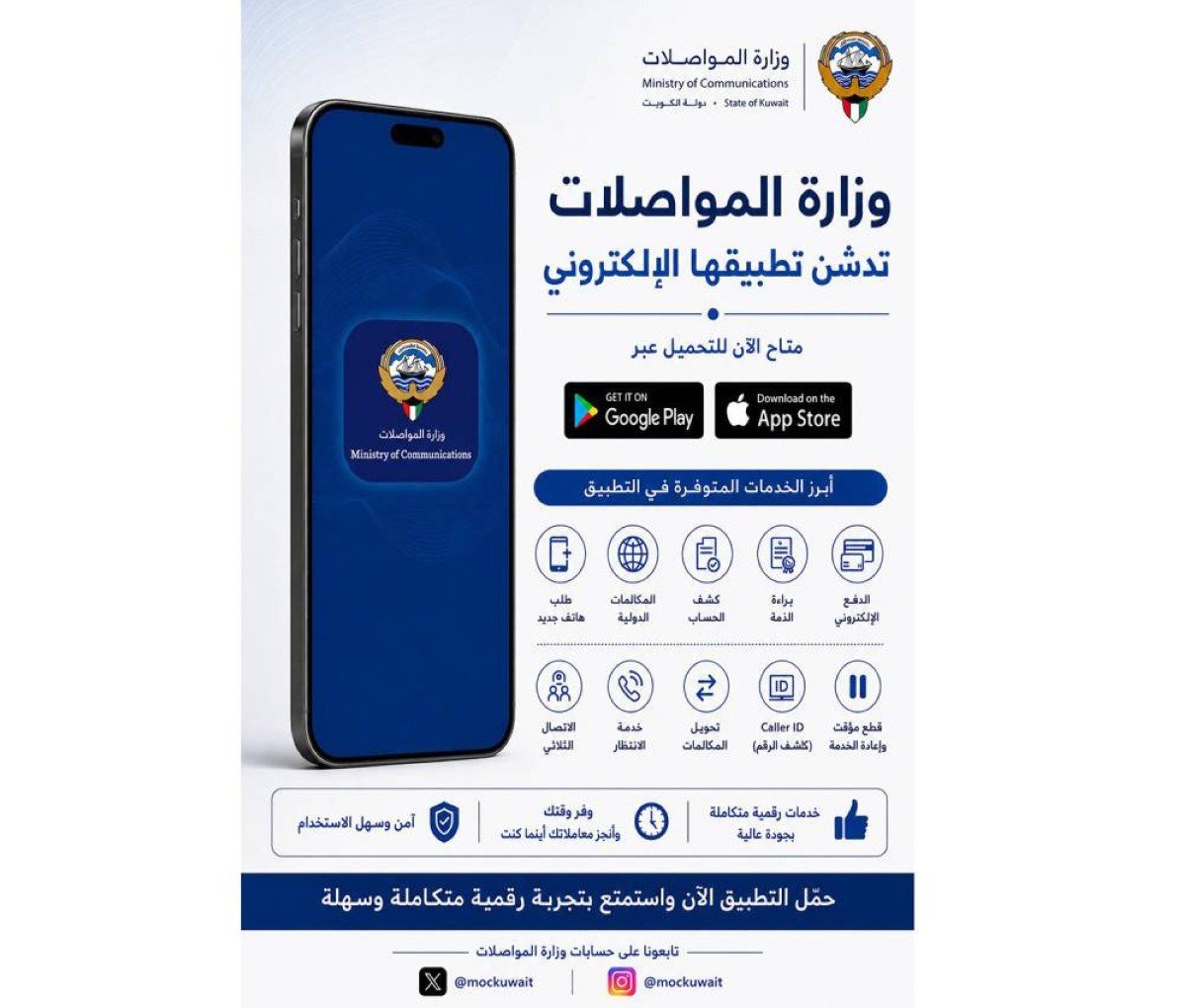
Kuwait’s Ministry of Communications (MoC) has launched a new mobile application aimed at improving access to government services, enabling citizens and residents to interact with the ministry through a more convenient, secure and digitally accessible platform.
The new application forms part of Kuwait’s broader digital government transformation, providing users with streamlined access to communications-related services through their smartphones. As governments across the Gulf continue to digitise public services, mobile applications are becoming an essential channel for delivering faster, more efficient and user-centric government experiences.
The initiative reflects Kuwait’s commitment to modernising public service delivery while supporting the country’s long-term digital transformation agenda.
Mobile Applications Are Transforming Government Service Delivery
Governments are increasingly adopting mobile-first strategies to make public services more accessible and convenient.
By enabling users to complete transactions, submit requests, receive notifications and access information through a single application, government agencies can reduce administrative burdens while improving service efficiency. Mobile platforms also minimise the need for in-person visits, helping create a more seamless digital experience for citizens and businesses.
As smartphone adoption continues to grow, mobile applications are becoming a cornerstone of digital government strategies worldwide.
Digital Government Improves Citizen Experience
User-friendly digital platforms are reshaping how people interact with public institutions.
Modern government applications offer secure authentication, real-time service updates and simplified digital workflows that improve accessibility and transparency. These capabilities enhance citizen satisfaction while enabling government agencies to respond more efficiently to public needs.
The launch of the MoC application supports Kuwait’s ongoing efforts to build more responsive and digitally connected public services.
Digital Infrastructure Supports National Transformation
The success of digital government initiatives depends on resilient telecommunications networks, secure cloud infrastructure and robust cybersecurity frameworks.
Reliable digital infrastructure enables government agencies to deliver services at scale while protecting sensitive user information. Investments in broadband connectivity, cloud platforms and secure digital identity systems are therefore becoming essential components of national digital transformation programmes.
Kuwait’s continued investment in digital public services complements wider regional efforts to build connected, technology-enabled economies.
Public Sector Innovation Drives the Digital Economy
Digital government initiatives often act as catalysts for broader digital adoption across society.
By encouraging citizens and businesses to engage with online services, governments accelerate the use of digital payments, electronic documentation and secure online transactions. These developments also stimulate demand for cloud services, cybersecurity solutions and enterprise technologies that support public sector modernisation.
The Ministry of Communications’ new application contributes to Kuwait’s wider vision of creating a more efficient, digitally empowered public sector.
Why This Matters
The launch of the Ministry of Communications’ mobile application demonstrates Kuwait’s continued commitment to expanding digital government services and improving citizen engagement through technology. Mobile-first public services increase convenience, reduce administrative complexity and strengthen access to essential government functions.
For Kuwait, the initiative supports broader national objectives around digital transformation, public sector innovation and the development of a modern digital economy built on accessible and secure government services.
Editor’s Note
Across the Gulf, digital government is increasingly being delivered through mobile platforms rather than traditional web portals. Citizens now expect public services to be as intuitive and accessible as commercial digital applications, driving governments to adopt mobile-first service models. Kuwait’s latest initiative reflects this evolution, highlighting how smartphones are becoming the primary gateway to public services and reinforcing the role of digital government in building more connected, efficient and citizen-centric societies.