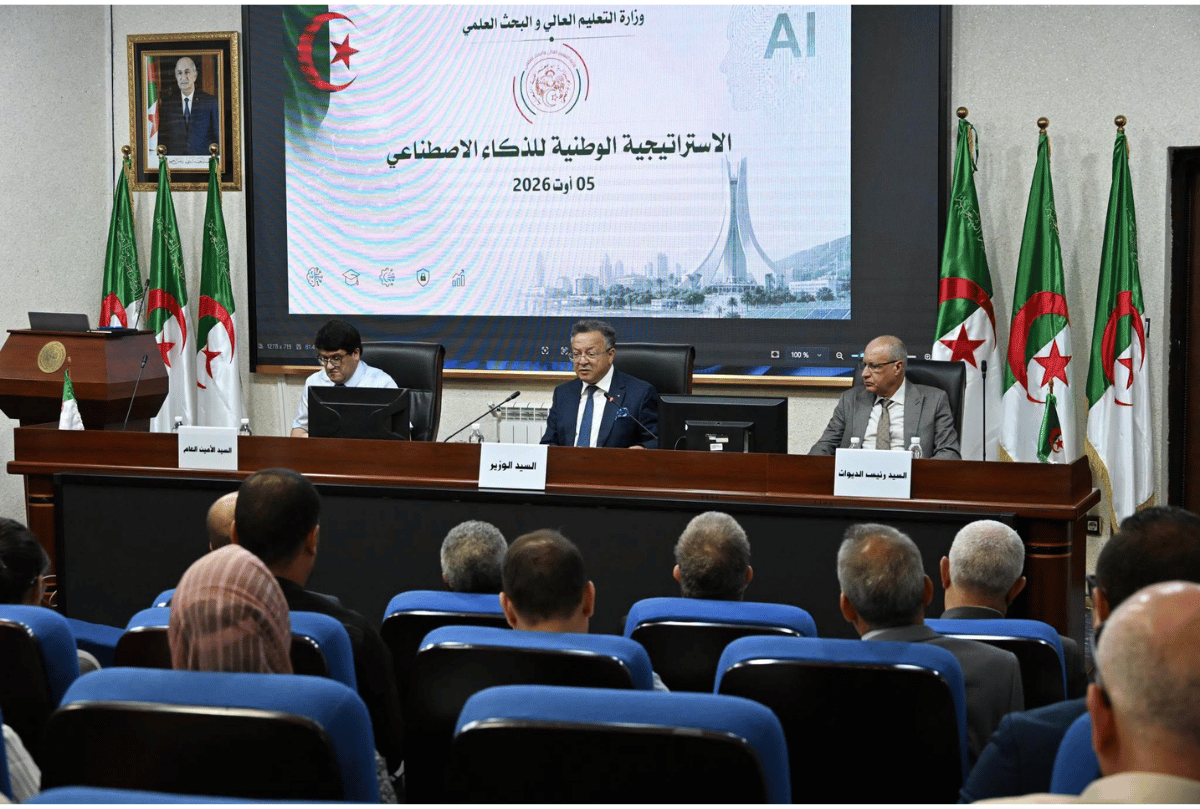





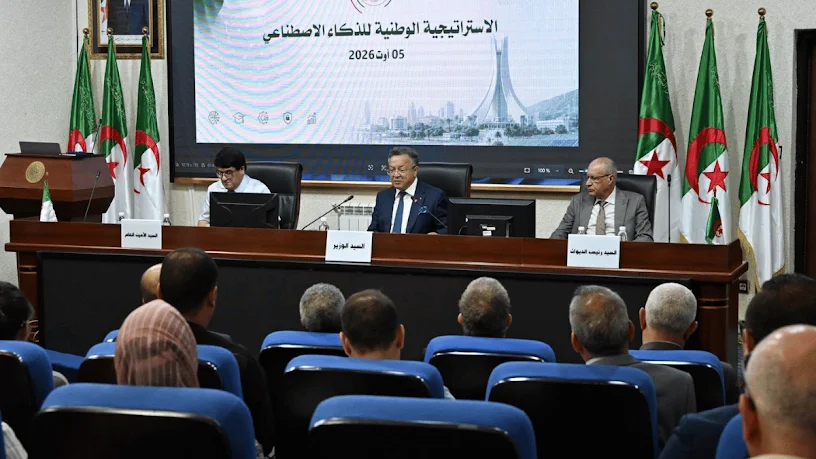
Algeria has agreed a joint inter-ministerial roadmap to deploy artificial intelligence across public services, with a focus on sovereign open-source models, high-performance computing, national data storage and stronger safeguards for government applications.
The roadmap marks a shift from policy development toward implementation as Algeria seeks to reduce dependence on foreign technology ecosystems and strengthen control over the infrastructure, data and skills underpinning its AI ambitions.
Kamel Baddari, minister of higher education and scientific research, said the plan is intended to support the country’s transition toward a knowledge-based economy while reinforcing technological sovereignty.
Sovereign AI models and local compute move to the centre
A key priority is the development of sovereign, open-source AI models that can be used across public-sector applications.
The government also plans to expand access to high-performance computing centres, giving research institutions and technology developers greater capacity to train and deploy AI systems locally.
This infrastructure component is central to Algeria’s approach because sovereign AI requires more than domestic model development. It also depends on access to compute, secure data environments and the ability to operate systems without relying entirely on external platforms.
The roadmap also places emphasis on storing and processing public-sector data within national infrastructure.
Public-sector AI deployment to include stronger safeguards
The government is pairing AI deployment with stronger requirements around the security and reliability of public-sector applications.
Keeping administrative and government data within national data centres forms part of Algeria’s wider effort to retain greater control over sensitive information and reduce exposure to external infrastructure dependencies.
The strategy reflects a broader regional trend in which governments are increasingly looking at sovereign cloud, local compute and domestic data hosting as foundations for digital and AI policy.
Talent pipeline expands around AI engineering
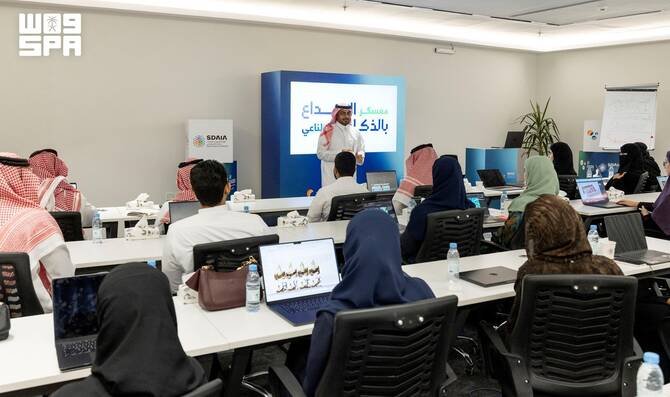
The roadmap also places major emphasis on developing domestic AI skills.
The government is introducing intensive training programmes through universities and research institutions, alongside a dedicated scientific research centre and specialised research units designed to help move academic research into industrial applications.
The initiative builds on an expanding national talent pipeline.
In June, the first cohort of 105 students graduated from Algeria’s National Higher School of Artificial Intelligence. The programme forms part of a broader government target to train 30,000 AI engineers by 2030.
That target underlines the scale of Algeria’s ambition to build a domestic workforce capable of supporting both public-sector deployment and private-sector AI development.
Startup ecosystem linked more closely with research
Algeria has also been strengthening links between universities, research institutions and technology companies.
In April, the country launched its first AI and cybersecurity startup cluster at Sidi Abdellah through cooperation between the higher education, economy and telecommunications ministries.
The cluster is intended to connect research capabilities with emerging technology businesses and improve the pathway from academic development to commercial applications.
This relationship will be important if Algeria wants its sovereign AI strategy to produce technologies that can be deployed beyond government institutions.
Joint committee to monitor implementation
A joint monitoring committee has been established to oversee delivery of the roadmap according to a defined timeline.
The structure is intended to coordinate implementation across ministries and ensure that infrastructure, skills, research and public-sector deployment progress in parallel.
That coordination will be particularly important because Algeria’s AI strategy spans multiple layers, from compute capacity and data governance to talent development and industrial adoption.
Why this matters
Algeria’s roadmap is notable because it treats AI sovereignty as an infrastructure and capability problem, not simply a model-development exercise.
The combination of sovereign open-source models, local high-performance computing, national data storage, research capacity and talent development creates the foundations for a more self-reliant AI ecosystem.
If implemented effectively, the strategy could allow Algeria to deploy more AI across government while retaining greater control over sensitive data, computing resources and technical expertise.
Editor’s note
The most important shift is that Algeria is moving from AI ambition toward execution.
Many national AI strategies focus heavily on skills, regulation or individual use cases. Algeria’s roadmap goes further by linking models, compute, data, research institutions and industrial applications within the same framework.
That is significant because genuine technological sovereignty depends on controlling multiple layers of the AI stack. The challenge now will be whether Algeria can translate that integrated strategy into operational infrastructure, scalable applications and sustained domestic innovation.