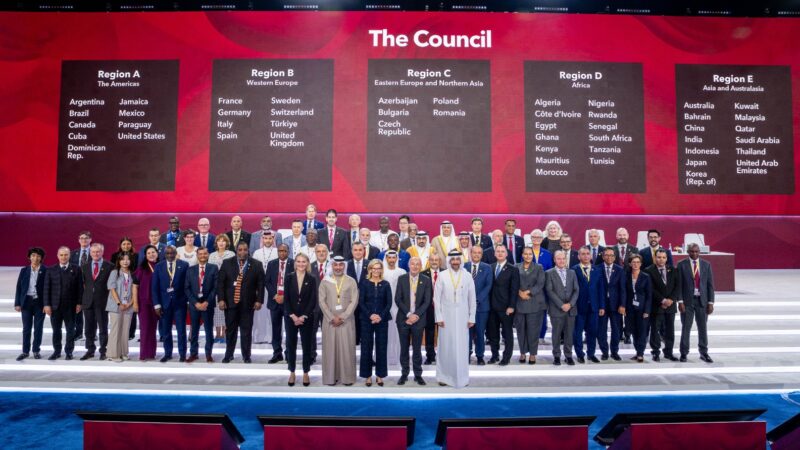




Uganda has lost its seat on the International Telecommunication Union (ITU) Council after 12 years, winning 100 votes in Doha and finishing 14th in a contest for Africa’s 13 seats, which Kenya topped with 136.
The 48-member Council runs the UN telecoms agency between its four-yearly conferences, overseeing its budget and plans. For Uganda’s regulator, losing the seat means one fewer direct voice on spectrum, satellite and standards work that shapes African networks from 2027 to 2030.
The Africa results in detail
According to the official PP-26 election results, 19 African countries stood for 13 seats. Kenya led with 136 votes, followed by Côte d’Ivoire (135), Senegal (134), Tanzania (131), Egypt (128), Rwanda (127), Algeria (126) and Morocco (125).
Ghana and Nigeria took 121 votes each. Tunisia (115), Mauritius (114) and South Africa (112) won the last three seats.
Uganda’s 100 votes left it 12 short of South Africa. The Democratic Republic of the Congo (89), Cabo Verde (81), Libya (80), Mali (64) and Gabon (56) also missed out.
The ITU’s 2022 results show that 12 of this year’s 13 winners already held Africa’s seats for 2023 to 2026. The one change is that Côte d’Ivoire has replaced Uganda.
What Uganda had at stake
The Uganda Communications Commission’s candidature page says Uganda served on the Council in 2014 to 2018, 2018 to 2022 and 2022 to 2026. It campaigned on affordable connectivity for landlocked and least developed countries, digital inclusion, cybersecurity and regional cooperation through the East African Communications Organisation.
The commission also said Uganda’s Partner2Connect advocacy had mobilised “over USD 250 million in rural connectivity investments”.
As reported by PC Tech Magazine, Uganda’s ICT minister, Justine Kasule Lumumba, made the case for re-election in the country’s policy statement at the conference.
Context: East Africa’s other results
Uganda’s neighbours did well. Kenya, a Council member since 1982, topped the regional vote, as reported by KBC. The Rio Times noted that Kenya won 146 votes in 2022, so its tally fell even as it finished first.
Tanzania and Rwanda were also re-elected, giving East Africa three of the region’s 13 seats. Kenya’s ICT cabinet secretary, William Kabogo, said the country would use its term to push for affordable connectivity and a stronger African voice in global ICT policy, according to KBC.
In the Radio Regulations Board vote, which decides on interference and frequency disputes, Africa’s three seats went to candidates from Ghana (173 votes), Morocco (130) and Botswana (126), the ITU results show. Egypt’s candidate, with 113, was not elected.
Elsewhere in our regions, Qatar topped the Asia and Australasia vote with 165, ahead of Saudi Arabia (155), India (151), the UAE (149) and Kuwait (147). Bahrain also won a seat. Pakistan, with 115, and Iraq, with 106, were not elected.
What happens next
The new Council serves from 2027 to 2030. The Plenipotentiary Conference continues in Doha until 27 November.