
ODP and Zain partner for cybersecurity in Oman – and beyond
Oman Data Park (ODP) has entered into a strategic partnership with ZainTECH, the integrated digital solutions arm of Zain Group,…

Technology news and insights in the Middle East, South Asia, and Africa
Technology News and insights in the Middle East, South Asia, and Africa










Oman Data Park (ODP) has entered into a strategic partnership with ZainTECH, the integrated digital solutions arm of Zain Group,…

Nepal has launched the Global Accounting Initiative to turn professional services into a major export sector. The programme targets 50,000 jobs annually, NRs80 billion in service exports, and a full ecosystem of digital infrastructure, skills training, and regulatory reform to position Nepali accountants in global markets.

BTCL has upgraded all broadband packages with up to five times higher speeds at unchanged prices, responding to market pressure after Starlink’s entry. The move aligns public-sector services with private ISPs, improves affordability, and expands access to high-speed internet for households, students, and institutions nationwide.

Qatar Airways has become the first airline to deploy Starlink Wi-Fi on Boeing 787-8 Dreamliners, expanding its fleet-wide rollout of free, high-speed inflight internet. With nearly 120 widebody aircraft connected, the airline now accounts for almost half of global Starlink airline users.

Qatar’s communications regulator has opened a consultation on updating radio spectrum fees, retaining its formula-based pricing while introducing refinements for terrestrial, satellite, and emerging direct-to-device services. The proposal aims to align fees with global best practices and support efficient spectrum use.

Nepal’s accounting body has launched the GAIN project to promote the export of accounting and audit services, targeting 50,000 jobs annually and $555 million in service exports. The initiative focuses on digital infrastructure, skills development, and regulatory reforms to boost global competitiveness.

ZIMSAT-3: Zimbabwe Bets on Satellite Connectivity
Zimbabwe is placing strategic emphasis on satellite technology to expand national connectivity through its third national satellite, ZIMSAT-3, as outlined in the National Development Strategy 2 (NDS2) covering the period from 2026 to 2030. The strategy positions ZIMSAT-3 as a key enabler of digital transformation, complementing national broadband expansion and improving access to digital services in both rural and urban areas.
According to the NDS2 document, the satellite will support efforts to strengthen nationwide connectivity and accelerate digital inclusion. The initiative aligns with broader government objectives to achieve universal Internet access across the country. In March 2024, authorities confirmed they were exploring partnerships with multiple satellite service providers to expand coverage and reduce service costs.
Beyond satellite deployment, the strategy outlines plans to expand digital infrastructure across Zimbabwe. These measures include extending high-speed fiber-optic networks to urban, peri-urban, and rural areas, expanding mobile broadband coverage, and deploying solar-powered digital kiosks in off-grid and underserved communities.
The government is also encouraging infrastructure-sharing agreements among telecommunications operators to speed up network rollout and lower the cost of Internet and digital services. This collaborative approach is intended to improve efficiency while maximizing the reach of limited infrastructure investments.
The increased focus on satellite connectivity reflects a broader trend across sub-Saharan Africa, where satellite technology is increasingly viewed as a practical solution for bridging the digital divide. The GSMA has noted that the region faces some of the world’s most challenging geographies for terrestrial networks, including deserts, rainforests, and mountainous terrain, making satellite-based solutions a critical complement to ground-based infrastructure.

Al Khan launches “Flowciti” group for smart cities management
Bahraini entrepreneur Mr. Omar Al Khan has launched the Flowciti Group, a smart cities solutions company operating across the Kingdom of Bahrain, the Kingdom of Saudi Arabia, and the United Arab Emirates. The group aims to transform how people interact with cities by delivering integrated solutions that generate sustainable value for real estate developers, businesses, and public institutions.
Flowciti operates as a unified ecosystem comprising four specialized companies. ParkPoint provides an integrated platform for parking management and urban mobility solutions. Rokket delivers advanced system integration and service automation solutions for smart cities, real estate, and infrastructure sectors. YooPlatform offers a modular digital suite covering access management, payments, entitlements, and user experience. Viritti delivers complementary service solutions that support and extend the overall ecosystem.
Through these entities, Flowciti delivers advanced systems, digital platforms, and managed services spanning parking, mobility, access management, and urban experience design. The group focuses on accelerating service digitalization while enhancing user experience across urban environments.
Commenting on the launch, Mr. Omar Al Khan, Founder and Chief Executive Officer of Flowciti Group, said the initiative is driven by a clear vision to build smarter, more connected cities where technology, operational excellence, and user experience are seamlessly integrated. He added that Flowciti’s solutions are designed to redefine urban experiences, support digital service transformation, and create measurable value for communities, businesses, and institutions across the region.
Flowciti positions itself as a regional smart cities solutions group integrating technology, operations, and user experience within a single ecosystem. Through its subsidiaries, the group aims to contribute to the development of future-ready cities across the Gulf.
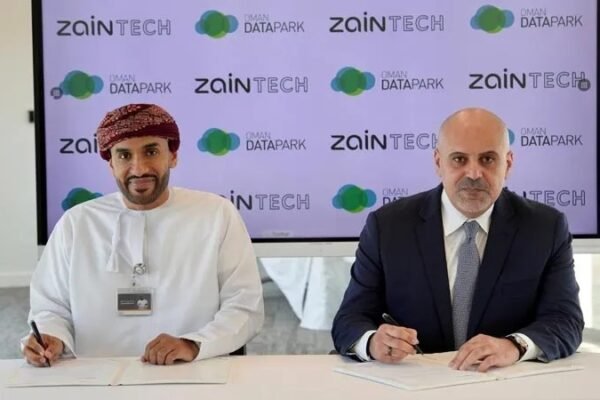
A strategic partnership between Oman Data Park and ZainTECH will enhance cybersecurity services by combining local infrastructure with regional expertise. The collaboration targets compliance, resilience, and secure digital transformation for government and enterprise organizations across Oman and beyond.

Nigeria’s average 4G speeds reached 33Mbps in 2025, reflecting major investments in fibre, network expansion and regulatory reform. While challenges persist, rising broadband penetration and improved quality of experience signal meaningful progress in one of Africa’s largest telecom markets.