








Edotco has rolled out new sustainability-focused initiatives in both Bangladesh and Malaysia, strengthening its commitment to circular economy practices and low-carbon telecom infrastructure across Asia.
In Bangladesh, Edotco has signed a memorandum of understanding with Telephone Shilpa Sangstha (TSS), a state-owned enterprise under the Posts and Telecommunications Division. The partnership aims to enhance local technical capabilities while advancing sustainability in the country’s telecom sector. Under the agreement, the two organizations will jointly establish a Battery Repair and Refurbishment Centre at TSS facilities to extend the lifecycle of lithium-ion batteries, reduce electronic waste, and build domestic expertise in power management systems.
Edotco Bangladesh will provide technical knowledge, diagnostics frameworks, and training, while TSS will contribute facilities, utilities, and manpower to ensure operational excellence. Following a successful feasibility phase, the collaboration is also expected to expand into battery assembly, smart poles, and IoT-based infrastructure solutions.
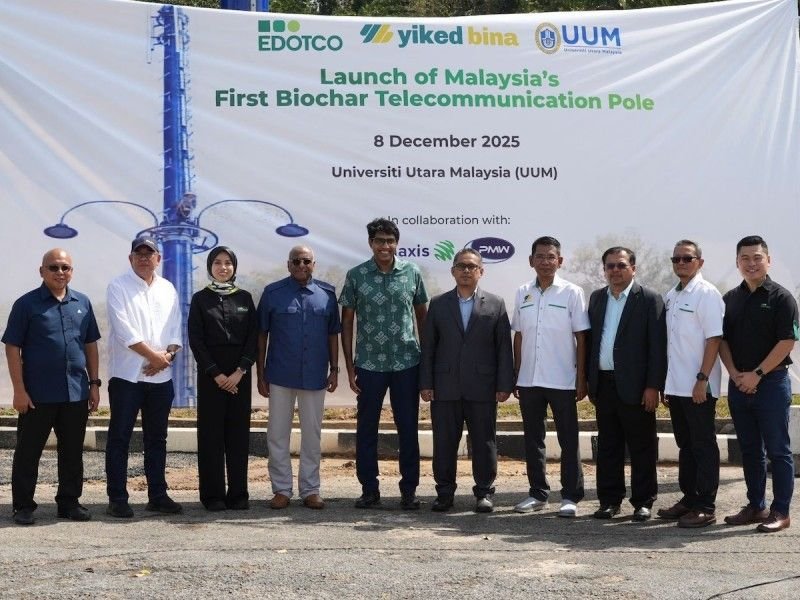
In Malaysia, Edotco has introduced the country’s first biochar-based telecommunications pole as part of its green infrastructure portfolio, with the first deployment at Universiti Utara Malaysia. The biochar pole delivers a 10 to 15 percent reduction in carbon emissions compared to traditional concrete poles, offering a lighter, stronger, and more installation-efficient alternative that also lowers transportation-related environmental impact.
Biochar is produced through the pyrolysis of organic waste such as agricultural residues and wood chips, converting waste into sustainable construction material while lowering greenhouse gas emissions. The development was achieved through collaboration with PMW Industries, Edotco’s manufacturing partner for the biochar-enhanced poles.
Together, these initiatives reflect Edotco’s strategy to build circular, climate-resilient telecom infrastructure and shape a more sustainable future for the regional telecommunications industry