








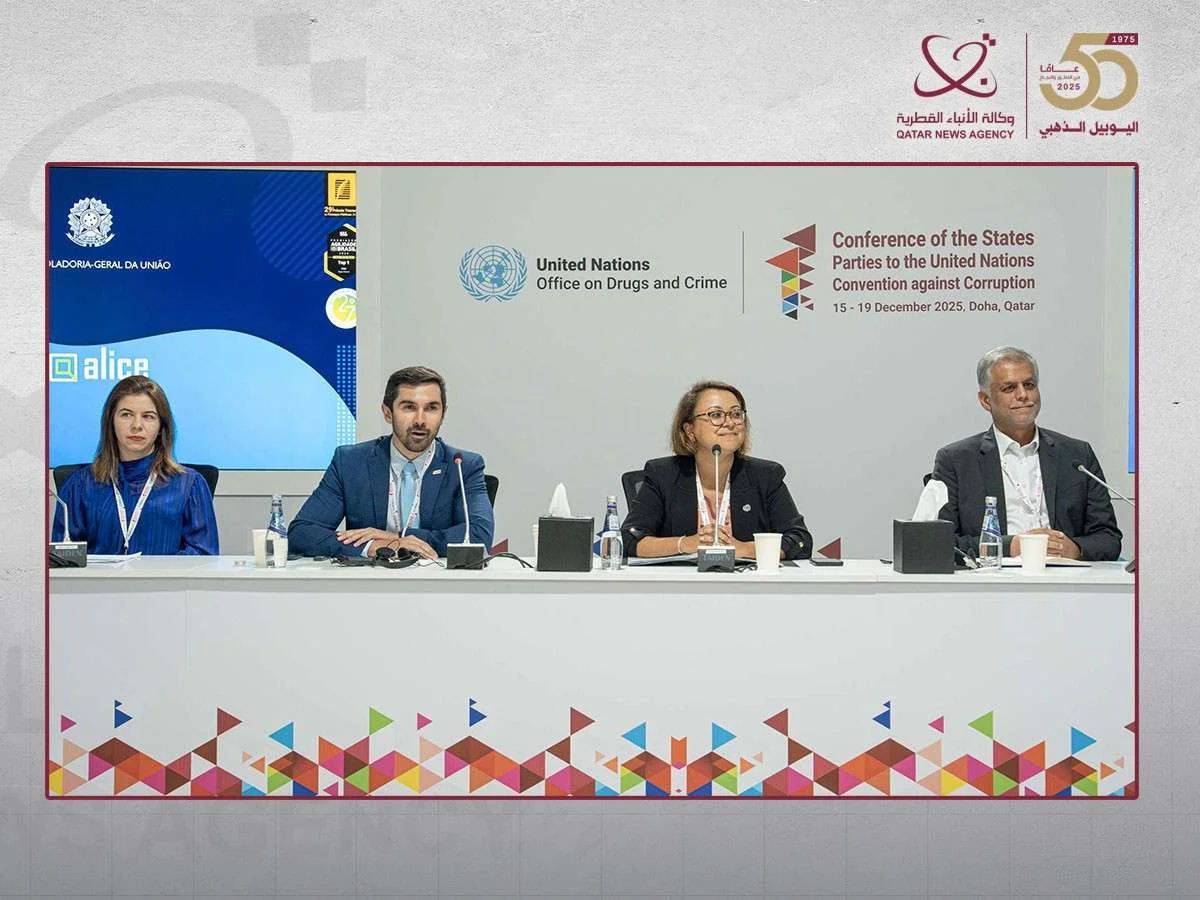
A side session held during the eleventh session of the Conference of the States Parties to the United Nations Convention against Corruption (CoSP11) in Doha examined the growing role of technology in strengthening integrity and transparency in government procurement, one of the sectors most exposed to corruption risks. Participants stressed that corruption in public procurement threatens economic and social development and erodes public trust, making digital transformation a governance necessity rather than an option.
Speakers from Brazil’s Supreme Audit Institution, Siemens Energy, and Petrobras highlighted how artificial intelligence and advanced digital tools can support proactive oversight by reducing risks and detecting irregularities early. The session showcased Brazil’s ALICE system, an AI-powered algorithm that analyzes government tenders and contracts daily by integrating data from more than 25 databases. Petrobras presented its digital supply-chain platform, which manages over 200,000 suppliers by embedding compliance and integrity checks directly into contracting processes. Siemens Energy shared its approach to supplier pre-screening through a unified platform that monitors sanctions, money laundering risks, and compliance throughout the project lifecycle.
Participants emphasized that such technologies are designed to support, not replace, human oversight by automating routine tasks and allowing auditors to focus on high-risk cases. They also noted challenges, including data quality, staff training, algorithm transparency, and the need for clear legal frameworks governing the use of AI. The session concluded that digital transformation and investment in AI and open data are now central pillars of effective anti-corruption strategies and sustainable governance.