








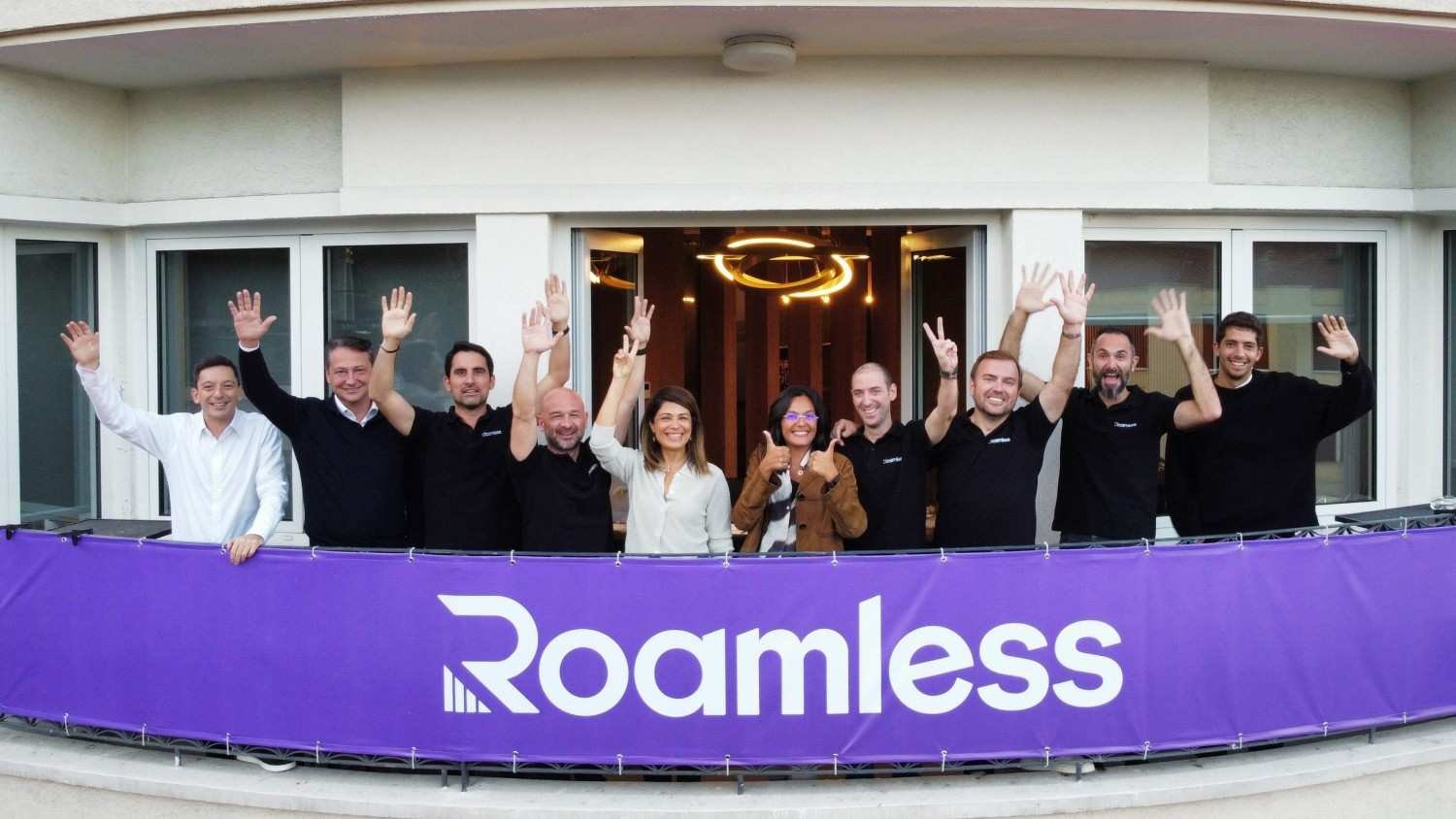
Roamless has raised $12 million in a Series A funding round as it accelerates plans to evolve from a travel eSIM provider into a global mobile connectivity platform. The round was led by Rasmal Ventures, with participation from Shorooq, Finberg, JIMCO, and Revo Capital, bringing the company’s total funding to $18 million following its 2024 seed round.
The investment comes amid rapid growth in demand for flexible international connectivity, driven by frequent travelers and digital-first consumers. While many eSIM startups operate as resellers relying on third-party telecom infrastructure, Roamless is pursuing a different strategy by building and operating its own carrier-grade telecom stack.
Developed by a team with experience at operators such as Vodafone, Deutsche Telekom, and Telia Sonera, Roamless’s cloud-based infrastructure allows users to move across borders without switching SIM profiles or plans. This approach gives the company greater control over network performance and customer experience, while enabling it to expand beyond data-only services.
Roamless plans to introduce voice, SMS, and local phone numbers in more than 20 countries, positioning itself closer to a full-stack mobile operator rather than a short-term travel utility. The company is also developing AI-driven features to optimise network performance and pricing.
Beyond consumers, Roamless is preparing a push into B2B services through APIs and integrations that allow airlines, airports, travel platforms, financial institutions, and superapps to embed connectivity directly into their customer journeys. This reflects a broader shift toward treating connectivity as an embedded service rather than a standalone product.
The expansion aligns with accelerating global adoption of eSIM technology, which grew by around 85% last year as device makers increasingly shift toward eSIM-first designs. Roamless reports more than one million users across over 200 countries and nearly fivefold year-on-year growth.
While owning telecom infrastructure offers differentiation, it also introduces higher capital and execution risks. Scaling carrier-grade systems across regions remains complex, especially as competition intensifies from other startups, global carriers, device manufacturers, and platform companies.
The Series A funding provides Roamless with the resources to test whether an infrastructure-led model can redefine global mobile connectivity in an industry long dominated by incumbents.