








Iraq is emerging as one of the Middle East’s most impactful telecom markets, driven by its large population, strategic position between Asia and Europe, and rising demand for digital services. While structural gaps long held back progress, recent years have seen Iraq lay the foundations for a locally anchored and internationally connected telecom ecosystem.
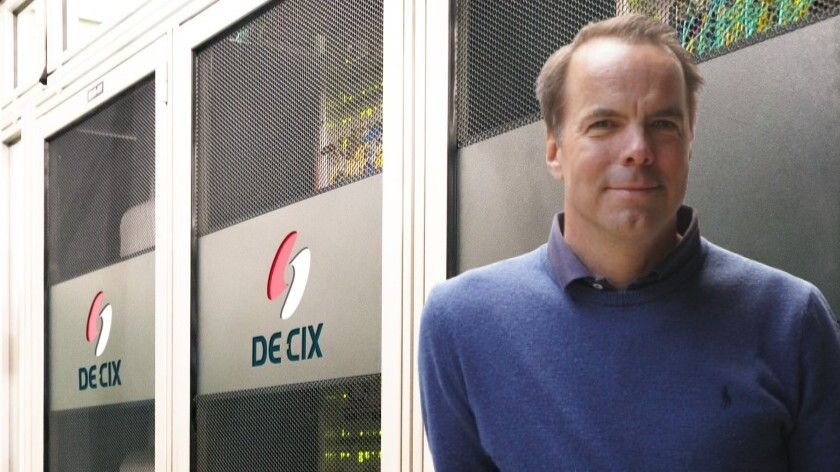
For DE-CIX Global Program Manager Marco Brandstätter, Iraq now represents a defining growth story in the region. Speaking ahead of Capacity Middle East 2026, he points to the country’s uniquely fragmented ISP landscape as both a challenge and an opportunity. Unlike markets such as the UAE, Iraq has a large number of localised ISPs serving specific regions. While this met local demand, it also exposed inefficiencies, with much domestic traffic historically routed outside the country, increasing latency and cost.
The launch of IRAQ-IXP powered by DE-CIX in 2024 addressed this structural gap. Designed primarily for local operators, the exchange provided Iraq with its first neutral interconnection point. From the outset, its focus was domestic. All 32 “eyeball” networks connected to the exchange are Iraqi, creating a truly local internet fabric.
“This was not really a challenge,” Brandstätter explains. “It was something we needed to understand in order to address the market properly. We really concentrated on the local market because there was huge potential and a huge need for an internet exchange.”
Once global content providers began connecting locally, traffic surged. “When the first content came onto the exchange, we saw a huge pickup in traffic,” he says. Today, IRAQ-IXP carries over 200 Gbps, with expectations to exceed 300 Gbps soon, and more than 1.2 Tbps of connected capacity.
Equally significant is the willingness of global content players to invest locally. With caching nodes now deployed, Iraqi operators can peer and access content within the country, dramatically improving performance and resilience.
Despite Iraq’s distinct structure, operator behaviour mirrors regional peers. “The mindset is the same everywhere,” Brandstätter notes. “Operators want peering for better latency, lower costs, optimisation and resilience.” This alignment helped accelerate adoption, making IRAQ-IXP the third-largest exchange in the region by connected networks within its first year.
Government and regulatory reforms have reinforced this momentum. Over the past two years, Iraq has invested in new cables and cross-border routes, positioning itself as a transit corridor between Asia and Europe. Projects such as the Fibre in Gulf subsea system and new land-based fibre routes toward Turkey strengthen Iraq’s role as an east–west digital bridge.
“Based on geography and these investments, Iraq has a real chance to develop into something bigger,” Brandstätter says.
While established hubs like the UAE continue to lead in cloud and AI, Iraq’s rise is not seen as competitive. “There is enough space for others,” he adds. The next phase, he argues, is attracting international data centre operators and neutral infrastructure providers.
“That’s when it really has the potential to become a regional hub,” he concludes.