









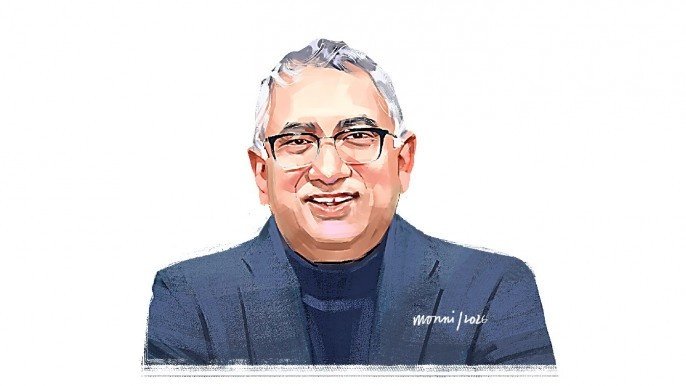
After years of regulatory uncertainty, shrinking margins, and a declining appetite for investment, Bangladesh’s telecom sector stands at a crossroads. Grameenphone Chief Executive Officer Yasir Azman believes 2026 could mark a decisive reset, provided long-standing structural issues are finally addressed.
In an interview with The Business Standard, Azman described 2025 not as a lost year, but as a period of transition that laid the groundwork for recovery and reform.
“I look at things through an optimistic lens,” he said. “Despite the macroeconomic slowdown and many challenges, I still see 2025 as a year of progress, a year that prepares us to move into a better, more hopeful 2026.”
A year of movement after prolonged stagnation
Azman pointed to the revival of policy and regulatory dialogue as one of the most important developments of 2025.
“For years, many issues remained stuck,” he said. “But in 2025, we finally saw movement, some big, some small, but together they matter.”
He highlighted progress on telecom policy reform, the regulator’s readiness for spectrum auctions, and renewed discussions around low-band spectrum, which is critical for improving network quality and preparing for 5G.
“There has also been meaningful discussion around quality-of-service regulations,” he noted. “While the regulator remains strict and rightly so, we were able to reach a more balanced understanding.”
Amendments related to quality-of-service penalties, long a pain point for operators, have moved in a more practical direction, allowing operators to focus resources on network improvement rather than excessive compliance costs.
Unlocking long-delayed service innovations
Azman said several customer-facing issues saw progress after years of stagnation. One is handset locking, a global practice that allows operators to subsidise smartphones and make them more affordable.
“For 28 years of telecom in Bangladesh, handset locking was never allowed,” he said. “Yet globally, this is a standard mechanism to make smartphones affordable. There was never a clear justification for not allowing it here.”
He also cited progress on data product flexibility. Despite serving more than 85 million mobile internet users, operators were long restricted to offering around 40 data products.
“We were confined to around 40 data products in a world that is moving towards hyper-personalisation; that restriction has now been lifted,” he said.
Clarification on Voice over WiFi (VoWiFi) services and international roaming billing in local currency were also described as breakthroughs.
“For students and small businesses travelling abroad, roaming is not a luxury, it’s a necessity,” Azman said. “When banking systems rely on OTPs and digital verification, not having roaming becomes extremely disruptive.”
Fibre and 5G: building the next layer
Azman stressed that fibre infrastructure will become even more critical as Bangladesh moves toward next-generation connectivity.
“Fibre is an extremely important component of our business; without fibre, you cannot deliver the data experience customers expect today, and you certainly cannot roll out 5G effectively,” he said.
He acknowledged that restrictions around fibre deployment had previously slowed expansion, but said progress in this area would be essential for supporting future technologies and enterprise solutions.
He also pointed to a structural imbalance in taxation between mobile operators and Internet Service Providers. ISPs pay roughly 5% in taxes, while mobile operators face a burden of around 55%.
“This disparity allows ISPs to offer much lower prices, leading customers to shift high-volume usage to home Wi-Fi,” he said.
Customers, capability, technology: three lenses for 2026
Looking ahead, Azman said Grameenphone’s strategy for 2026 is framed around three lenses: customers, organisational readiness, and technology.
“The question is no longer just connectivity,” he said. “It’s about how we secure customers in our network, how we protect their privacy, their financial transactions, and their digital lives.”
Cybersecurity, cloud services, connected devices, and digital solutions for businesses will increasingly define the operator’s role, he added.
“We will not produce everything ourselves,” he said. “But we must work with ecosystem partners to bring relevant solutions that help people and businesses become more efficient.”
Artificial intelligence will be central to this shift. “AI is already being used at an individual level, but its real impact will be transformational for businesses and industries. If used responsibly, it can help enterprises flourish.”
The second lens is people and organisational capability.
“Are we equipped as an organisation? Are our employees ready to adopt new technologies and serve customers in a much more complex digital environment?” he asked.
The third lens is technology itself.
“In telecom, nothing is possible without technology,” Azman said. “Advanced networks, automation, and AI-driven operations are what will define competitiveness in the new world.”
Investment dilemma: tax and disputes
Despite his optimism, Azman was blunt about the two biggest barriers holding the industry back: an exceptionally high tax burden and unresolved financial disputes.
“Unless these are resolved, investment appetite will remain very limited,” he warned.
Bangladesh’s telecom operators face a corporate tax rate of 40%, alongside 15% VAT, 20% supplementary duty, revenue sharing, spectrum fees, social obligation funds, and a fragmented licensing structure.
“I have not found another country close to Bangladesh in terms of spectrum cost,” he said. “It is unheard of.”
More damaging, he argued, is the accumulation of audit disputes stretching back to the sector’s inception.
“In 28 years of operation, not a single year’s audit dispute has been fully resolved,” he said. “All three operators are foreign investors, and all carry massive disputed liabilities.”
Industry estimates suggest disputed amounts, including interest, run into tens of thousands of crores of taka.
“How will investors decide to invest more when uncertainty exists from inception till today?” he asked.
He revealed that data services are effectively subsidised by voice revenue, which is now in decline.
“If voice continues to drop, the current profitability of Grameenphone may not be sustainable in five to seven years,” he warned.
A case for arbitration and reset
Azman believes international arbitration could offer a pragmatic path forward.
“If disputes remain in court for another 10 years, followed by another 10 years of accumulated interest, no telecom business will be viable,” he said. “Bangladesh already has an arbitration law, why not use it?”
He welcomed recent dialogue with the regulator on this issue, describing it as the first structured conversation after years of silence.
“That itself is progress,” he said.
Competition, SMP and innovation constraints
Another concern is the competitive framework, particularly Significant Market Power (SMP) regulations.
“SMP continues to pull us down when it comes to innovation,” he said. “Every product or service requires lengthy approvals, sometimes taking years.”
He questioned why, in a market where each of the three operators serves more than 40 million customers, profitability remains elusive.
“We were profitable with far fewer customers in the past,” he said. “So why is the industry struggling now? The answer lies in taxes, disputes, competition rules, and pricing constraints.”
Why telecom reform matters for Bangladesh
Azman stressed that telecom reform is not merely an industry issue. It is fundamental to Bangladesh’s development.
“If inequality is to be reduced, digital services are essential,” he said. “Healthcare, education, financial inclusion, nothing works without strong connectivity and continuous innovation.”
He credited journalists and the media for enabling constructive dialogue.
“Without media scrutiny and constructive criticism, progress would be far more difficult.”
As Bangladesh enters 2026 with renewed political and economic expectations, Azman sees a narrow but critical window.
“This is a reset moment,” he said. “If taxation, disputes, competition, and pricing are addressed step by step, investment will return.”
“And once investment returns,” he added, “telecom can again become a powerful engine for national progress.”