








RIYADH – An investment of 3.4 billion Omani rials ($8.8 billion) by the end of 2025 underscores Oman’s accelerating transformation across transport, logistics, and the digital economy.
According to the Ministry of Transport, Communications and Information Technology’s Achievement Bulletin, total investment in the sector reached 2.3 billion rials between 2021 and the end of 2024, rising to 3.4 billion rials by the close of 2025.
The scale of capital deployment signals a shift from planning to execution, as infrastructure, services, and digital systems actively reshape how goods, data, and people move across the Sultanate. The funding aligns with Oman’s ambition to establish itself as a regional and international logistics hub.
Investment has been directed toward ports, logistics hubs, land transport systems, and digital platforms designed to improve efficiency and sector integration.
A major outcome has been rapid progress in digital transformation. By the end of 2024, 1,700 of 2,523 key government services were fully digitized. By the end of 2025, that figure rose to 2,277, bringing public service digitalization close to completion.
For businesses—particularly in trade, transport, and logistics—this shift has delivered faster processing, greater transparency, and lower administrative costs, strengthening the overall business environment.
Workforce localization trends point to deeper structural change. Omanization in the IT sector increased from 38 percent in 2024 to 45.5 percent in 2025, reflecting stronger integration of Omani talent into high-value digital roles. In transport and logistics, Omanization rose from 20 percent to 21.6 percent, showing steady progress in building national expertise.
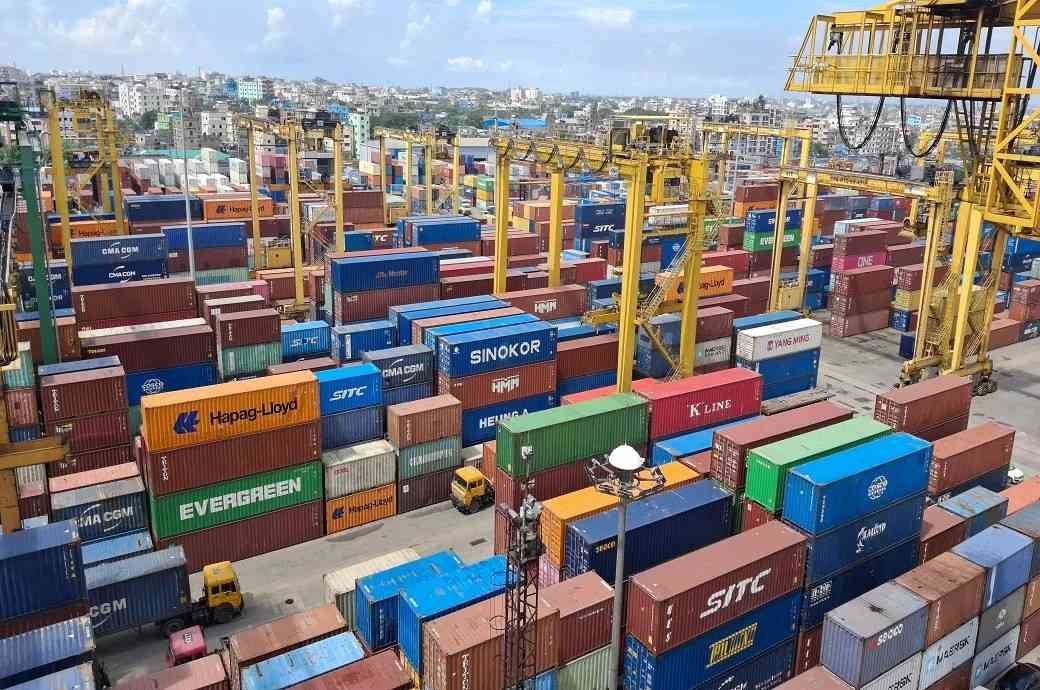
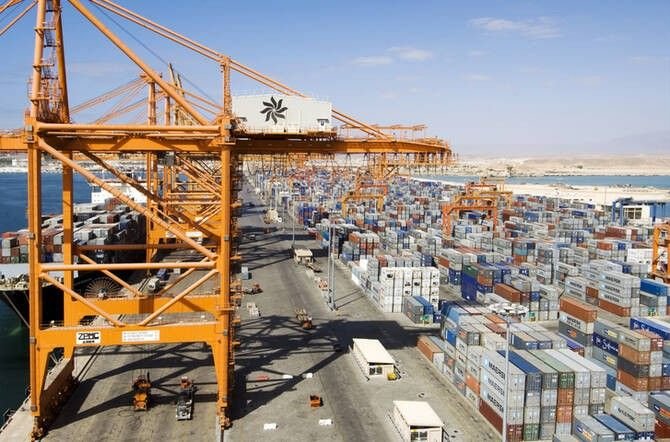
Operational metrics highlight the sector’s expanding capacity. Container traffic grew from 4.3 million twenty-foot equivalent units in 2024 to more than 5 million TEUs in 2025. General cargo volumes increased from 115.7 million tonnes to 143 million tonnes over the same period.
Digital governance has also advanced. The National Digital Transformation Program’s performance rate climbed from 73 percent in 2024 to 94 percent in 2025, reflecting stronger execution, improved inter-agency coordination, and better oversight of complex digital projects.
Financial performance across subsectors confirms tangible gains. Ports revenue rose by 12.9 percent, maritime affairs recorded 6.5 percent growth, and land transport led with an 18 percent increase, driven by strong demand for freight and mobility services.
Project delivery exceeded expectations. While the target implementation rate was set at 70 percent, actual performance reached 85 percent in 2025, reflecting stronger planning, execution capability, and accountability.
In December, Fitch Ratings upgraded Oman to investment-grade status, raising its long-term foreign-currency rating from BB+ to BBB-. The agency cited stronger public finances, an improved external position, and sustained fiscal discipline, noting government debt had fallen to around 36 percent of GDP in 2025 from nearly 68 percent in 2020.