







North African countries are rapidly pulling ahead in 5G adoption, forming a near-continuous Mediterranean corridor of live networks from Tunisia to Libya that is reshaping how digital transformation unfolds on the continent.
Over the past year, Tunisia, Egypt, Morocco, Algeria, and now Libya have rolled out commercial 5G in major cities, creating what analysts describe as a real-time blueprint for how regulatory clarity, disciplined investment, and dense urban demand can accelerate next-generation connectivity.
Libya’s Almadar Aljadid activated 5G in central Tripoli in late January 2026, completing a regional sequence of launches that began in Tunisia in early 2025 and moved steadily east and west along the Mediterranean rim. Initial deployments have focused on central districts, with staged national expansion planned.
This momentum contrasts sharply with much of sub-Saharan Africa. By the end of 2025, Africa had around 54 million 5G connections—just 3.8% of total mobile subscriptions—despite more than $28 billion invested in mobile infrastructure over five years, according to GSMA Intelligence.
Nigeria illustrates the gap. Quality of Experience data shows that 5G-capable devices fail to connect to 5G networks more than half the time in major cities. Lagos and Abuja record average 5G coverage of just 27% and 31%, leaving most users on 4G despite early launches by MTN, Airtel, and Mafab.
Analysts attribute North Africa’s acceleration to spectrum certainty and aligned policy. Tunisia deployed early across Tunis and Sfax using the 3.5 GHz band. Egypt followed with multi-operator rollouts in Cairo and Alexandria delivering speeds above 200 Mbps. Morocco and Algeria prioritised dense urban centres with vendor support, while Morocco embedded coverage obligations into spectrum awards.
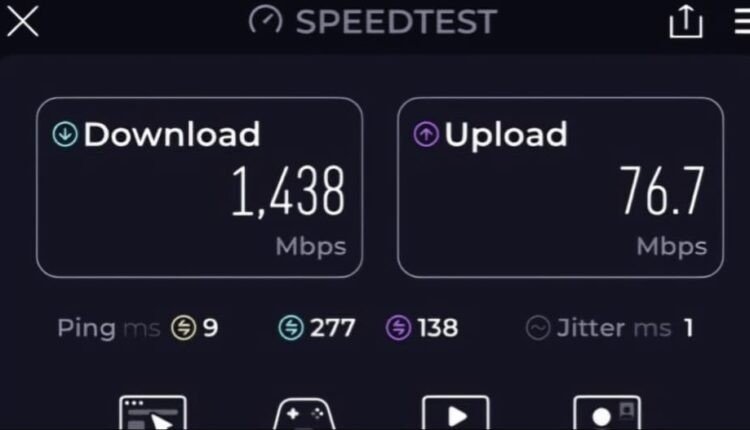
Libya’s entry now completes a contiguous 5G arc across every Mediterranean African country. Speed tests show median downloads in the low hundreds of Mbps—five to ten times faster than typical 4G—enabling cloud applications, fintech services, remote work, and low-latency business tools.
Another quiet enabler is monetisation readiness. In cities with limited fibre, 5G fixed wireless access is providing immediate value for homes and small businesses, helping operators justify investment while expanding digital access.