









Pakistan’s $1 billion investment in artificial intelligence signals a clear ambition: to reduce reliance on foreign technology and build strategic autonomy in an increasingly AI-driven world. But ambition alone won’t deliver sovereignty. The real challenge lies in execution—whether Pakistan can build meaningful control over its AI stack or remain dependent on external systems.
The risks of dependency are not theoretical. As AI capabilities concentrate within a few global powers, reliance on foreign platforms could expose critical sectors—defense, healthcare, finance—to geopolitical pressures. External providers often retain deeper visibility into systems than their users, creating asymmetries in control, security, and data governance. For Pakistan, this raises a fundamental question: can it secure its digital future without owning its infrastructure?
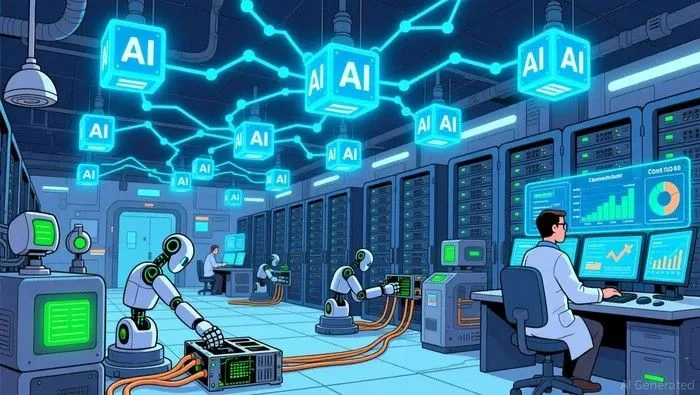
Building sovereign AI, however, is capital-intensive and complex. Training advanced models requires massive compute power, high-end chips, skilled talent, and reliable energy infrastructure. Pakistan’s current capacity—anchored by a single AI-focused data center with around 3,000 GPUs—represents an early step, but falls short of global benchmarks.
The global AI landscape is rapidly consolidating. The US and China dominate frontier model development, backed by hundreds of billions in investment. American tech giants are collectively spending around $600 billion on AI infrastructure, while China is mobilizing large-scale state funding across AI, semiconductors, and quantum technologies.
In this context, Pakistan must be strategic. Rather than attempting to compete head-on at the frontier, it may need to define its role within the broader AI value chain—focusing on applied AI, localized models, regulatory frameworks, and partnerships that balance capability with control.
AI sovereignty is not just about building models—it’s about governance, infrastructure, and long-term strategic alignment. Pakistan’s next moves will determine whether it becomes a serious player in the AI economy or remains a consumer in a system shaped by others.