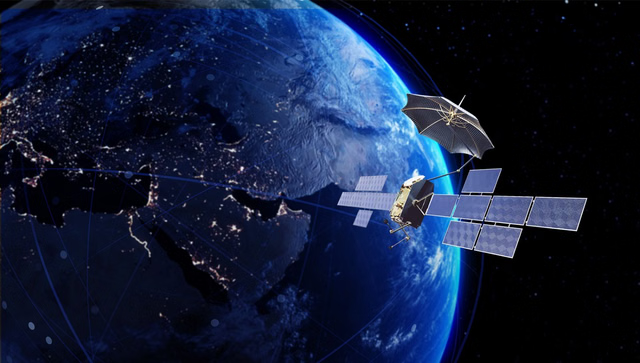









India is advancing plans to develop its first orbital data centre satellite, marking a step toward space-based computing infrastructure as demand for data processing continues to grow.
The initiative involves Indian companies working to create a satellite capable of hosting data storage and processing capabilities in orbit. By moving certain workloads into space, the concept aims to reduce latency for specific applications, enhance data security, and support emerging use cases such as edge computing and real-time analytics.
Orbital data centres remain an emerging concept, with global players exploring how space-based infrastructure can complement terrestrial networks. As data volumes increase and demand for faster processing intensifies, alternative architectures are being considered to address capacity and performance constraints.
India’s move reflects growing interest in leveraging space technology beyond traditional communications and observation, positioning it as part of the broader digital infrastructure landscape.
However, significant technical and economic challenges remain, including cost, energy management, and integration with existing networks.
The success of the project will depend on technological feasibility, scalability, and the ability to demonstrate clear advantages over ground-based infrastructure.
Editor’s Note
This is not just a space project. It reflects the search for next-generation compute infrastructure.
The real story is capacity pressure. As data demand grows, traditional infrastructure models are being pushed to their limits.
The opportunity is architectural innovation. Space-based computing could open new possibilities for edge processing and secure data handling.
The advantage is strategic positioning. Early investment in emerging infrastructure models can create long-term leadership.
The challenge is feasibility. Technical complexity and cost remain significant barriers.
The risk is unclear demand. Use cases for orbital data centres are still evolving.
What to watch next is practical application. The real signal will be whether this concept moves beyond experimentation into commercially viable deployments.