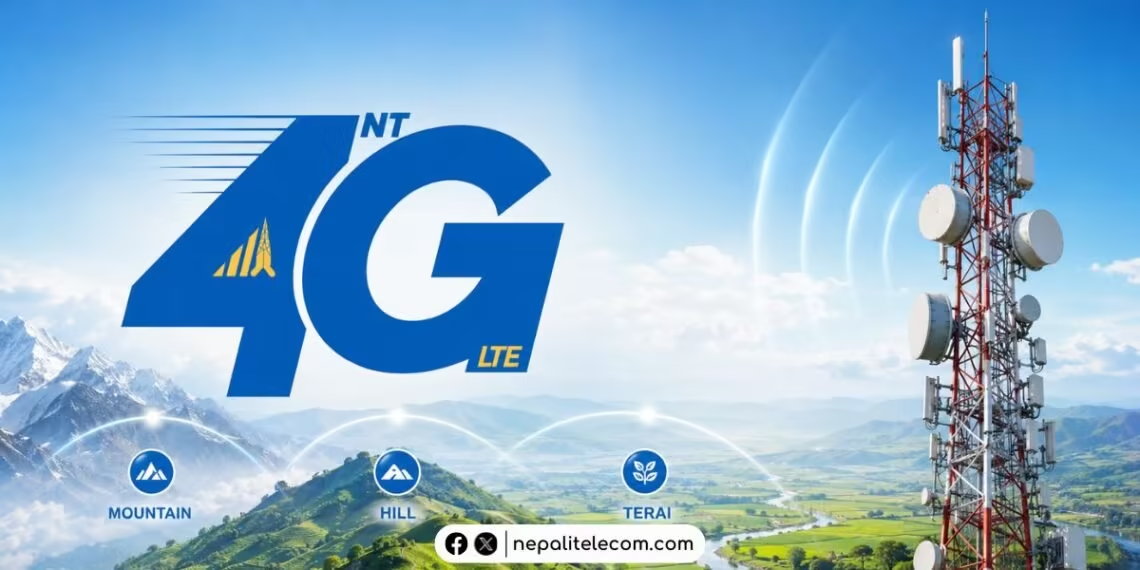








Nepal Telecom has extended its 4G mobile network to remote villages in the mountainous districts of Mugu and Bajura, bringing high-speed mobile internet and enhanced voice services to communities that have historically faced limited digital connectivity.
The state-owned operator launched 4G services in Soru-6 of Sorukot Rural Municipality in Mugu, as well as Neta Bichchhya-1 and Kuwadi-5 in Bajura. The expansion is part of Nepal Telecom’s ongoing efforts to improve telecommunications infrastructure in geographically challenging regions and support the country’s broader digital inclusion agenda.
Local government representatives welcomed the rollout, describing it as a significant milestone for residents who will now gain improved access to digital communication, online services and information resources.
Expanding Digital Connectivity in Remote Regions
Bringing broadband connectivity to mountainous and remote areas remains one of the most significant challenges for telecom operators across South Asia.
The deployment of 4G infrastructure in Mugu and Bajura extends reliable mobile broadband to communities where difficult terrain has historically slowed telecommunications development. According to Nepal Telecom, the new tower in Neta Bichchhya provides coverage to Kot, Neta, Bama, Baudi, Yauna, Natikhola, Gumba and stretches along the route toward Ranisaina in Bajura.
The operator has also expanded 4G coverage to villages surrounding the Kuwadi River confluence and along the route to Tanjakot Rural Municipality-2 in Humla, improving connectivity for residents and travelers alike.
4G Networks Drive Digital Inclusion
Mobile broadband has become a key enabler of digital inclusion, particularly in rural and underserved communities where fixed broadband infrastructure is difficult to deploy.
Access to 4G services enables residents to use digital banking, e-learning platforms, telemedicine, e-commerce and cloud-based communication tools while improving access to government services delivered through digital channels.
For remote communities, mobile broadband often represents the primary gateway to the digital economy, helping reduce geographic barriers to information and essential public services.
Telecommunications Support Rural Development
Reliable telecommunications infrastructure increasingly plays an important role in regional economic and social development.
Improved connectivity enables local businesses to reach wider markets, supports digital entrepreneurship and enhances communication for agriculture, tourism and public administration. Educational institutions and healthcare providers also benefit from improved internet access, enabling online learning and remote consultations.
Local leaders from Soru Rural Municipality pledged continued coordination to ensure the long-term operation, protection and future expansion of the newly deployed network infrastructure.
Universal Connectivity Remains a National Priority
Nepal continues to expand digital infrastructure as part of broader efforts to improve nationwide connectivity and reduce the urban-rural digital divide.
Telecom operators are investing in network expansion alongside government initiatives that seek to increase access to digital public services and strengthen the country’s digital economy. Extending 4G to remote districts supports these objectives by ensuring more citizens can participate in an increasingly connected society.
As demand for digital services continues to grow, expanding broadband coverage to underserved regions will remain central to Nepal’s long-term telecommunications strategy.
Why This Matters
Nepal Telecom’s latest 4G expansion demonstrates the critical role of mobile broadband in connecting remote communities that have traditionally been underserved by digital infrastructure. Improved connectivity will enable residents to access education, healthcare, government services and economic opportunities that increasingly depend on reliable internet access.
For Nepal, extending high-speed mobile networks into mountainous regions supports national digital inclusion goals while strengthening the telecommunications infrastructure needed for future digital government initiatives and economic development.
Editor’s Note
Expanding broadband coverage into remote regions remains one of the most impactful investments telecom operators can make in emerging markets. While discussions around 5G and artificial intelligence often dominate the technology agenda, extending reliable 4G connectivity to underserved communities continues to deliver immediate social and economic benefits. For countries such as Nepal, where challenging geography presents significant infrastructure hurdles, mobile broadband serves as the foundation for digital inclusion, enabling access to essential services and creating opportunities for sustainable regional development.