










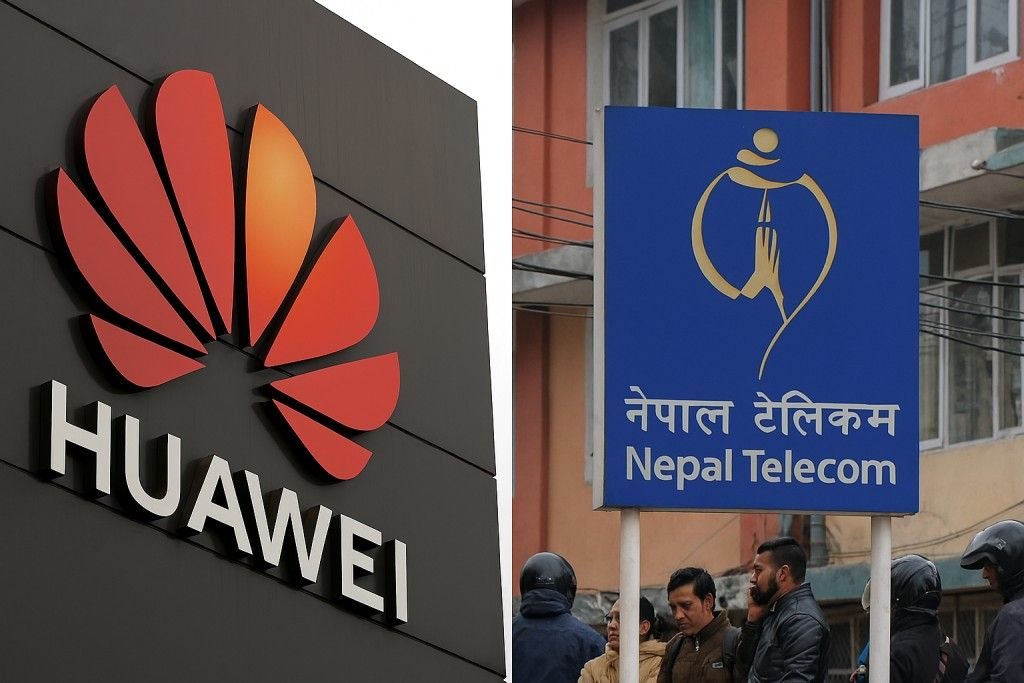
Nepal Telecom’s nationwide 4G expansion project has come under scrutiny amid allegations of procurement irregularities, contract violations, and political influence involving Chinese technology vendor Huawei. The project, valued at approximately NPR 19 billion, is now being investigated by the Commission for the Investigation of Abuse of Authority (CIAA).
Huawei, the main contractor, was required under Nepal’s Public Procurement Act to be blacklisted for failing to meet contractual obligations. Instead, the company reportedly avoided penalties and was granted billing rights, allegedly due to political backing. The project has been criticised for substandard quality, delayed implementation, and escalating costs, while customers continue to experience weak network performance.
Nepal Telecom has reportedly been paying over NPR 100 million annually for unused WiMAX spectrum intended for small cell equipment that was never installed. Huawei’s local partner, China Communications Services International (CCSI), was contracted to deploy around 6,000 small cell units to enhance 4G and future 5G coverage, particularly indoors and underground. Equipment worth an estimated NPR 700 million was not delivered, significantly affecting service quality.
Despite contractual provisions that would have required Huawei to pay penalties of NPR 600,000 per day for delays over the past three years, Nepal Telecom did not enforce damages or initiate blacklisting. Former managing directors Sangeeta Pahadi and Sabina Maskey reportedly approved project clearances without applying contractual sanctions.
The project has also raised concerns over political involvement. Reports allege that backing from then-Prime Minister KP Sharma Oli and Communications Minister Prithvi Subba Gurung shielded Huawei from accountability. An initial tender was cancelled and reissued, eventually favouring Huawei. Experts have warned that granting Huawei control over billing systems could place Nepal Telecom’s core technology under external influence, posing strategic and security risks.
Additional complaints filed with the CIAA include allegations that Huawei supplied antennas that did not comply with contract specifications, which required equipment sourced from approved regions including the US, Europe, Canada, Finland, or Australia. Instead, Chinese-made antennas were allegedly deployed.
Nepal Telecom launched 4G services in Kathmandu Valley and Pokhara in 2017 and began nationwide expansion two years later. While ZTE, which was awarded a separate NPR 2 billion contract for the core network, completed its work on schedule, Huawei delayed installations and cited COVID-19 disruptions while delivering equipment that regulators now consider substandard.
The CIAA investigation remains ongoing as authorities examine rising costs, procurement decisions, and compliance failures linked to the project.


