








Egypt’s Ministry of Water Resources and Irrigation is deploying satellite imagery, digital platforms, and artificial intelligence to monitor and remove water hyacinth from the country’s waterways, as part of a wider digital transformation of the irrigation sector.
During a recent review, ministry departments presented how free satellite imagery is being analysed to classify aquatic weeds. Officials demonstrated the use of platforms such as Digital Earth Africa and Google Earth Engine to track the spread of water hyacinth in near real time, with further development underway to improve accuracy and responsiveness.
These tools are designed to enable immediate, data-driven decisions by field agencies tasked with removing invasive plants and restoring water flow.
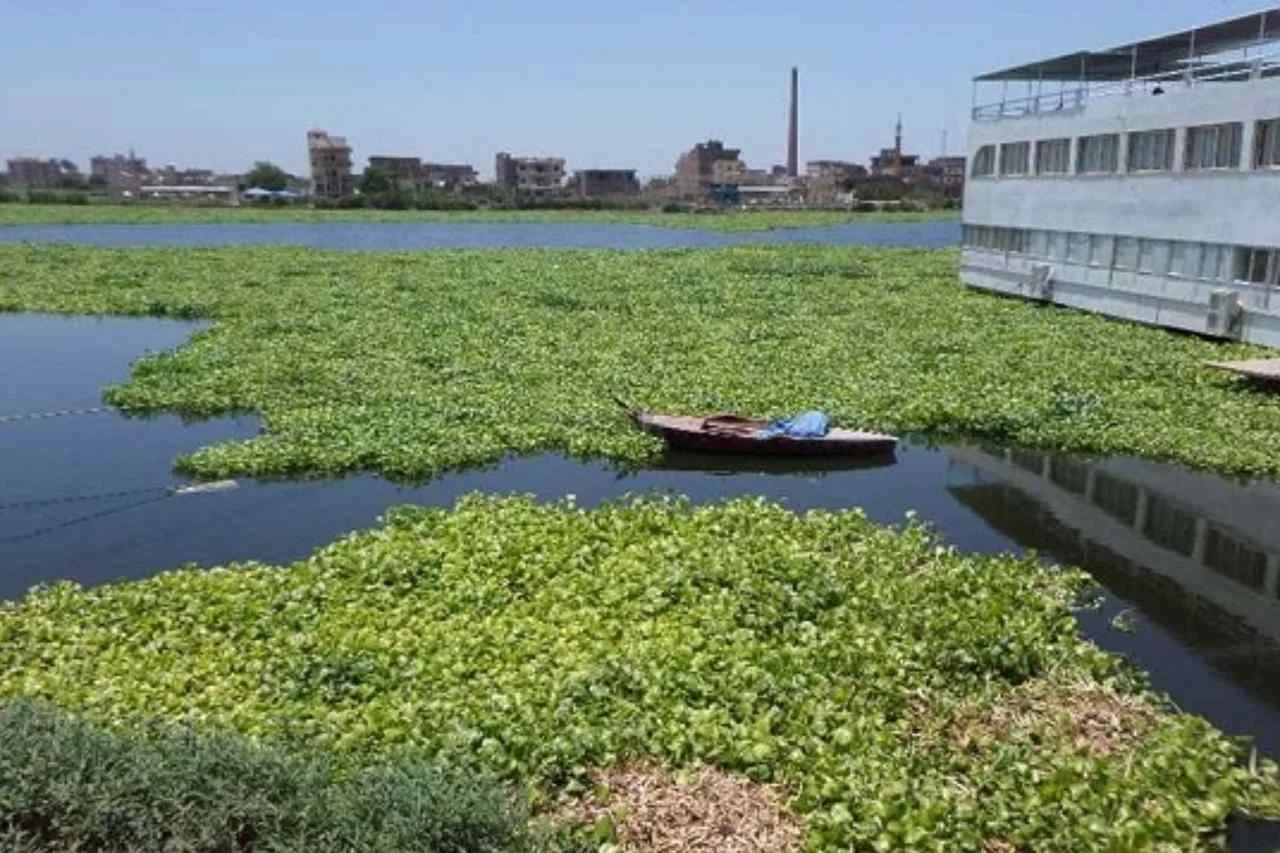
Water hyacinth, native to South America, was introduced to Egypt in the late 19th century for ornamental purposes during the reign of Khedive Tawfiq. Over time, it escaped into waterways and, without natural predators in the Nile ecosystem, spread aggressively. Today, it covers thousands of feddans across the Nile and Delta, obstructing canals and disrupting natural water movement.
More than a century after its arrival, the ministry is now using technology to confront the crisis.
Officials also reviewed AI-powered applications integrated with satellite data that can classify aquatic weeds with high precision. These systems provide detailed maps of infestation zones, guiding response teams and optimising removal efforts.
Minister of Water Resources and Irrigation Hani Sewilam said the applications will ensure continuous monitoring and deliver actionable data across the ministry’s agencies, helping maintain the efficiency of Egypt’s water system and prevent the damaging effects of weed proliferation.
He added that the initiative aligns with the second generation of the Egyptian Irrigation System 2.0, which aims to embed advanced technologies into water management and strengthen long-term resource optimisation.
Sewilam directed that the applications be continuously updated and refined to support timely decisions while reducing the cost, time, and labour associated with manual field inspections.
Water hyacinth remains one of the most serious threats to Egypt’s irrigation infrastructure. Its biomass can double in as little as two weeks, forming dense vegetative “dams” that block canals and drains. This restricts water flow, deprives farmers at canal endpoints, and creates cascading environmental and economic losses amounting to billions of Egyptian pounds.