








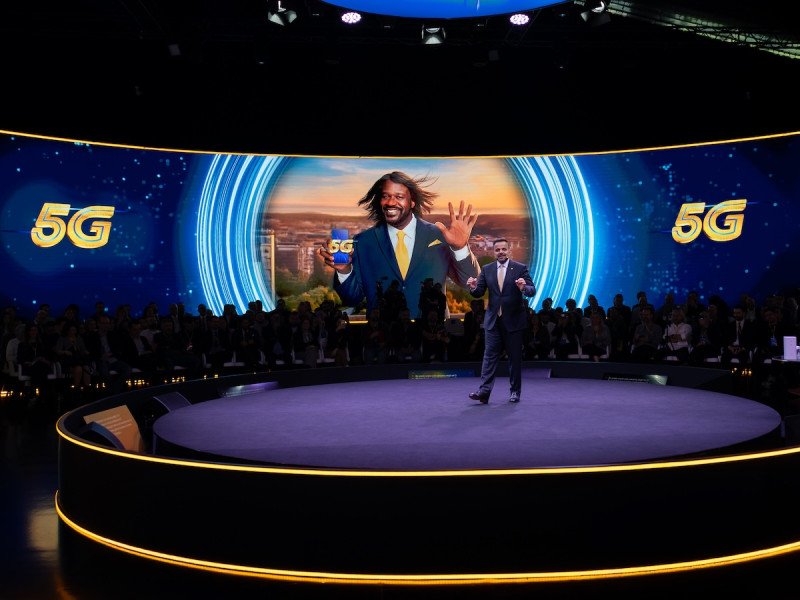
Turkcell, Türk Telekom and Vodafone Türkiye launched commercial 5G services simultaneously on 1 April 2026, bringing fifth-generation mobile connectivity to all 81 provincial centres in the country on day one, following a formal announcement ceremony at the Presidential Complex attended by President Recep Tayyip Erdoğan on 31 March.
The launch marks the end of a prolonged wait for one of the world’s largest mobile markets. Türkiye has operated on 4.5G networks since 2016 and repeatedly delayed its 5G transition through a combination of regulatory uncertainty and postponed spectrum tenders. The BTK finally held its 5G auction in October 2025, raising USD 2.95 billion in winning bids — nearly 40 per cent above the government’s base valuation — across 700 MHz and 3.5 GHz frequencies. Licences run until 31 December 2042.
Turkcell emerged as the heaviest bidder, committing USD 1.22 billion for the A1 700 MHz block and four 3.5 GHz packages. Türk Telekom invested approximately USD 1.1 billion, while Vodafone Türkiye spent USD 627 million. To fund its rollout, Turkcell separately secured a USD 1 billion loan specifically earmarked for 5G infrastructure deployment.
The government and operators have set a two-year timeline for full nationwide geographic coverage beyond the 81 provincial centres. Pilot tests conducted at Istanbul Airport and major stadium venues recorded peak download speeds of 1.8 gigabits per second, approximately ten times the performance of the existing 4.5G network.
The device readiness gap remains a significant challenge. Of Türkiye’s approximately 85 million mobile subscribers, only around one in four currently uses a 5G-compatible handset, a penetration constraint that will shape uptake curves in the near term regardless of network availability.
Turkcell CEO Ali Taha Koç has signalled ambitions to launch 5G-Advanced services rather than standard 5G, positioning Türkiye to skip one technology tier and begin the era of network intelligence from a higher baseline than most late-launching markets.
Editor’s Note: Türkiye’s simultaneous three-operator launch across all provincial centres on day one is a deliberate policy signal, distinguishing this rollout from the phased urban-first deployments that characterised most early European 5G launches. The domestic equipment sourcing requirements embedded in the licence conditions are also worth tracking, as they could shape which vendors — and which domestic technology firms — benefit most from the infrastructure buildout over the next two years.