










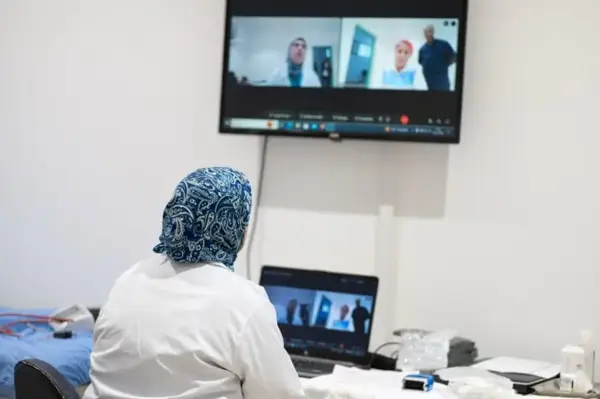
Morocco has signed a partnership agreement with Huawei to strengthen telemedicine infrastructure, as the country accelerates efforts to modernize healthcare delivery through digital technologies.
The collaboration focuses on expanding access to remote healthcare services by improving digital connectivity, healthcare platforms, and communication systems that support virtual consultations and medical collaboration. Telemedicine is becoming increasingly important in improving access to care, particularly in underserved and remote areas where specialist services may be limited.
The initiative aligns with Morocco’s broader digital transformation strategy, where technology is being integrated into critical sectors such as healthcare, education, and public services. By leveraging Huawei’s infrastructure and technology expertise, Morocco aims to improve healthcare efficiency, accessibility, and service continuity.
The expansion of telemedicine infrastructure also reflects a wider regional trend, as governments seek to address healthcare capacity challenges through digital solutions. Remote healthcare platforms can help reduce pressure on physical facilities while enabling faster access to medical expertise.
The long-term impact of the partnership will depend on implementation, connectivity reliability, healthcare integration, and user adoption among both medical professionals and patients.
Editor’s Note
This is not just a healthcare partnership. It reflects the digitization of care delivery.
The real story is access. Telemedicine is becoming a critical tool for extending healthcare services beyond physical hospitals and urban centers.
The opportunity is healthcare scalability. Digital platforms can improve efficiency and expand specialist access without equivalent physical infrastructure growth.
The advantage is connectivity-driven healthcare. Telecom and digital infrastructure are increasingly central to modern medical systems.
The challenge is integration. Telemedicine requires alignment between healthcare providers, platforms, and regulatory systems.
The risk is uneven adoption. Infrastructure alone does not guarantee usage without training, trust, and operational readiness.
What to watch next is clinical utilization. The real signal will be how widely telemedicine becomes integrated into routine healthcare delivery across Morocco.

