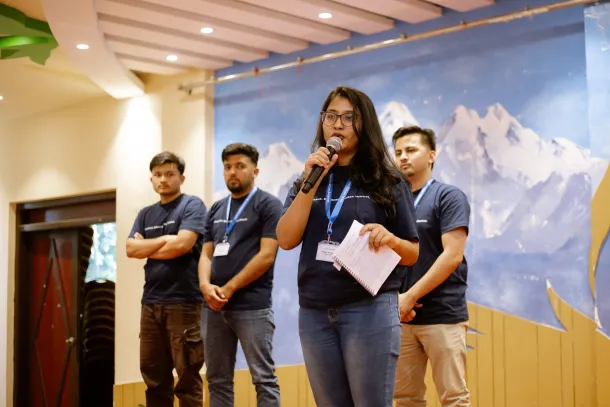







Cryptocurrency exchange Bitget and UNICEF have expanded their global digital education partnership to Bangladesh, Bolivia and Indonesia, broadening access to digital skills training for young people as demand for technology talent continues to grow worldwide.
The expanded initiative aims to equip youth with practical digital competencies through educational programmes focused on emerging technologies and digital literacy. By extending the partnership into three additional countries, Bitget and UNICEF seek to improve access to future-ready skills while supporting greater inclusion in the digital economy, particularly among underserved communities.
The programme forms part of wider global efforts to prepare the next generation for careers in an increasingly technology-driven workforce.
Digital skills are becoming essential for future employment
As digital technologies reshape industries, governments, businesses and international organisations are investing heavily in digital education to address growing skills gaps.
Competencies in areas such as coding, artificial intelligence, cybersecurity, blockchain and data literacy are increasingly viewed as essential for future employment. Expanding access to digital education helps young people participate in emerging industries while enabling countries to build more competitive and innovation-driven economies.
Developing digital talent has become a strategic priority across both developed and emerging markets.
Public-private partnerships are accelerating digital inclusion
Collaboration between international organisations and technology companies is playing a growing role in expanding access to digital learning opportunities.
By combining educational expertise with industry knowledge, partnerships can provide learners with practical skills that align more closely with evolving workforce demands. Such initiatives also help bridge digital divides by extending training programmes to communities that may have limited access to technology education.
These collaborative models are becoming increasingly important as countries seek to build inclusive digital economies.
Emerging markets are investing in digital talent
Bangladesh, Indonesia and Bolivia are among the countries working to strengthen digital capabilities as part of broader economic development strategies.
Expanding access to technology education can support entrepreneurship, improve workforce competitiveness and create opportunities in sectors such as software development, fintech, e-commerce and digital services. For emerging economies, developing a digitally skilled population is essential to attracting investment and participating more actively in the global digital economy.
Youth-focused education initiatives are therefore becoming an important pillar of national digital transformation agendas.
Education underpins long-term digital transformation
Building sustainable digital economies requires investments not only in infrastructure but also in human capital.
While countries continue to expand broadband connectivity, cloud infrastructure and digital government services, the availability of skilled talent will determine how effectively these technologies are adopted and scaled. Programmes that strengthen digital literacy and technical skills among young people help create a workforce capable of supporting innovation across both the public and private sectors.
As digital transformation accelerates globally, education is emerging as one of its most critical enablers.
Why this matters
The expansion of the Bitget-UNICEF partnership into Bangladesh, Bolivia and Indonesia highlights the growing importance of digital skills development in preparing young people for the future economy. By broadening access to technology education, the initiative supports digital inclusion while helping build the talent needed to drive innovation and economic growth.
Editor’s note
The success of digital transformation increasingly depends on the availability of skilled people as much as it does on technological infrastructure. International organisations, governments and technology companies are therefore placing greater emphasis on digital education, recognising that future economic competitiveness will be shaped by a workforce capable of navigating emerging technologies. Initiatives such as the Bitget-UNICEF partnership illustrate how cross-sector collaboration can help close digital skills gaps and create more inclusive pathways into the global digital economy.