






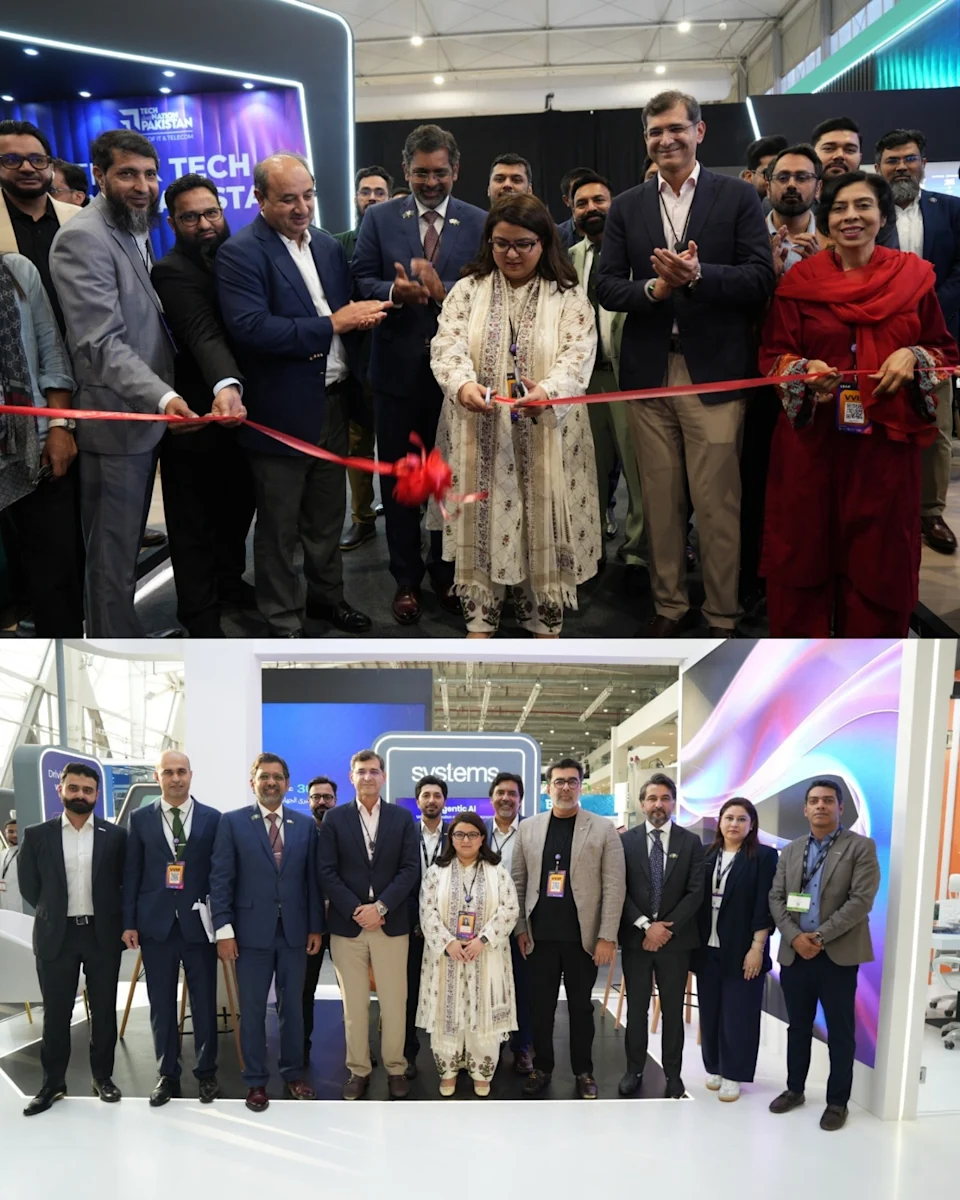
Pakistan has brought one of its largest technology delegations to LEAP 2026 in Riyadh, with close to 1,000 delegates and exhibiting staff as the country seeks to convert rising ICT exports and its engineering talent base into deeper commercial partnerships with Saudi Arabia and the wider Gulf.
The Pakistan Software Export Board (PSEB), operating under the Ministry of IT & Telecommunication (MoITT), is leading the national presence under the “Think Tech, Think Pakistan” banner.
LEAP 2026 is taking place from August 31 to September 3 at RECC Malham in Riyadh, bringing together technology companies, investors, startups and policymakers from across the world.
Pakistan expands presence across LEAP
Pakistan’s participation extends beyond a single national pavilion and includes government organisations, industry associations, established technology companies and startups.
Eighteen companies are exhibiting through the PSEB-led Pakistan Pavilion, covering areas including fintech, enterprise AI, cybersecurity, engineering talent and smart-city technologies.
Another ten startups are participating through Ignite, Pakistan’s national technology fund, while more than ten Pakistani companies have established independent stands across the exhibition.
The wider delegation also includes 18 representatives from PMTF and 25 from the Pakistan Software Houses Association (P@SHA).
Established technology companies including Systems Limited, 10Pearls and Abacus are among the independent exhibitors, giving Pakistan a presence that combines larger technology exporters with emerging companies.
ICT exports reach $4.6 billion
The expanded LEAP participation comes after Pakistan’s ICT exports reached $4.6 billion during FY2025-26.
The government is seeking to build on that growth by positioning the country as a technology partner for Gulf markets rather than primarily as a source of outsourced software development and engineering talent.
Federal Minister for IT & Telecommunication Shaza Fatima Khawaja said Pakistan’s growing participation at LEAP reflects the development of the domestic technology industry and its interest in opportunities created by Saudi Arabia’s transformation agenda.
“This is our third year at LEAP, and our growing presence reflects the strength and potential of Pakistan’s technology sector,” Khawaja said.
“We see LEAP as an important platform to connect Pakistani companies with opportunities emerging from Saudi Arabia’s transformation agenda, build lasting partnerships, and expand our presence in this dynamic market.”
Saudi Vision 2030 creates target market for Pakistani technology firms
Saudi Arabia has emerged as an increasingly important market for technology companies as investment under Vision 2030 expands across artificial intelligence, cloud infrastructure, smart cities and wider digital transformation.
Pakistan is attempting to align its technology export strategy with that demand.
PSEB CEO Faisal Jeddy highlighted the potential to connect Pakistan’s existing technology workforce with Saudi Arabia’s digital transformation requirements.
“Over the past five to six years, Pakistan has built a strong network of freelance tech professionals delivering solutions for global clients,” Jeddy said.
“Connecting this talent and our broader tech ecosystem with Saudi Arabia’s digital transformation creates a strong, mutually beneficial opportunity for both markets.”
Several participating Pakistani companies already have operations or customers in Saudi Arabia, providing a base from which they can seek larger regional contracts.
AI and smart-city technologies feature at Pakistan Pavilion
The Pakistan Pavilion is showcasing operational technology alongside broader company presentations.
Demonstrations highlighted by PSEB include AI-powered voice banking, cybersecurity platforms, a 4D digital twin used for smart-city applications and enterprise AI systems deployed in banking and retail environments.
The technology mix reflects an effort to position Pakistani companies higher in the technology value chain, particularly in areas where Gulf governments and enterprises are increasing investment.
AI, cybersecurity, fintech and smart-city platforms are all becoming significant components of Saudi Arabia’s digital development agenda.
Pakistan targets shift from outsourcing to technology partnerships
Pakistan has historically developed a substantial technology services and freelance workforce, but the government and industry are increasingly seeking to translate that capacity into larger enterprise relationships and technology exports.
The LEAP strategy reflects that transition.
Instead of competing primarily on development costs, PSEB is positioning Pakistani businesses as potential implementation and technology partners capable of supporting complex digital transformation programmes.
Saudi Arabia provides a significant test of that strategy because of the scale of technology investment taking place across the Kingdom and the competition for those contracts from regional and international vendors.
Why this matters
Pakistan’s nearly 1,000-strong presence at LEAP is significant because the country is attempting to connect its growing technology export industry directly with one of the world’s most active digital investment markets.
ICT exports of $4.6 billion provide evidence of momentum, but Pakistan’s next opportunity is to increase the value and sophistication of those exports. Enterprise AI, cybersecurity, fintech and smart-city solutions potentially offer higher-value opportunities than conventional outsourced software development alone.
Saudi Arabia could become an important gateway for that transition. Success in the Kingdom can provide Pakistani technology companies with reference customers, regional partnerships and a platform for expansion into other GCC markets.
Editor’s note
The scale of Pakistan’s LEAP delegation is noteworthy, but participation numbers will ultimately matter less than what follows the event.
The stronger measure will be how many commercial agreements, Saudi market entries, investment relationships and long-term contracts Pakistani companies can convert from the connections made in Riyadh.
Pakistan already has a large engineering and freelance talent base. The strategic challenge is turning that human capital into globally recognised technology companies, intellectual property and recurring export revenue. LEAP 2026 gives the sector a major regional platform to demonstrate that it can compete on capability and technology, rather than primarily on cost.