





The State of Palestine has signed the Digital Cooperation Organisation Charter and unveiled a Digital Prosperity Plan for 2026–2028, setting out priorities across digital infrastructure, artificial intelligence readiness, digital government, skills development and startup growth.
The announcements were made during LEAP 2026, where the Digital Cooperation Organisation concluded a series of initiatives focused on digital policy, AI, investment, innovation and cross-border cooperation.
Palestine becomes a Signatory Member of the DCO, while its new digital prosperity plan was co-developed with the organisation.
Palestine sets out 2026–2028 digital priorities
The Digital Prosperity Plan is intended to provide a framework for strengthening Palestine’s digital economy over the next three years.
Its priorities include improving digital infrastructure and AI readiness, expanding digital government capabilities, developing technology skills and supporting startups and small and medium-sized enterprises.
The DCO did not disclose individual funding allocations, implementation milestones or specific infrastructure projects attached to the plan.
The initiative reflects the organisation’s broader model of working with member and prospective member states on policy frameworks intended to strengthen digital economic participation.
DCO membership could expand from 16 to 24 states
Palestine’s signing follows an earlier decision by the DCO Council approving eight candidate countries for membership.
Once accession procedures are completed, the organisation expects its membership to increase from 16 to 24 states, representing approximately 980 million people.
The DCO said the expansion would move it closer to representing a billion people within its digital cooperation framework.
Tajikistan is also progressing toward joining as an Associate Member.
According to the organisation, participation could provide Tajikistan with additional opportunities around digital cooperation, public-private partnerships, innovation, skills and inclusion, aligned with its National Development Strategy through 2030.
DCO joins Saudi Arabia and AMD on open AI initiative
AI development was another major focus of the DCO’s participation at LEAP.
The organisation joined Saudi Arabia’s Ministry of Communications and Information Technology and AMD to launch an open AI and open innovation ecosystem.
The initiative was accompanied by a DevDay workshop aimed at providing developers, startups and software engineers with access to open-source tools, technical training and ecosystem opportunities.
The source did not provide technical details on the open AI ecosystem, including the computing resources, models, platforms or funding that will be available through it.
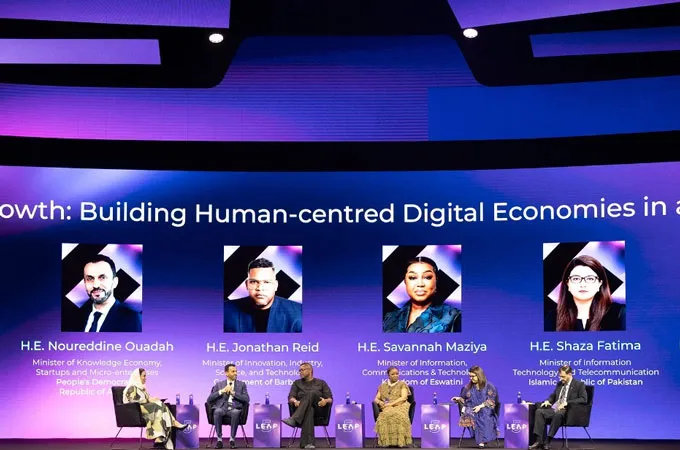
DCO Secretary-General Deemah AlYahya also led a ministerial discussion on building human-centred digital economies in an AI-driven environment, covering responsible innovation, skills, investment and digital business growth.
Digital trust and cross-border governance move up agenda
The organisation also convened a multi-stakeholder roundtable focused on strengthening online content integrity.
The discussion brought together media organisations, technology platforms and other partners to examine misinformation, AI-generated content and digital trust.
Separately, DCO joined Saudi Arabia’s Digital Government Authority and ITL Estonia in discussions around data governance, trust and cross-border alignment.
The organisation also participated with Estonian digital leaders in a session examining how trusted and resilient digital systems can support business and economic development.
These discussions reflect growing policy attention to how AI, data and digital services can operate across borders while maintaining trust and regulatory alignment.
DCO and World Bank examine digital financing
Financing was another component of the organisation’s LEAP programme.
DCO and the World Bank co-hosted a fireside discussion examining the relationship between digital policy, infrastructure, skills, finance and partnerships.
A separate high-level roundtable held at Elm Company focused on financing digital innovation as a mechanism for supporting economic growth, employment and inclusive development.
No new financing facility or specific investment commitment was announced as part of those discussions.
STRIDE brings 30 startups to LEAP
Through its STRIDE programme, the DCO brought 30 startups from 11 Member States to LEAP.
The participating companies were connected with investors, potential partners and new markets through targeted matchmaking activities.
Startups also joined dedicated sessions involving DCO Observers and partners including Elm, ITL and Tools & Solutions, with the aim of creating additional opportunities for investment, partnerships and market expansion.
Why this matters
Palestine’s Charter signing and Digital Prosperity Plan are the most concrete country-level outcomes from the DCO’s LEAP participation.
The plan brings together several areas that increasingly need to develop in parallel. AI readiness depends on infrastructure and skills, digital government requires trusted data and interoperable systems, and startup growth depends on access to capital, institutions and markets.
The DCO’s prospective expansion to 24 members also increases the potential scale of cross-border cooperation around digital policy, although formal accession procedures still need to be completed for the candidate countries.
Editor’s note
The Digital Prosperity Plan gives Palestine a broad strategic framework, but its significance will ultimately depend on implementation.
The next details to watch are the specific infrastructure programmes, AI initiatives, digital government projects, funding mechanisms and measurable targets that emerge from the 2026–2028 roadmap.
For the DCO itself, expanding membership toward 24 countries could strengthen its influence as a platform for digital cooperation. The more important test, however, will be whether that larger membership translates into practical cross-border initiatives around investment, skills, trusted digital infrastructure and interoperable digital services.