
The Islamabad-based B2B marketing leader on taking technology to market in four regions, handing work to AI agents, and why adoption alone is not the win.
Intro
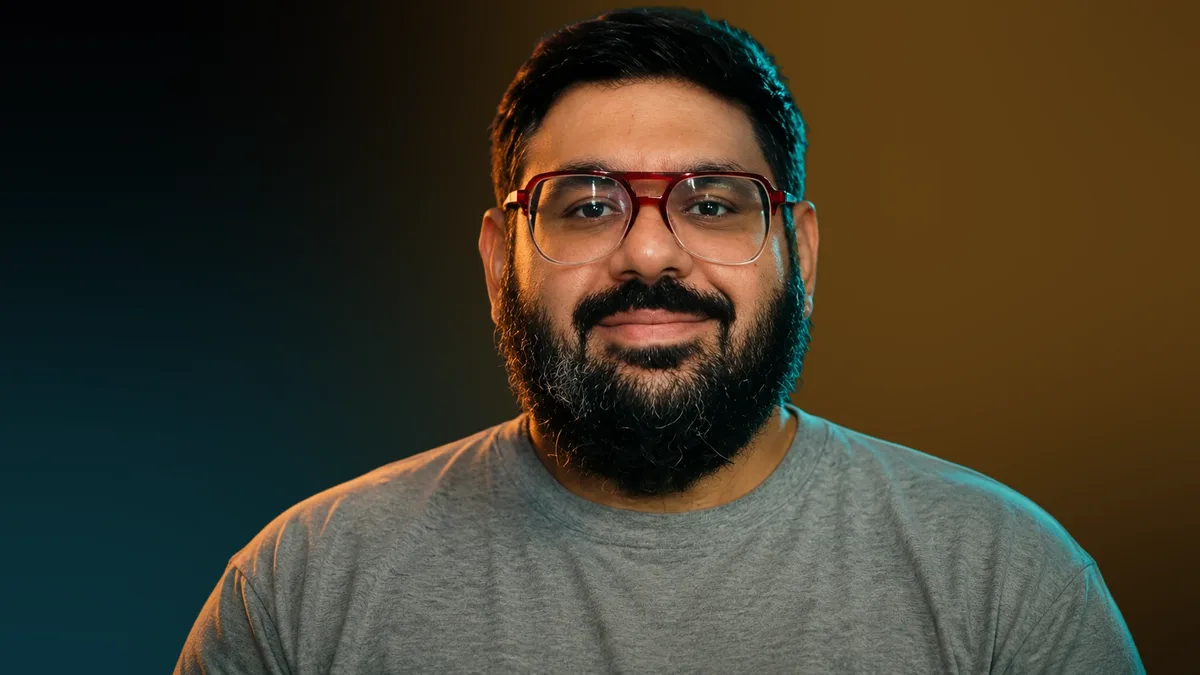
Ali Tahir has spent 17 years taking B2B technology to market, a career that started as a market research analyst at a telecom industry body covering South Asia, the Middle East and North Africa. He has since run marketing for enterprise software sold across North America, Asia Pacific and Europe, led a logistics and travel group’s entry into the UAE and Saudi Arabia, and joined a North American payments business as its first marketing hire to launch an embedded payments platform.
Working from Islamabad, he now advises technology companies in the US, the UK, the Gulf and South Asia on fractional and advisory terms, and is on a postgraduate research track leading into a PhD on AI and marketing technology adoption in B2B firms. His work is at ali-tahir.com.
Q&A
You describe your work in one line: taking B2B technology to market. What does that mean in practice?
It means owning everything between a finished product and a repeatable sales motion. Who the ideal customer is, what we say to them, which proof we put in front of them, how sales and partners are equipped, and what we measure. Most companies have pieces of this. Very few have it joined up, and that gap is where growth stalls.
You started in telecom research before moving into marketing. How did that shape you?
It taught me to respect technical buyers. I spent my early years writing telecom and ICT market reports and supporting a policy team working on regulation. Engineers, operators and regulators became familiar company. Today I mostly sell to long cycles, technical buyers and regulated markets, and that grounding still helps. You cannot market a payments API or an infrastructure product with slogans. You need to understand how the buyer evaluates risk.
Your most recent flagship project was an embedded payments launch, built from zero. What did you learn?
That a launch is a system, not a campaign. As the first marketing hire, I had to build eight things in sequence: positioning and messaging, a six-pillar sales enablement programme, a partner toolkit, a partner portal with migration trackers for 38 partners, a lifecycle email system, launch content, first customer proof and a scoreboard. If any one of those is missing, the others underperform.
The proof point that mattered most was simple. Our first published case study showed a customer live in under two hours with one developer, and the migration rated 10 out of 10. One credible story like that does more than a dozen brochures.
You have worked across the US, the UK, the Gulf and South Asia. How different are these markets to take a product into?
Very different, and the mistake is assuming the same playbook travels. In the Gulf, relationships, partners and local credibility carry enormous weight, and regulation can differ sharply from one market to the next. Our UAE and Saudi entry for a logistics and travel group delivered roughly $100,000 in marketing-attributed incremental revenue in one fiscal year, but only because we built brand, partner marketing and digital demand together rather than one at a time.
In the US, the buyer usually has options already. The question is not “do I need this?” but “why you?” So differentiation and proof do the heavy lifting. I now work in both directions: Western products coming into the Gulf and South Asia, and Gulf and South Asian businesses going into the US and UK.
What do South Asian and Gulf technology companies get wrong when they go after US or UK buyers?
They lead with capability instead of clarity. They list everything the product can do and expect the buyer to work out why it matters. A US buyer will not do that work for you. You need a sharp ideal customer profile, a value proposition in the buyer’s language, and proof from a customer that looks like them. The good news is that teams from our region are often excellent at adapting. They have had to operate across very different markets from day one.
AI is in every marketing plan now. Where are AI agents actually useful, and where do they fall short?
The useful question is not whether to use AI in marketing. It is which jobs an agent should do and where a person signs off. Agents are very good at research, first drafts, reporting, list building and keeping systems tidy. I use Claude, Gemini and ElevenLabs daily and build them into agents and internal tools.
But anything that speaks for the brand to a customer, or commits the company to something, needs a human approval step. And AI cannot fix a broken process. If your handover from marketing to sales is unclear, an agent will simply make the confusion faster.
Your research is on AI and martech adoption in B2B firms. What question are you trying to answer?
Firms now have plenty of AI-powered marketing tools. Why do some turn them into an advantage while others get little from the same technology? That is the question.
My working argument has three parts. First, adoption has causes, and they sit in the technology itself, the organisation and the environment around it. Second, value runs through capability: tools pay off when they strengthen a firm’s ability to sense opportunities, act on them and change how it markets. Adoption alone is not the win. Third, context sets the payoff. Firm size, data maturity and market turbulence make the return stronger or weaker, which is why the same tool works in one company and stalls in another.
The study surveys marketing leaders at B2B firms in technology, financial services, industrial, logistics and professional services across Pakistan and the Gulf. Alongside it, I am working on papers on generative AI adoption among marketers in Pakistan’s IT and SaaS sector, and on how consumers respond to AI-generated social media advertising.
Why focus the research on Pakistan and the Gulf?
Because most of the evidence on martech adoption comes from large Western firms, and it does not transfer neatly. Our markets move faster in some ways and face real constraints in others, such as data maturity and budget. Leaders here are making expensive technology decisions with very little local evidence. I would like to help change that.
You argue for a five-number marketing scoreboard. Why five?
Most marketing reports are long because nobody decided what matters. A scoreboard is short because somebody did. Leadership should be able to read the state of marketing in a minute. So I lock five numbers in three buckets, tied to one goal, and report them monthly. One of them now tracks visibility in AI-generated search answers, because that is increasingly where buyers start.
Earlier in my career I ran the full digital mix on a budget above $1m for an enterprise software company selling into insurance, financial services and healthcare. Leads rose 50%, website conversions 40% and traffic 30% year on year. What made that possible was not more activity. It was agreeing early on what we would count.
More companies are hiring fractional marketing leaders. When does that model make sense?
When a company needs senior judgement but not a full-time executive yet. A fractional leader can own the plan, budget, team, agencies and board reporting one or two days a week. It suits companies preparing a launch, entering a new market or resetting a stalled pipeline. If the company needs daily hands-on execution at volume, an agency or a full-time hire may be the better fit. The honest answer depends on the stage, and a 30-minute conversation is usually enough to tell.
What should technology leaders in the Middle East, Africa and South Asia focus on in 2027?
Three things. Get clear on positioning before spending on channels. Treat AI as a capability to build, not a tool to buy, starting with data readiness, then people, then tools. And invest in proof. In every market I have worked in, one well-documented customer outcome beats any amount of claims.
“Adoption alone is not the win. Tools pay off when they strengthen a firm’s ability to sense opportunities and act on them.”
About Ali Tahir
Ali Tahir is a B2B marketing leader with 17 years in technology marketing across payments and fintech, SaaS and developer tools, healthcare technology, regulated enterprise software, logistics, telecom, IT services, proptech and edtech. He works with companies on fractional leadership, go-to-market strategy, market entry, demand generation, AI and martech builds and executive narrative.
Website: ali-tahir.com · LinkedIn: linkedin.com/in/alitahir5 · Newsletter: Pipeline Thinking