









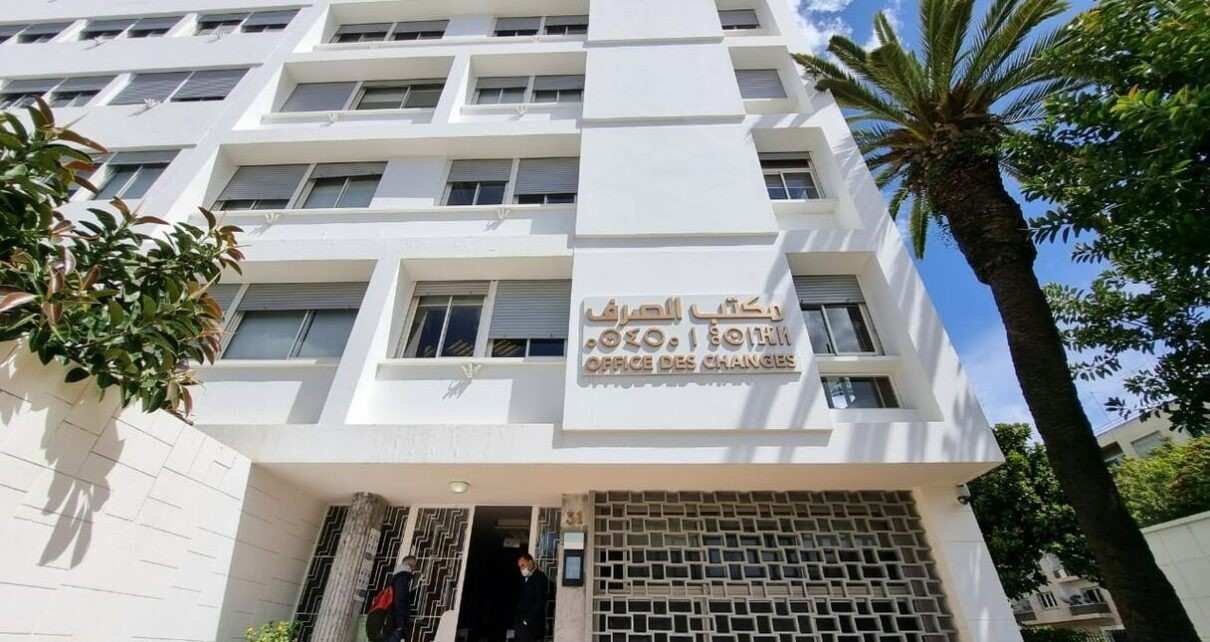
Morocco’s Foreign Exchange Office has introduced reforms allowing accredited exchange agents to use electronic payment terminals for foreign currency purchases against the dirham using international bank cards. Customers can also receive prepaid cards loaded in dirhams, creating a seamless link between global payment systems and the domestic economy.
The move responds to strong growth in international payments. Moroccan spending abroad reached 21.6 billion dirhams by September 2025, up nearly 8 percent year-on-year, while cross-border e-commerce transactions grew by more than 20 percent, according to consolidated data from Bank Al-Maghrib. Digitising currency exchange operations is intended to modernise a sector that has historically relied heavily on cash.
Despite progress in banking penetration and digital payments, Morocco remains highly cash-dependent. Bank Al-Maghrib’s 2024 annual report shows fiduciary currency in circulation reached 444 billion dirhams, equivalent to 28.2 percent of GDP. Authorities believe expanding card-based exchange operations can ease pressure on cash circulation, lower the logistical and operational costs of cash handling—estimated at around 0.5 percent of GDP—and improve transaction traceability in areas prone to informal activity.
More than 1,000 exchange points nationwide are expected to gradually align with banking technology standards. The reform also strengthens Morocco’s compliance framework by aligning with Financial Action Task Force Recommendation 17, which promotes third-party payment services under strict monitoring and full transaction traceability.
The initiative comes as Morocco’s tourism sector continues to grow, with revenues up 12 percent through September 2025. Digital payment options at exchange agents are expected to simplify access to dirhams for foreign visitors, improve the visitor experience, and further integrate tourism spending into the formal economy.