









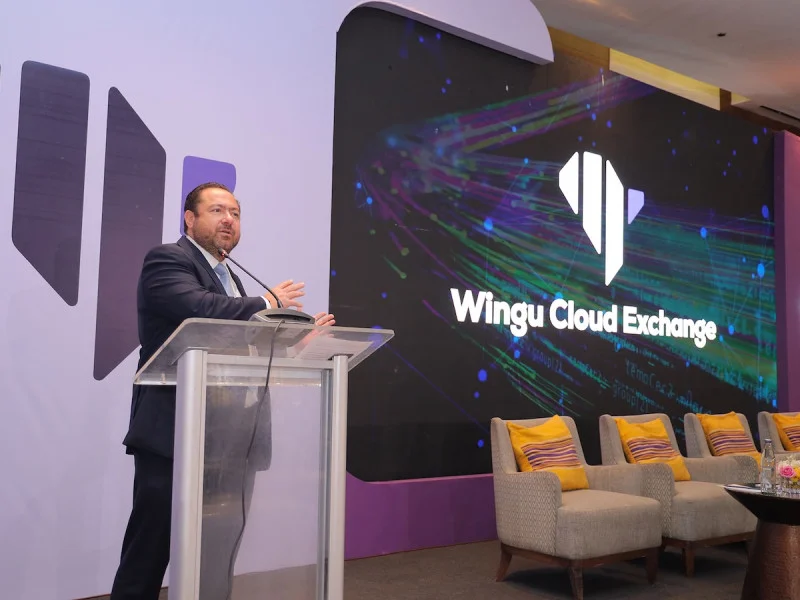
East African data centre operator Wingu Africa has launched its Wingu Cloud Exchange private cloud platform in Ethiopia, offering compute, storage, container management and security services billed in Ethiopian Birr and hosted within the country to meet local data residency regulations.
The platform, known as WCX, was first launched in Tanzania in November 2025 and is now available in Ethiopia, with Djibouti set to follow as Wingu rolls out the service across its three-country data centre footprint. Wingu operates Tier III-certified, carrier-neutral facilities in Addis Ababa, and has an existing relationship with the Ethiopian Electric Utility, for which it provides colocation services.
The local currency billing model addresses a structural barrier that has constrained cloud adoption across Ethiopia. Securing US dollars for subscriptions to global cloud platforms including Microsoft Azure and Amazon Web Services can take months for Ethiopian enterprises under current foreign exchange conditions, leaving organisations either exposed to unpredictable costs or unable to access international services at all. WCX is designed to complement rather than replace global platforms, integrating with existing on-premises systems and supporting hybrid deployments alongside Azure and AWS.
“We are delivering secure, compliant, and scalable cloud solutions built specifically for local needs,” said Demos Kyriacou, Deputy CEO and Co-founder of Wingu Africa.
Ethiopia’s cloud computing market is projected to grow from approximately USD 918 million in 2025 to USD 5.7 billion by 2034, driven by the country’s Digital Ethiopia 2030 strategy and tightening data sovereignty regulations that increasingly require sensitive data to remain within national borders. Wingu’s USD 60 million funding position and its existing client base — which includes Premier Switch Solutions, Ethiopia’s primary interbank payment switch — gives the platform immediate enterprise credibility in a market where trust in new infrastructure providers is hard-earned.
Editor’s Note: The Ethiopia launch is worth watching as a test case for whether locally priced, domestically hosted cloud infrastructure can unlock enterprise cloud adoption in African markets where forex constraints and data localisation requirements have together kept global hyperscaler penetration low. If the model proves commercially viable here, it has direct applicability across several other sub-Saharan markets facing similar conditions.