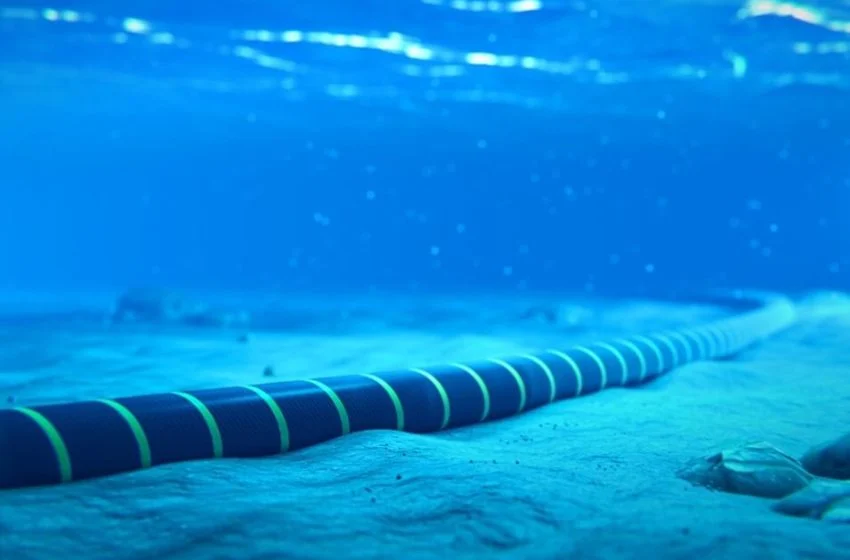










UAE operator du has signed a strategic partnership with Cyprus-based Datawave Networks to land and invest in the Singapore-India-Gulf submarine cable system in the UAE, establishing a new high-capacity digital corridor connecting the Middle East, South Asia and Southeast Asia via a route that deliberately bypasses the Red Sea.
The SING system will land at six points: Kalba in the UAE at du’s cable landing station, Muscat in Oman, Mumbai and Chennai in India, Kedah in Malaysia, and Singapore. The network is designed with 16 fibre pairs, each capable of delivering a minimum of 18 terabits per second, targeting the bandwidth requirements of AI model training, cloud services and hyperscale data centre interconnection across the Gulf and Asia.
The project received a significant financial injection in early 2026 when Cerberus Capital Management entered a binding investment agreement with Datawave, taking a majority stake and providing development funding. Industry reporting has identified SubCom, a Cerberus-owned subsea cable supplier, as the system’s design, manufacture and deployment contractor, though this has not been officially confirmed. The cable is targeting a ready-for-service date of 2030.
The Red Sea diversification rationale has sharpened considerably since the project was first announced. Repeated cable cuts in the Red Sea corridor — attributed to Houthi activity in 2024 and 2025 — disrupted international connectivity for extended periods across the Gulf, India and East Africa. The ongoing Iran conflict has added fresh urgency to route resilience planning. SING’s Kalba-Muscat-India routing provides a geographically distinct alternative to Red Sea transit for data flows between Europe, the Gulf and Asia.
Du’s participation puts it in direct competition with e&, which landed the 2Africa cable at its SmartHub data centre in the same month, with both operators accelerating their roles as UAE landing points for major international cable systems.
Editor’s Note: The Cerberus-Datawave-SubCom constellation here is notable — a private equity firm owning both the developer and the contractor on the same project is an unusual structure that warrants monitoring as SING moves through its development and financing phases toward the 2030 target. For MEA Tech Watch readers, the Muscat landing point also confirms Oman as a key node in the new East-West routing geography taking shape outside the Red Sea corridor.