









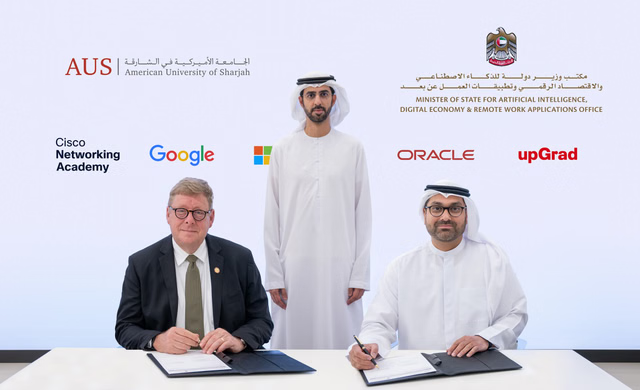
The UAE has launched the “Digital Talents” initiative in Sharjah as part of ongoing efforts to develop an AI-ready workforce and strengthen national digital capabilities.
The program is focused on equipping students and professionals with skills in artificial intelligence, digital technologies, and future-focused technical disciplines. Through training, mentorship, and practical learning opportunities, the initiative aims to prepare participants for evolving workforce demands driven by rapid digital transformation.
As AI adoption accelerates across sectors, governments and enterprises are increasingly prioritizing talent development to address widening skill gaps. The UAE has been investing heavily in digital infrastructure and AI strategies, with workforce readiness emerging as a critical component of long-term competitiveness.
The initiative reflects a broader national push to align education and workforce development with future economic priorities, particularly in areas such as AI, cloud computing, data science, and advanced technologies.
Sharjah’s growing role in educational and innovation initiatives also supports the UAE’s wider ambition to create distributed centers of digital capability beyond major commercial hubs.
The long-term impact of the program will depend on scale, industry alignment, and the ability to translate training into employment and innovation outcomes.
Editor’s Note
This is not just a skills initiative. It reflects the race to build AI-capable workforces.
The real story is talent competitiveness. Countries investing in AI infrastructure now recognize that workforce readiness will determine long-term success.
The opportunity is future-proofing. Building AI literacy and technical capability early creates stronger economic resilience.
The advantage is policy alignment. The UAE continues integrating education, workforce development, and digital strategy into a unified approach.
The challenge is depth versus scale. Large participation numbers do not automatically translate into advanced technical expertise.
The risk is mismatch with industry demand. Training programs must remain closely tied to real-world workforce needs.
What to watch next is employment and innovation output. The real signal will be how many participants transition into AI-focused roles, startups, and technology development initiatives.