








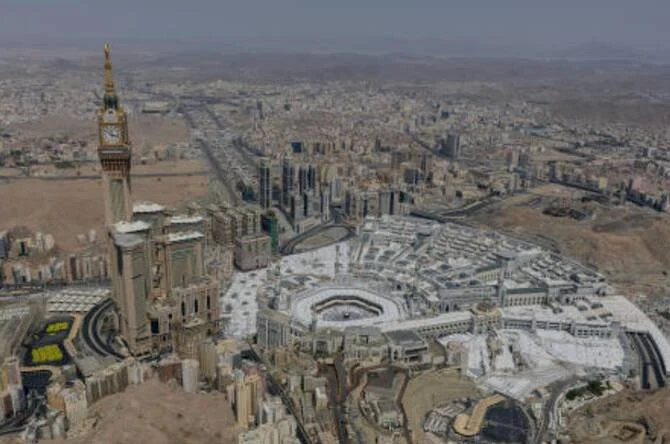
MINA, Saudi Arabia – Saudi Arabia’s Communications, Space and Technology Commission (CST) has highlighted the performance of the Kingdom’s telecommunications and digital infrastructure during the current Hajj season, underscoring the growing role of artificial intelligence and advanced connectivity in managing one of the world’s largest annual gatherings.
Makkah Region Deputy Governor Prince Saud bin Mishaal met with a CST delegation in Mina to review the sector’s technical achievements and assess the effectiveness of digital systems deployed to support pilgrims throughout the pilgrimage.
During the meeting, officials reviewed how artificial intelligence technologies and smart digital infrastructure enabled government entities to optimize crowd management, improve operational coordination, and enhance the overall pilgrim experience across key Hajj sites.
According to the Commission, the telecommunications sector delivered strong performance during peak pilgrimage periods. Mobile internet speeds reached 361 Mbps, while network infrastructure successfully supported the significant increase in data traffic generated by millions of pilgrims.
On the Day of Arafah, one of the most important days of the Hajj pilgrimage, average daily data consumption per user exceeded more than double the global average, reflecting the growing reliance on digital services, mobile applications, navigation tools, and communication platforms during the pilgrimage.
The Kingdom’s telecommunications networks also demonstrated significant capacity, seamlessly handling more than 21.3 million voice calls on the 8th of Dul Hijjah without major disruption.
Saudi Arabia has invested heavily in telecommunications infrastructure, artificial intelligence, cloud technologies, and smart city capabilities as part of broader efforts to support Vision 2030 and position the Kingdom as a global leader in digital innovation. Hajj continues to serve as a real-world testing ground for large-scale deployment of advanced connectivity, data analytics, and AI-enabled operational technologies.
The annual pilgrimage requires extensive coordination across government agencies, telecommunications operators, transportation providers, healthcare services, and security authorities, making digital infrastructure a critical component of overall event management and public service delivery.
Editor’s Note
Hajj is increasingly becoming one of the world’s most sophisticated demonstrations of digital infrastructure at scale. Beyond the impressive network statistics, the real significance lies in how Saudi Arabia is integrating AI, connectivity, and real-time data analytics into public service delivery and crowd management. The pilgrimage provides a unique environment where millions of users generate extraordinary levels of network demand within a concentrated geographic area. Successfully managing this demand showcases not only telecommunications capacity but also the Kingdom’s broader ambitions in smart infrastructure, digital government, and AI-driven operational excellence. The lessons learned during Hajj are likely to influence future smart city and large-scale event management initiatives both within Saudi Arabia and internationally.