





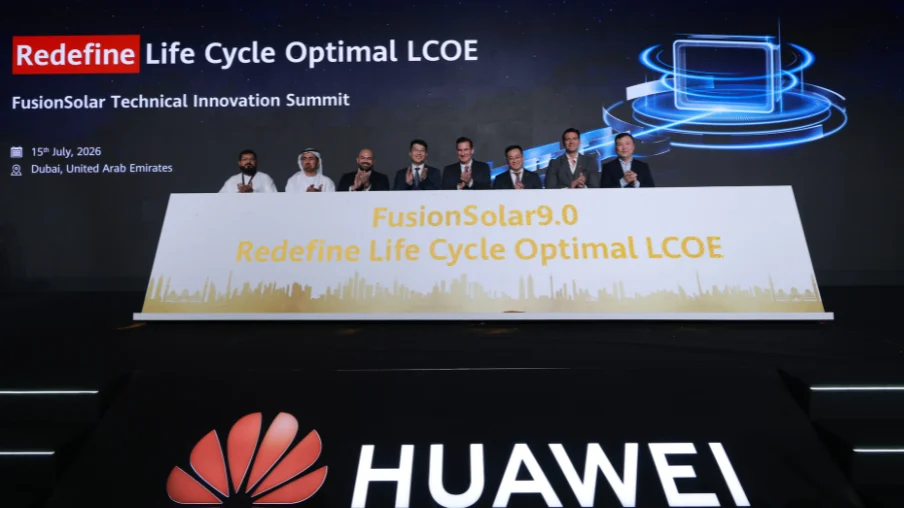
Huawei has launched FusionSolar 9.0, its latest intelligent solar energy solution, aimed at improving renewable energy integration and grid stability across the Middle East. The platform introduces advanced digital energy technologies designed to help utilities, businesses and large-scale solar operators manage increasingly complex power networks as renewable energy adoption accelerates.
The announcement reflects the growing convergence of artificial intelligence, cloud computing and digital infrastructure with the energy sector. As countries across the Gulf continue investing heavily in clean energy and smart grids, digital platforms capable of optimizing power generation, storage and distribution are becoming critical components of national energy strategies.
Huawei said the new solution combines intelligent energy management, AI-powered analytics and enhanced grid support capabilities to improve operational efficiency while supporting the region’s transition toward more sustainable electricity systems.
AI and Digital Technologies Transform Energy Infrastructure
Modern renewable energy projects increasingly rely on digital technologies to maximize efficiency and maintain grid reliability. Platforms such as FusionSolar integrate artificial intelligence, real-time monitoring and predictive analytics to optimize energy production while balancing fluctuating demand.
By continuously analysing operational data from solar assets, energy storage systems and grid infrastructure, intelligent platforms can identify performance issues, forecast energy generation and automate operational adjustments. This reduces downtime while improving overall system efficiency.
As renewable energy capacity expands, AI-driven energy management is becoming an essential layer of critical infrastructure rather than an optional enhancement.
Middle East Accelerates Renewable Energy Investment
Countries across the Middle East are rapidly expanding renewable energy capacity as part of long-term economic diversification and net-zero ambitions. Saudi Arabia, the United Arab Emirates, Oman and other regional markets are investing billions of dollars in solar farms, battery storage projects and smart electricity networks.
These investments require digital energy platforms capable of integrating variable renewable power into national grids without compromising stability or reliability.
Solutions that combine energy storage, intelligent inverters and advanced grid management technologies are expected to play an increasingly important role as utilities modernize their infrastructure.
Smart Grids Become a Strategic Priority
The evolution of smart grids is reshaping how electricity is generated, transmitted and consumed. Digital grid technologies enable utilities to respond dynamically to changes in supply and demand while improving resilience against outages and operational disruptions.
Intelligent energy platforms also support predictive maintenance, remote asset management and real-time visibility across distributed energy resources, helping operators reduce costs and improve service reliability.
As electricity demand grows alongside digital economies, resilient and intelligent power infrastructure is becoming as strategically important as telecommunications and cloud computing.
Digital Energy Ecosystems Continue to Expand
Huawei’s latest platform reflects a broader industry trend where technology companies are extending their capabilities beyond traditional ICT infrastructure into digital energy solutions.
The convergence of cloud platforms, AI, Internet of Things (IoT) technologies and renewable energy management is creating integrated ecosystems that enable utilities and enterprises to manage increasingly distributed energy assets more efficiently.
This shift is expected to accelerate as governments pursue smarter, lower-carbon infrastructure while businesses seek greater operational efficiency and energy resilience.
Why This Matters
FusionSolar 9.0 highlights the growing role of digital technologies in supporting renewable energy deployment across the Middle East. By combining AI, intelligent energy management and smart grid capabilities, the platform can help utilities and enterprises improve operational efficiency while integrating larger volumes of renewable power.
For the region, advanced digital energy solutions support broader sustainability goals, strengthen critical infrastructure and enable more resilient electricity networks capable of supporting long-term economic growth and digital transformation.
Editor’s Note
Energy infrastructure is becoming increasingly software-defined. As renewable energy generation expands, the challenge is no longer limited to producing clean electricity but managing complex, distributed power systems in real time. AI, cloud computing and intelligent automation are emerging as foundational technologies for modern energy networks, enabling utilities to balance supply and demand, improve grid resilience and optimize asset performance. Huawei’s FusionSolar 9.0 illustrates how digital platforms are evolving beyond ICT into critical infrastructure, reinforcing the close relationship between digital transformation, energy security and sustainable economic development across the Middle East.