







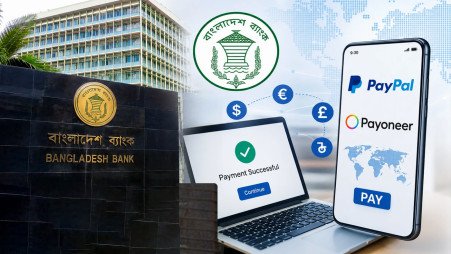
Bangladesh Bank has introduced a new regulatory framework that paves the way for international payment service providers similar to PayPal and Payoneer to operate in the country, a move expected to simplify cross-border digital transactions for freelancers, exporters and businesses.
The new policy allows licensed foreign payment service providers to facilitate inbound and outbound cross-border payments under Bangladesh’s regulatory oversight. The initiative is designed to improve access to global digital payment networks, making it easier for individuals and businesses to receive international payments while strengthening the country’s digital financial ecosystem.
The decision marks a significant step in modernizing Bangladesh’s payment infrastructure as the country seeks to support its expanding digital economy and growing base of online service exporters.
Cross-border payments are critical to the digital economy
Efficient international payment systems are becoming increasingly important as digital trade and remote work continue to expand.
Freelancers, software developers, digital agencies, exporters and e-commerce businesses depend on fast, secure and affordable payment channels to receive funds from overseas clients. Access to globally recognized payment platforms can reduce transaction friction, improve cash flow and make it easier for local businesses to participate in international markets.
Modern payment infrastructure is also becoming an important factor in attracting foreign investment and supporting digital entrepreneurship.
Fintech modernization supports financial inclusion
The introduction of new cross-border payment services reflects Bangladesh’s broader efforts to modernize its financial sector through digital innovation.
By enabling regulated international payment providers to operate within the country, Bangladesh Bank aims to increase competition, improve service quality and expand financial access for businesses and individuals. Digital payment ecosystems also support greater transparency, faster settlement times and enhanced compliance with international financial standards.
The move complements ongoing efforts to promote cashless transactions and strengthen the country’s fintech ecosystem.
Freelancers and exporters stand to benefit
Bangladesh has one of the world’s largest freelance and IT outsourcing communities, making access to efficient international payment platforms increasingly important.
Simplified cross-border payment mechanisms can reduce delays and transaction costs while improving the ability of professionals to receive earnings from overseas clients. Export-oriented businesses and digital service providers are also expected to benefit from more streamlined international payment processes, supporting the country’s ambitions to expand technology exports and digital trade.
Improved payment infrastructure strengthens Bangladesh’s competitiveness in the global digital services market.
Digital financial infrastructure is evolving globally
Central banks around the world are updating payment regulations to accommodate the rapid growth of digital commerce and international financial technology services.
Regulatory frameworks are increasingly being designed to balance innovation with consumer protection, financial stability and anti-money laundering requirements. As cross-border digital transactions continue to grow, enabling trusted global payment providers to operate within regulated environments is becoming an important component of national digital economy strategies.
Bangladesh’s latest policy reflects this broader global shift toward more connected and digitally enabled financial systems.
Why this matters
Bangladesh Bank’s new framework has the potential to significantly improve international payment accessibility for freelancers, exporters and digital businesses. By opening the market to PayPal-style cross-border payment providers, the country is strengthening its digital financial infrastructure and creating new opportunities for participation in the global digital economy.
Editor’s note
Access to efficient cross-border payment systems has become a fundamental requirement for modern digital economies. As freelancing, software exports and cross-border e-commerce continue to expand, countries are increasingly modernizing financial regulations to support seamless international transactions. Bangladesh’s latest initiative reflects a strategic effort to enhance its fintech ecosystem, improve financial connectivity and strengthen the country’s position as a growing hub for digital services and technology-driven exports.