






Iran and Iraq have agreed to provide free internet services for millions of pilgrims attending the annual Arbaeen pilgrimage while upgrading cross-border telecommunications infrastructure to ensure reliable connectivity during one of the world’s largest religious gatherings.
The agreement includes measures to enhance communications networks, expand connectivity capacity and offer complimentary internet access to pilgrims travelling between the two countries. The initiative is intended to improve communication, facilitate access to digital services and support the coordination of public safety and emergency response throughout the pilgrimage period.
The collaboration reflects the increasing role of digital infrastructure in managing large-scale public events, where reliable communications have become essential for both participants and authorities.
Telecom infrastructure supports large-scale events
Major public gatherings place significant pressure on mobile networks, requiring operators to expand capacity and strengthen network resilience.
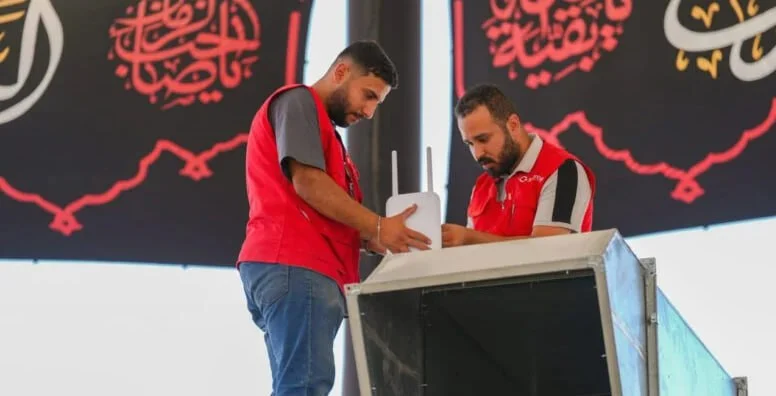
Telecommunications providers typically deploy temporary base stations, increase network bandwidth and optimize coverage to accommodate sharp increases in voice and data traffic. These measures help ensure uninterrupted communications for attendees, emergency responders and event organizers.
Reliable connectivity has become a critical component of event planning, particularly for gatherings involving millions of participants.
Digital services are enhancing the pilgrimage experience
Mobile connectivity is playing an increasingly important role in supporting pilgrims through access to navigation, emergency information and digital communication tools.
Free internet access enables visitors to stay connected with family members, receive real-time travel updates and use digital applications that assist with transportation, accommodation and essential services. Governments are also increasingly leveraging digital platforms to improve crowd management and deliver public information more efficiently.
These technologies contribute to a safer and more coordinated pilgrimage experience.
Cross-border cooperation strengthens communications resilience
Joint initiatives between neighboring countries are becoming increasingly important for maintaining seamless connectivity during international events.
Coordinated planning allows telecommunications operators and government agencies to improve network interoperability, optimize infrastructure deployment and enhance service continuity across borders. Such collaboration also strengthens emergency communications and operational coordination when large numbers of international visitors are involved.
The agreement between Iran and Iraq demonstrates the growing importance of regional cooperation in supporting critical communications infrastructure.
Digital infrastructure underpins public safety
Modern telecommunications networks have become essential for ensuring public safety during mass gatherings.
High-capacity mobile networks support emergency services, enable rapid dissemination of public information and facilitate coordination between multiple government agencies. Continued investment in resilient communications infrastructure helps authorities manage increasing network demand while maintaining reliable service throughout major events.
As digital technologies become more deeply integrated into public services, connectivity is playing an increasingly strategic role in event management.
Why this matters
The agreement between Iran and Iraq highlights how telecommunications infrastructure is becoming an essential component of managing large-scale international events. By providing free internet access and strengthening communications networks, both countries aim to improve the safety, accessibility and overall experience of millions of Arbaeen pilgrims.
Editor’s note
Telecommunications infrastructure is increasingly viewed as critical public infrastructure during major religious, sporting and cultural events. Operators and governments are investing in temporary network expansion, digital services and cross-border coordination to ensure reliable connectivity for millions of participants. The Iran-Iraq initiative reflects this broader trend, demonstrating how robust communications networks have become fundamental to public safety, event management and digital inclusion during large-scale gatherings.