








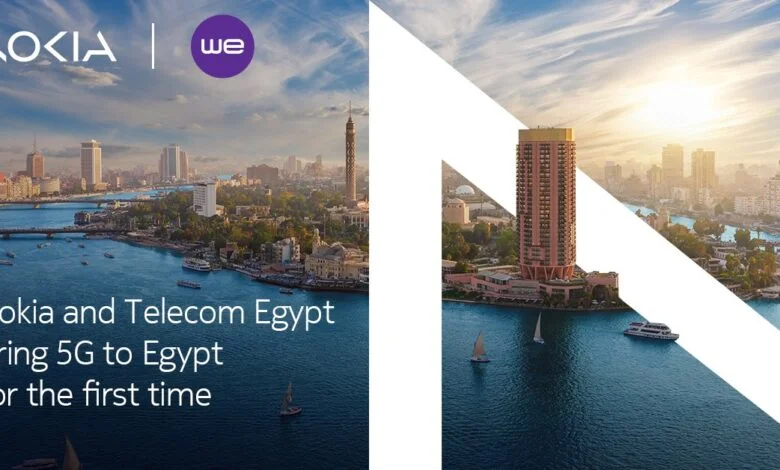
Nokia has selected Egypt as a strategic regional hub for its operations across the Middle East and Africa, reinforcing the country’s growing importance within the regional technology and telecommunications landscape.
The move reflects Nokia’s intention to leverage Egypt’s talent pool, geographic positioning, and expanding digital infrastructure to support operations, services, and regional business activities. Egypt has increasingly positioned itself as a technology and outsourcing destination, attracting multinational companies seeking scalable regional bases.
By strengthening its presence in Egypt, Nokia is aligning with broader industry trends where global telecom and technology companies are establishing regional hubs in markets that offer skilled labor, connectivity advantages, and access to neighboring regions.
Egypt’s ICT sector has experienced significant growth in recent years, supported by government-led digital transformation initiatives, infrastructure investments, and workforce development programs. These factors have helped improve the country’s attractiveness for multinational technology firms.
The decision also highlights the strategic role Egypt plays in connecting African and Middle Eastern markets, both geographically and operationally.
The long-term impact will depend on how extensively Nokia expands regional functions from Egypt and whether the move drives further investment, job creation, and ecosystem development within the country’s technology sector.
Editor’s Note
This is not just a regional office decision. It reflects the competition to become the operational backbone of regional technology ecosystems.
The real story is strategic positioning. Countries are increasingly competing to host regional operations for global technology companies.
The opportunity is ecosystem multiplication. Regional hubs can generate jobs, knowledge transfer, and supplier ecosystem growth.
The advantage is geography and talent. Egypt offers strong regional connectivity combined with a large technical workforce.
The challenge is maintaining competitiveness. Regional hub status requires continuous investment in infrastructure, policy, and talent quality.
The risk is operational concentration without local innovation growth. Hosting regional operations does not automatically create deeper technology ecosystems.
What to watch next is function expansion. The real signal will be whether Egypt evolves beyond operational support into a center for R&D, advanced engineering, and technology innovation for the region.