







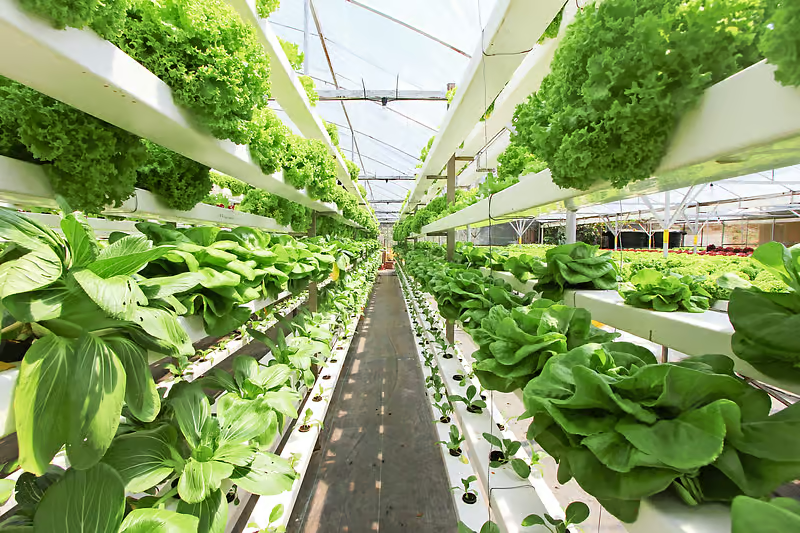
The United Arab Emirates is expanding its focus on vertical farming and artificial intelligence as part of a broader strategy to reduce dependence on food imports, strengthen domestic agricultural production, and build a more resilient food security ecosystem suited to the region’s desert climate.
As traditional farming faces challenges related to water scarcity, limited arable land, and extreme temperatures, the UAE is increasingly turning to technology-driven agricultural solutions that can deliver higher yields while using fewer natural resources. Vertical farming facilities, supported by AI-powered monitoring and automation systems, are emerging as a key component of this strategy.
These controlled-environment agriculture systems enable crops to be grown indoors using significantly less water than conventional farming methods. Advanced sensors, data analytics, machine learning, and automated climate control technologies help optimize growing conditions, improve productivity, and reduce operational waste.
The UAE’s food security agenda has gained momentum in recent years as global supply chain disruptions, geopolitical uncertainties, and climate-related challenges have highlighted the importance of strengthening local production capabilities. Government agencies, technology providers, agritech startups, and investors have increasingly collaborated to accelerate the development of sustainable farming solutions.
Artificial intelligence is playing a growing role across the agricultural value chain, from monitoring crop health and predicting yields to managing water consumption and optimizing energy use. These technologies are helping operators improve efficiency while making large-scale indoor farming more commercially viable.
The UAE has already attracted significant investment into agritech innovation, with several large-scale vertical farming projects established across the country. The sector is also benefiting from government support, research partnerships, and initiatives designed to encourage the adoption of advanced agricultural technologies.
As demand for locally produced food continues to rise, industry stakeholders believe that AI-enabled farming systems can help reduce import dependency while enhancing food supply resilience and supporting broader sustainability goals.
The development aligns with the UAE’s long-term vision of leveraging innovation and advanced technologies to address strategic national challenges, including food security, resource management, and climate adaptation.
Editor’s Note
The UAE’s investment in vertical farming reflects a broader shift in how countries are approaching food security in an era of climate uncertainty and supply chain volatility. What makes the UAE’s approach particularly noteworthy is the integration of AI, automation, and data-driven agriculture into national resilience planning. Food security is increasingly becoming a technology challenge as much as an agricultural one. By combining controlled-environment farming with artificial intelligence, the UAE is building a model that could be replicated across other water-scarce regions. The strategy also highlights how emerging technologies are expanding beyond traditional sectors such as telecom and finance to address critical national priorities including food production, sustainability, and economic resilience.